
Homemade South Indian Sambar Powder
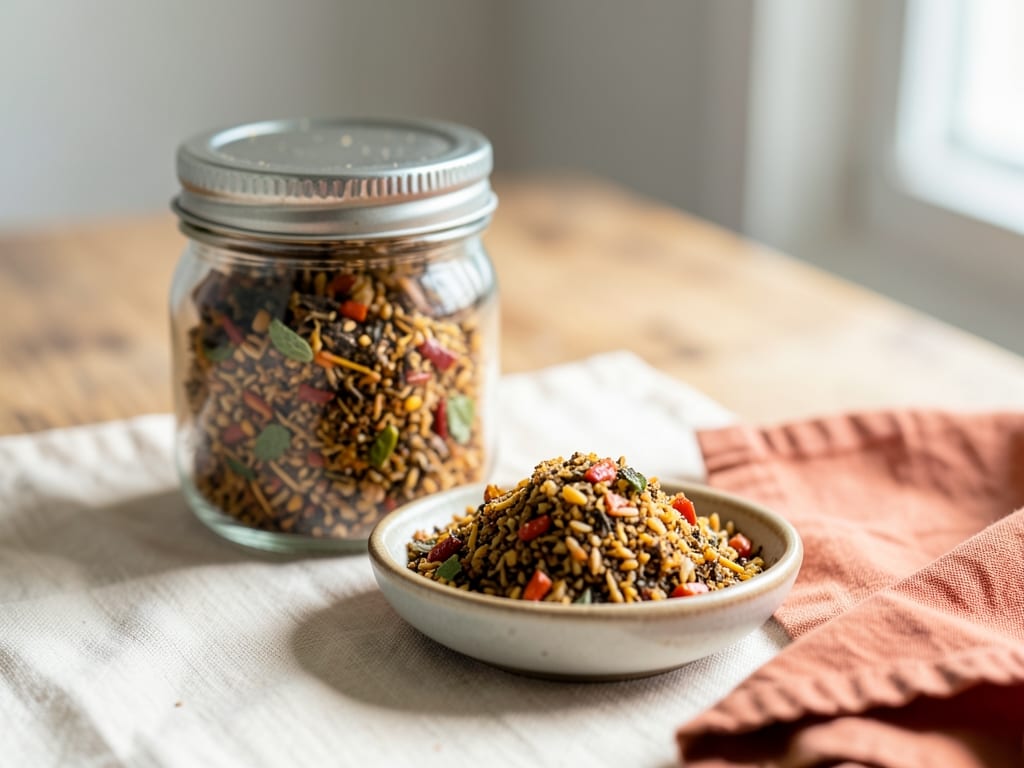
A fragrant, medium-hot sambar masala made by dry roasting coriander, lentils, chilies and spices separately, then grinding to a fine powder. Stir it into lentil-vegetable sambar for deep, toasty flavor far beyond store-bought.
- Prep
- 10 min
- Cook
- 15 min
- Wait
- 30 min
- Total
- 55 min
- Makes
- About 1½ cups (150 g) powder, enough for roughly 12 pots of sambar (2 tablespoons per pot)
Steps
Before you start
- Measure and group all spices before heating anything, because roasting moves fast and the spices can't be left unattended.
- Use a wide, heavy-bottomed skillet or kadai and keep the heat low to medium-low so nothing scorches; burnt spices turn bitter.
- Open a window or turn on the exhaust fan, since roasting chilies releases pungent fumes.
- Make sure the grinder jar is completely dry; any moisture makes the powder clump and spoil faster.
Set up the pan
- Place the dry skillet over low heat.
- Have all spices measured in separate piles beside the stove, and a large plate ready for cooling.
- Dry skillet should be warm, not smoking, before you start.
+ Show details− Hide details
Ready when: Pan feels warm when you hold your palm 2 inches above it
Tip: A heavy pan holds even heat and prevents hot spots that scorch small seeds.
Roast the dals
- Add the oil, toor dal and chana dal to the pan.
- Stir constantly for 3 to 4 minutes until the dals turn light golden and smell nutty.
- Tip onto the cooling plate.
+ Show details− Hide details
Ready when: Dals are light golden brown with a nutty aroma
Tip: The dals are the slowest to roast, so they go in first. Don't let them go dark brown or the powder tastes bitter.
Roast the coriander
- In the same pan, add the coriander seeds.
- Stir for 2 to 3 minutes until they darken slightly and smell warm and citrusy.
- Move to the plate in a separate pile.
+ Show details− Hide details
Ready when: Seeds turn a shade darker and release a strong citrusy aroma
Roast small spices
- Add the fenugreek, cumin, peppercorns and mustard seeds together.
- Stir for 60 to 90 seconds until the cumin darkens and the mustard seeds just begin to pop.
- Move to the plate immediately.
+ Show details− Hide details
Ready when: Cumin is deep brown, fenugreek turns golden, mustard seeds begin to pop
Tip: Fenugreek turns bitter fast. Pull it off the heat as soon as it goes golden, not brown.
Roast the chilies
- Add the broken chilies and stir for 1 to 2 minutes until they darken slightly, puff, and become crisp.
- Move to the plate.
+ Show details− Hide details
Ready when: Chilies are a deeper red and crackle when pressed, with no blackened spots
Tip: Keep your face back from the pan; chili fumes are sharp and make you cough.
Crisp the curry leaves
- Add the dry curry leaves and stir for 1 to 2 minutes on low heat until they shrivel and turn crisp.
- Then add the turmeric and asafoetida (if using) and stir for 10 seconds only, then turn off the heat and tip everything onto the plate.
+ Show details− Hide details
Ready when: Leaves crumble easily between your fingers
Tip: Leaves must be fully dry or they will steam, not crisp, and shorten the powder's shelf life.
Cool completely
- Spread everything out on the plate and let it cool to room temperature, about 30 minutes.
- Do not grind warm spices.
+ Show details− Hide details
Ready when: Spices feel completely cool to the touch
Tip: Grinding warm spices releases moisture and causes clumping and faster spoilage.
Grind to powder
- Grind in two batches in a dry spice grinder, pulsing in 20-second bursts with pauses, for about 1 to 2 minutes per batch, until a fine, uniform powder forms.
- Shake the jar between pulses.
+ Show details− Hide details
Ready when: Powder is fine and even with no whole pieces of dal or chili visible
Tip: Pause between pulses so the motor doesn't heat the spices and turn the powder gummy.
Sift and store
- Sift through a fine-mesh sieve and re-grind any coarse bits.
- Mix the two batches well.
- Let the powder sit 10 minutes uncovered to release residual heat, then transfer into an airtight jar.
+ Show details− Hide details
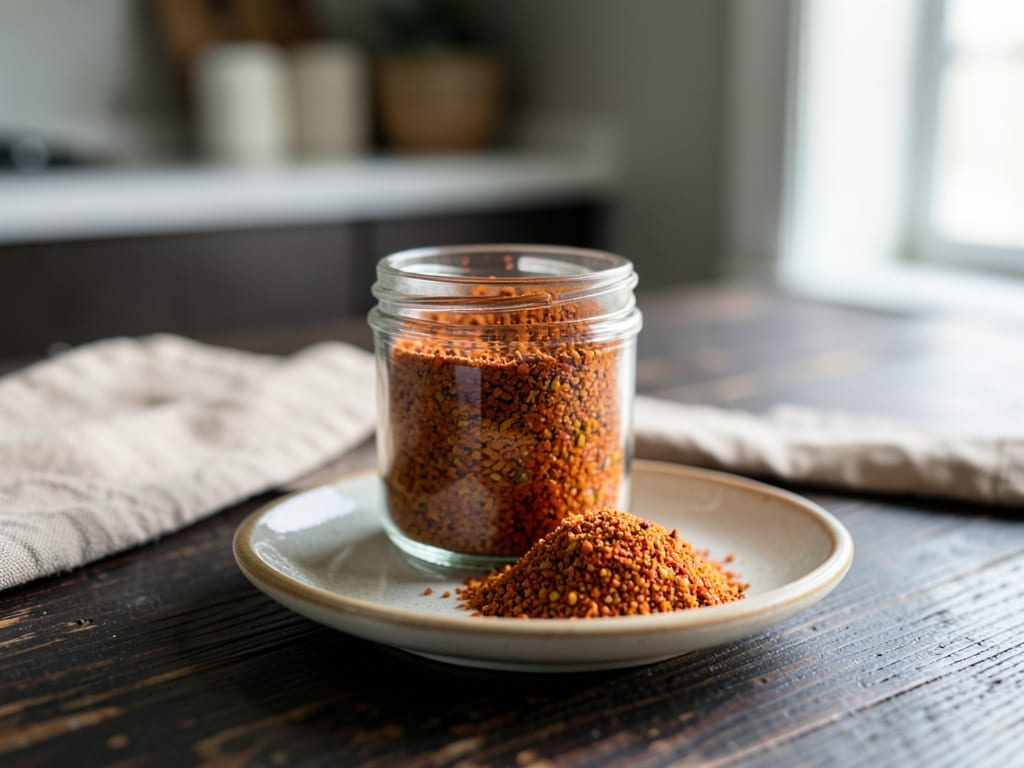
Ready when: Powder is uniformly fine and rust-orange in color
Good to know
Tips
- Roast each group separately because they cook at different speeds; this prevents bitterness and uneven flavor.
- Grind in small batches for a finer, cooler grind and better aroma.
- Use a dry spoon every time to keep moisture out of the jar.
- For a sweeter, rounder blend, add 1 tablespoon of dried grated coconut roasted until golden, but refrigerate and use within 1 month.
Make ahead
"Make up to 3 months ahead; flavor is best in the first month and the blend is ready to use as soon as it is cooled and stored."
Storage & reheating
"Room temperature in an airtight glass jar away from heat and light: up to 3 months. Fridge: up to 6 months. Freezer: up to 1 year; spoon out what you need with a dry spoon and no thawing is needed. To use, add 2 tablespoons per pot of sambar (about 1 cup dal) and bloom briefly in hot oil or simmer in the tamarind broth for 10 minutes."
Substitutions
- dried red chilies → Kashmiri chilies for color with mild heat, or reduce to 8 chilies. Adjust to taste; Kashmiri gives deep red color but less heat.
- fresh curry leaves → 1 tablespoon dried curry leaves. Dried leaves skip the drying step but are less fragrant.
- toor dal (split pigeon peas) → Additional chana dal or moong dal. Gives similar thickening and nutty body.
- asafoetida (hing) powder → Omit. It is optional; add it to the sambar tempering instead.
More spice blends
See all →
Find more like this
- Meal
- Lunch
- Cuisine
- South Indian
- Main ingredient
- Chickpeas
- Method
- Stovetop
- Quick & Easy
- EasyMake Ahead