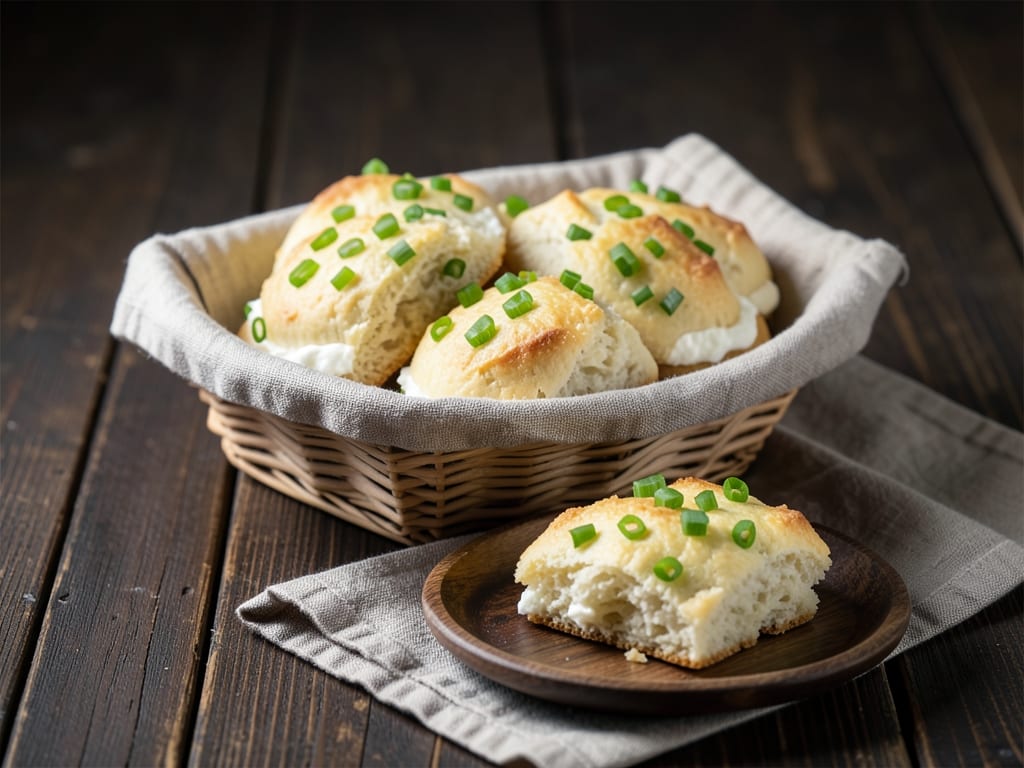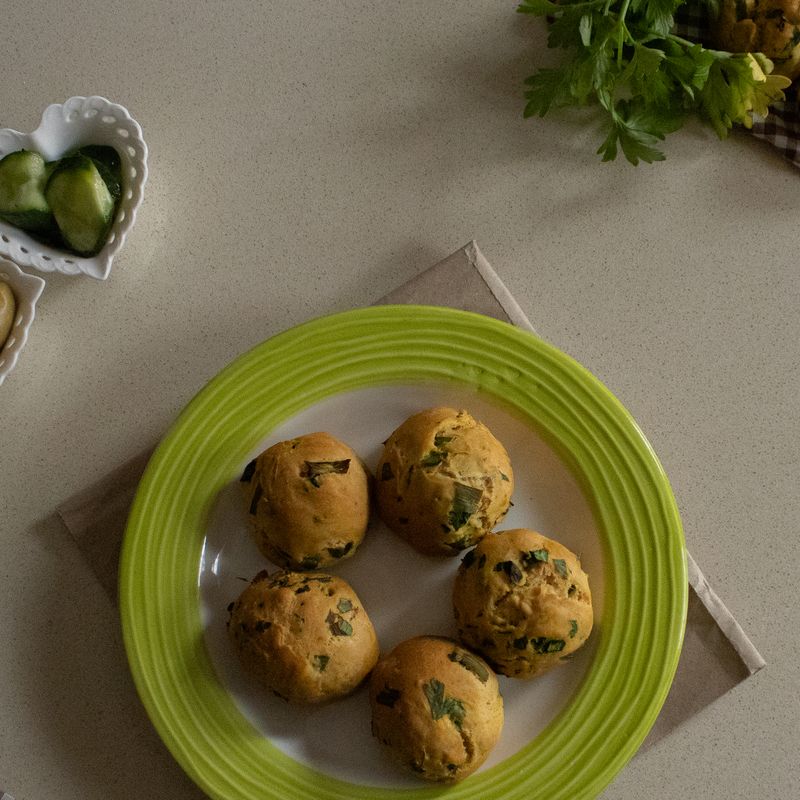
Herb Butter Quick Biscuits
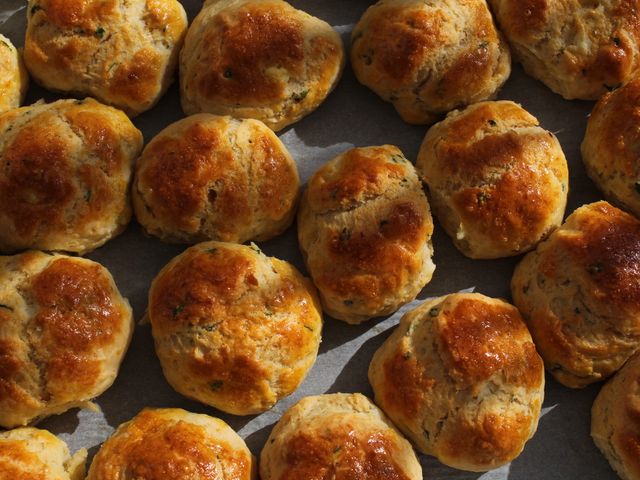
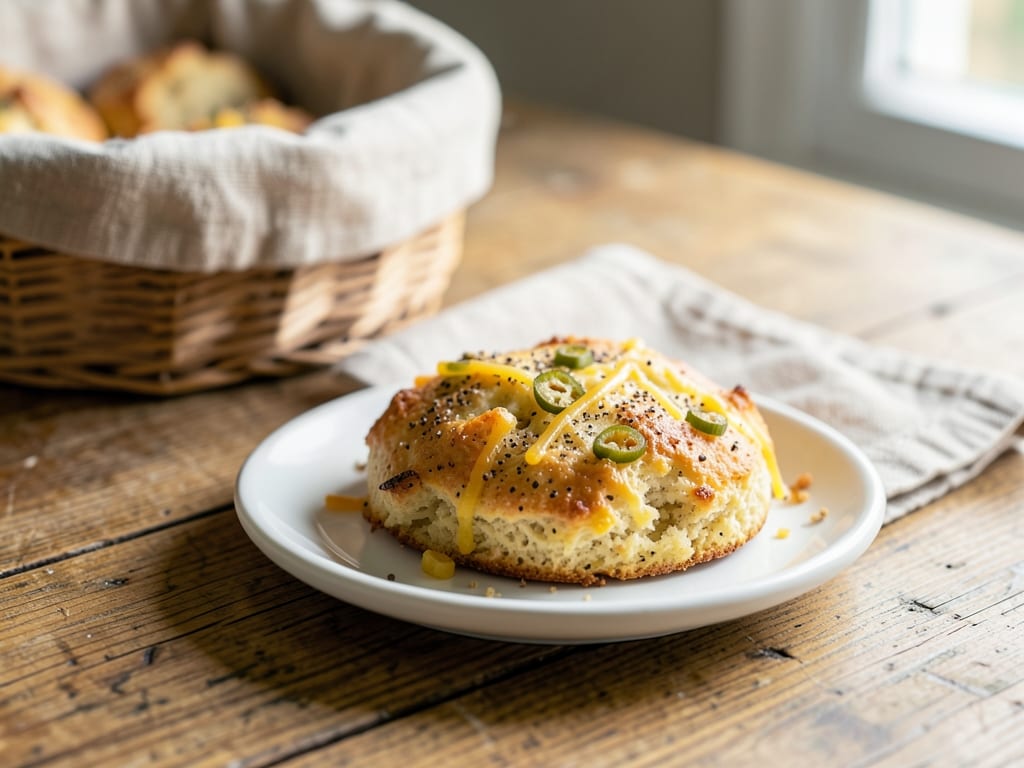
Tender, flaky biscuits infused with fresh herbs and rich butter, ready in under 30 minutes. The dough comes together quickly with buttermilk and baking powder, creating a light crumb with crispy edges. Perfect warm from the oven with jam, gravy, or served plain alongside soups and stews.
Steps
Before you start
- Preheat your oven to 400°F (200°C)
- Use cold butter straight from the refrigerator
- Have all ingredients at hand before you begin mixing
Mix dry ingredients
- In a large mixing bowl, whisk together 2 cups (250 g) all-purpose flour, 1.5 tsp (7 g) baking powder, and 0.75 tsp (4 g) salt until well combined.
- Make sure there are no lumps of baking powder.
+ Show details− Hide details
Ready when: Mixture is uniform and no lumps are visible
Tip: Whisking the dry ingredients ensures the baking powder is evenly distributed for consistent rise
Add herbs and cut in butter
- Stir the 3 tbsp (12 g) chopped fresh herbs into the flour mixture.
- Using a pastry cutter, two forks, or your fingertips, work the 6 tbsp (85 g) cold butter cubes into the flour until the mixture resembles coarse breadcrumbs.
- Some pea-sized bits of butter should remain visible.
+ Show details− Hide details
Ready when: Mixture looks like coarse breadcrumbs with visible pea-sized butter pieces
Tip: Keep butter cold and work quickly to prevent the fat from warming and creating dense, tough biscuits
Add buttermilk and bring dough together
- Pour 0.75 cup (180 ml) cold buttermilk into the flour mixture.
- Using a wooden spoon or your hands, gently stir until a shaggy dough just comes together.
- Do not overmix; the dough should be slightly sticky.
+ Show details− Hide details
Ready when: All dry flour is incorporated and dough is cohesive but still slightly sticky
Tip: Overmixing develops gluten and makes biscuits tough; stop as soon as the dough holds together
Turn out and shape dough
- Lightly dust your work surface with flour.
- Turn the dough out onto the surface and gently knead it 3 to 4 times, just until it comes together into a loose ball.
- Pat or roll the dough out to a ½-inch (1.25 cm) thickness.
+ Show details− Hide details
Ready when: Dough is even thickness and no visible dry streaks remain
Tip: Don't knead too much—gentle folding preserves the lamination that creates flaky layers
Cut and arrange biscuits
- Using a 2-inch (5 cm) round biscuit cutter dipped in flour, cut out biscuits from the dough.
- Arrange them 2 inches (5 cm) apart on a parchment-lined baking sheet.
- Press the scraps gently together, re-roll, and cut additional biscuits until all dough is used.
+ Show details− Hide details
Ready when: All dough is cut into rounds and arranged on the baking sheet
Tip: Press the cutter straight down without twisting; twisting seals the edges and prevents even rising
Brush and season biscuits
- Lightly brush the tops of each biscuit with 2 tbsp (30 g) melted butter.
- If desired, sprinkle fleur de sel or flaky sea salt lightly over the tops for extra flavor and texture.
+ Show details− Hide details
Ready when: Biscuit tops are evenly coated with butter and salt (if using)
Tip: Save a few minutes for this step right before baking so the butter doesn't cool and separate
Bake until goldenOven 400°F / 205°C
- Bake the biscuits in a preheated 400°F (200°C) oven for 12 to 14 minutes, until the tops are deep golden brown and the sides are pale golden.
- The biscuits should feel firm to the touch when done.
+ Show details− Hide details
Ready when: Tops are deep golden brown, sides are golden, and biscuits feel firm when lightly touched
Tip: Don't open the oven door for at least the first 10 minutes or the biscuits may not rise properly
Cool and serve
- Let the biscuits cool on the baking sheet for 3 minutes, then transfer them to a wire rack or serve them warm.
- They are best enjoyed within the first hour of baking but are delicious throughout the day.
+ Show details− Hide details
Ready when: Biscuits have set enough to handle without crumbling
Tip: Serve warm for the best flavor and texture—reheat gently if they have cooled
Good to know
Tips
- Cold ingredients are essential: butter, buttermilk, and even the bowl and your hands should be as cool as possible. This keeps the fat in distinct pieces, which creates flaky layers.
- Don't overmix—this cannot be overstated. Mix only until the dough just holds together. Overworked dough becomes tough and dense.
- If your biscuits aren't rising well, check that your baking powder is fresh (less than 1 year old) and hasn't been exposed to moisture.
- For extra-tall, fluffy biscuits, stack two cut rounds together before baking; they'll rise higher but take 2–3 minutes longer to bake.
Storage & reheating
Store cooled biscuits in an airtight container at room temperature for up to 2 days. For longer storage, wrap them individually in foil and freeze for up to 1 month. Reheat frozen or room-temperature biscuits, wrapped in foil, in a 325°F (163°C) oven for 8–10 minutes until warmed through.
Substitutions
- buttermilk → whole milk or 2% milk mixed with 1 tbsp fresh lemon juice or white vinegar (let sit 5 minutes before using). A common substitute when buttermilk isn't on hand; gives a slightly less tangy flavor but still produces tender biscuits
- fresh herbs, mixed (chives, parsley, thyme, or rosemary) → 1 tbsp dried Italian seasoning or 2 tsp dried thyme mixed with 1 tsp dried chives. Dried herbs are more concentrated; reduce the amount by one-third if substituting
- unsalted butter → cold vegetable shortening or lard. These fats produce even flakier biscuits than butter, though with slightly less flavor
- all_purpose_flour → cake flour or pastry flour. Lower-protein flours create more tender biscuits; reduce the amount by 2 tablespoons if using cake flour