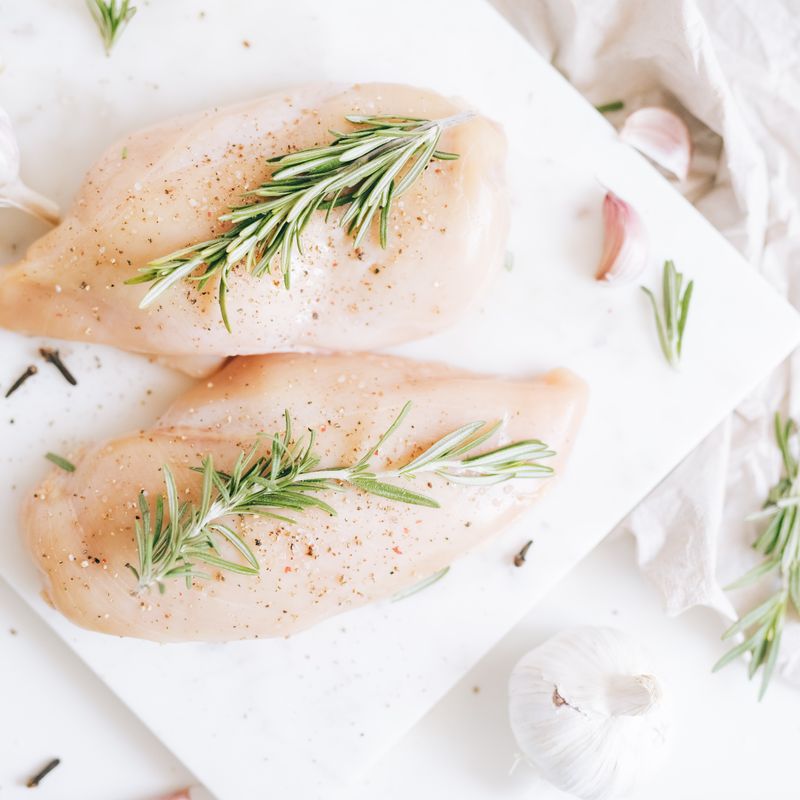
Hanukkah Potato Leek Herb Chicken Marinade
A fragrant, creamy herb marinade made from pureed potato and leek, infused with fresh dill, thyme, and garlic. This distinctive paste clings beautifully to chicken before roasting, creating deeply flavored, tender meat with the subtle sweetness of leeks and earthy potato undertones. Perfect for a traditional Hanukkah roasted chicken with warming, elegant flavors.
- Prep
- 20 min
- Cook
- 40 min
- Wait
- 1 hr
- Total
- 2 hr
- Makes
- About 1½ cups marinade (enough for 4–6 chicken pieces or 1 whole chicken)
Steps
Before you start
- Have chicken at room temperature for 20–30 minutes before marinating for best flavor absorption
- Wash, trim, and pat dry all vegetables and fresh herbs before blending
- Preheat your oven to 425°F (220°C) about 10 minutes before the chicken is ready to roast
Prepare Vegetables and Herbs
- Wash the leeks thoroughly, halving them lengthwise and rinsing between layers to remove any sand, then chop into 1-inch pieces.
- Peel the Yukon gold potato and roughly chop it into 1-inch pieces.
- Peel the garlic cloves.
- Wash the fresh dill and thyme, pat dry completely, and pick the leaves from the thyme stems.
- Set everything aside in separate bowls.
+ Show details− Hide details
Ready when: All vegetables and herbs are clean, trimmed, and ready for blending
Tip: Washing fresh herbs and patting them dry removes any grit and prevents the marinade from becoming sandy
Blend the Herb Marinade Paste
- In a food processor, combine the chopped leeks, potato, garlic cloves, dill leaves, thyme leaves, olive oil, lemon juice, salt, and black pepper.
- Pulse 8–10 times (about 30–45 seconds total) until the mixture becomes a coarse, chunky paste with visible pieces of vegetables throughout.
- Do not over-blend.
- If the mixture is too thick to spread easily, add 1–2 tbsp of broth and pulse once more to loosen.
+ Show details− Hide details
Ready when: Mixture is a thick, chunky paste with 1/4- to 1/2-inch pieces of vegetables visible; it should be spreadable with a spatula
Tip: Over-processing will release too much starch from the potato and make the marinade gluey instead of chunky. Stop when you still see vegetable pieces
Prepare the Chicken
- Remove the chicken pieces from the refrigerator and pat them completely dry with paper towels; moisture prevents the marinade from adhering properly.
- Arrange the chicken pieces in a large baking dish or shallow container in a single layer.
+ Show details− Hide details
Ready when: Chicken is thoroughly dry to the touch and arranged in the dish
Tip: Pat the chicken more aggressively than you might think necessary; any surface moisture will cause the marinade to slip off
Coat Chicken with Herb Marinade
- Using a rubber spatula or your hands (wearing food-prep gloves), spread the herb paste evenly over all sides of each chicken piece, coating the skin generously.
- Gently lift the skin on each piece and work some of the marinade underneath, between the skin and meat, to infuse flavor directly into the chicken.
- Use all of the marinade.
+ Show details− Hide details
Ready when: All chicken pieces are completely coated with the herb paste, with some underneath the skin
Tip: Working marinade under the chicken skin allows the herbs and aromatics to infuse directly into the meat, creating deeper flavor and moister poultry
Marinate the Chicken
- Cover the baking dish with plastic wrap or a lid.
- Refrigerate for at least 30 minutes.
- For best flavor development and maximum tenderness, marinate for 4 hours or overnight.
- The longer marinating time allows the acid from the lemon juice to gently tenderize the meat and the herbs to penetrate the chicken.
+ Show details− Hide details
Ready when: Chicken has been marinating for at least 30 minutes (overnight is ideal)
Tip: Marinating overnight makes a noticeable difference in flavor; if time allows, plan ahead
Preheat Oven and Bring Chicken to Room TemperatureOven 425°F / 220°C
- Preheat your oven to 425°F (220°C).
- Remove the marinated chicken from the refrigerator and let it sit on the counter for 15–20 minutes to come closer to room temperature.
- This ensures even cooking throughout each piece, so the exterior doesn't burn before the interior finishes cooking.
+ Show details− Hide details
Ready when: Oven is preheated to 425°F (220°C), and chicken is no longer cold to the touch
Tip: Room-temperature chicken cooks more evenly than chicken straight from the fridge; cold spots in the center can create undercooked areas
Roast the ChickenOven 425°F / 220°C
- Transfer the marinated chicken pieces to a large roasting pan or oven-safe baking dish, arranging them skin-side up in a single layer without crowding.
- Roast uncovered in the preheated 425°F (220°C) oven for 35–45 minutes, depending on the size of the pieces.
- Thighs and drumsticks take longer than breasts.
+ Show details− Hide details
Ready when: An instant-read meat thermometer inserted into the thickest part of the thigh (without touching bone) reads 165°F (74°C), or juices run clear when the thickest part is pierced with a fork
Tip: Check the thickest piece first; if smaller pieces finish earlier, transfer them to a warm plate while the larger ones continue cooking to avoid overcooking them
Rest and Serve
- Remove the chicken from the oven and transfer to a serving plate or cutting board.
- Let the chicken rest for 10 minutes without covering it (covering traps steam and softens the crispy skin).
- While the chicken rests, scrape any herb bits stuck to the pan and spoon them over the finished chicken.
- Serve immediately with the pan drippings spooned over each piece.
+ Show details− Hide details
Ready when: Chicken has rested for at least 10 minutes and is ready to serve
Tip: The resting step is crucial; it prevents juices from running out onto the plate and keeps the meat succulent
Good to know
Tips
- Over-blending the marinade will make the potato starchy and gluey. Pulse just until chunky for the best texture and superior coating ability. You should still see visible vegetable pieces in the final paste.
- Work some marinade under the chicken skin before roasting. This is the secret to deeply flavored, juicy poultry—the herbs and aromatics infuse directly into the meat, not just the surface.
- Use an instant-read meat thermometer for foolproof doneness. Insert the probe into the thickest part of the thigh without touching bone; 165°F (74°C) is perfectly safe and reliable.
- For extra-flavorful pan drippings, save the herb bits and vegetable pieces that fall to the bottom of the roasting pan. Spoon them over the finished chicken for concentrated, rustic flavor.
Make ahead
The herb marinade can be made up to 2 days ahead and stored in an airtight container in the refrigerator. The chicken can be marinated overnight for deeper flavor. Assemble and roast when ready to serve for the best crispy skin and juicy meat.
Storage & reheating
Leftover roasted chicken: Store in an airtight container in the refrigerator for up to 4 days. Freeze for up to 3 months. Reheat gently in a 350°F (175°C) oven for about 15 minutes, covered loosely with foil, until warmed through (do not overheat, or the meat will dry out). The herb marinade (uncooked) can be refrigerated for 1 day; the fresh herbs will begin to darken and oxidize. Freeze for up to 1 month, and thaw in the refrigerator before using on fresh chicken.
Substitutions
- Fresh dill → Dried dill. Use 2.5 tbsp (8 g) dried dill instead of fresh. Dried herbs are more concentrated, so reduce the amount to avoid an overpowering flavor. The marinade will be less bright but still delicious.
- Leeks (white and light green parts only) → Yellow or white onion. Use 1 medium onion (6 oz / 170 g), chopped. Onion will be sharper and more pungent than the mild sweetness of leeks, creating a more assertive marinade.
- Yukon gold potato → Cauliflower. Use 1.5 cups (300 g) chopped cauliflower instead. This creates a lighter, less starchy marinade with a more subtle vegetable flavor. The texture will be slightly different but equally good.
- Fresh lemon juice → White wine vinegar or apple cider vinegar. Use 1.5 tbsp (22.5 ml) vinegar instead of lemon juice. The marinade will be more acidic and tangy, with less citrus brightness but a pleasant vinegary complexity.
More roasts
See all →


Find more like this
- Meal
- Dinner
- Main ingredient
- Whole Chicken
- Method
- Oven
- Quick & Easy
- EasyMake Ahead