Green Pea and Mint Risotto
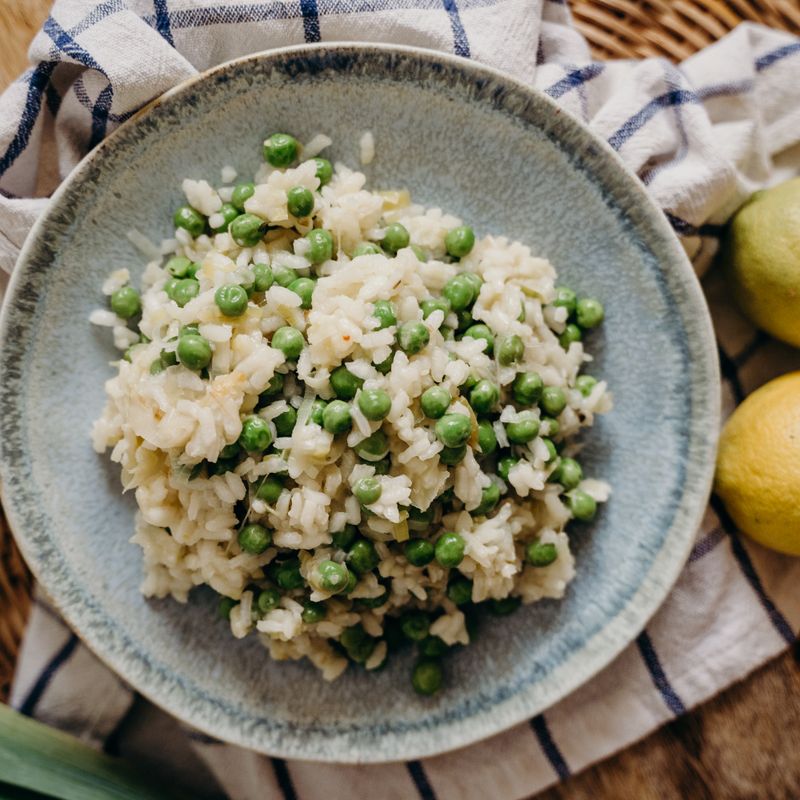
A vibrant, creamy risotto highlighting tender peas and fresh mint. Arborio rice is stirred constantly into simmering broth, releasing its starch to create a luxurious, naturally velvety sauce. Finished with butter, Parmesan, and a burst of mint, this elegant side dish pairs beautifully with roasted vegetables, grilled fish, or chicken.
- Prep
- 15 min
- Cook
- 25 min
- Wait
- 5 min
- Total
- 45 min
- Makes
- 4 servings (about 1½ cups each)
Steps
Before you start
- Bring broth to a steady simmer in a separate pot before you begin stirring the rice
- Have all ingredients measured and within reach of the stove
- Chop the mint just before serving so it stays vibrant green
Heat oil and butter
- Place the 3-quart saucepan over medium heat.
- Add the 1 tablespoon (15 ml) olive oil and 1 tablespoon (14 g) of the butter.
- Once the butter foams and melts, you should see small bubbles on the surface and smell a nutty aroma—this takes about 1 minute.
+ Show details− Hide details
Ready when: Butter foams and becomes fragrant
Tip: Don't let the butter brown; you want a gentle foam, not color.
Sauté shallot and garlic
- Add the diced shallot and stir constantly.
- Cook for 1 minute, then add the minced garlic.
- Continue stirring for another 30 seconds until the shallot is softened and both vegetables release a sweet, pungent aroma.
+ Show details− Hide details
Ready when: Shallot is translucent and fragrant
Tip: Don't brown the shallot; you want it soft and just beginning to lose its raw bite.
Toast rice and deglaze
- Add the 1.5 cups (300 g) Arborio rice to the pan.
- Stir constantly for 2 minutes, coating the grains in oil and butter.
- Each grain should become opaque and slightly glossy but not begin to color.
- Pour in the 0.5 cup (120 ml) white wine, scraping the bottom of the pan to release any stuck bits.
- Stir until the wine is almost completely absorbed, about 1 minute—the rice should still look a little wet.
+ Show details− Hide details
Ready when: Wine is nearly evaporated, rice looks just barely wet
Tip: Toasting the rice helps it absorb broth gradually and creates the creamy texture; don't skip this step.
Begin stirring in broth
- Add 1 ladle of the warm broth (about 0.75 cup / 180 ml) to the rice.
- Stir frequently—about every 10–15 seconds—letting each addition of broth absorb into the rice before adding the next ladle.
- The rice should never look dry but should be mostly absorbed before adding more liquid.
- Continue this rhythm for 18–20 minutes.
- After about 10 minutes of stirring, add the 1.5 cups (190 g) frozen peas and stir to distribute them evenly.
+ Show details− Hide details
Ready when: Rice grains are tender but still slightly firm in the center when bitten; broth is creamy and surrounds each grain
Tip: Stir frequently but don't let it become porridge. You're looking for 'al dente' rice suspended in a glossy sauce. Taste a grain at 18 minutes to check doneness—it should be creamy, not chalky.
Finish with butter and cheese
- When the rice is tender and creamy, remove the pan from heat.
- Stir in the remaining 2 tablespoons (28 g) cold butter and the 0.75 cup (75 g) grated Parmigiano-Reggiano.
- The risotto should look glossy and flow gently on the plate—not stiff.
- Season with kosher salt and freshly ground black pepper to taste.
- This step should take about 1 minute.
+ Show details− Hide details
Ready when: Risotto is glossy, creamy, and flows slightly on the spoon
Tip: Cold butter creates the creamiest finish; stirring it in off heat prevents it from separating into grease.
Rest and serve
- Let the risotto rest off the heat for 2–3 minutes.
- Just before serving, stir in the 0.25 cup (10 g) fresh chopped mint, reserving a few leaves for garnish if desired.
- Divide among warmed bowls and top with a small sprig of mint.
- Serve immediately.
+ Show details− Hide details
Ready when: Risotto has rested and mint is fresh and aromatic
Tip: Add mint at the very last moment so its bright flavor isn't muted by heat.
Good to know
Tips
- Timing is key: keep the broth at a gentle simmer in a separate pot so each ladle-full is hot. Cold broth will stop the cooking and break the creamy emulsion.
- Stir frequently but not frantically. Constant stirring releases starch from the rice, which thickens the sauce naturally; don't add cream or cornstarch.
- If the risotto becomes too thick before the rice is tender, add a little more warm broth a few tablespoons at a time. If it's too loose when the rice is done, you may have added too much broth—this is still delicious but thinner.
Storage & reheating
Best served immediately. Leftover risotto can be refrigerated in an airtight container for up to 3 days. To reheat, place in a saucepan over medium-low heat, add a splash of warm broth or water (about 2–3 tablespoons per portion), and stir gently until heated through and creamy again, about 2–3 minutes. Do not freeze; the texture becomes grainy.
Substitutions
- frozen peas → fresh spring peas (if in season) or fresh baby spinach added in the last 2 minutes of cooking. Fresh peas require no precooking; add spinach just before finishing so it wilts from residual heat while keeping its vibrant color.
- dry white wine → additional broth or dry vermouth. Use the same amount. The wine adds acidity and subtle flavor; broth is milder, vermouth slightly more aromatic.
- fresh mint → fresh basil, chives, or parsley (about 2 tablespoons for basil, 3 tablespoons for chives or parsley). Mint is traditional, but basil adds sweetness, chives add onion notes, and parsley adds a lighter herbal note.
- Parmigiano-Reggiano cheese → Grana Padano or aged Asiago. Both are firm aged Italian cheeses with similar nutty, rich flavor. Use the same amount grated.