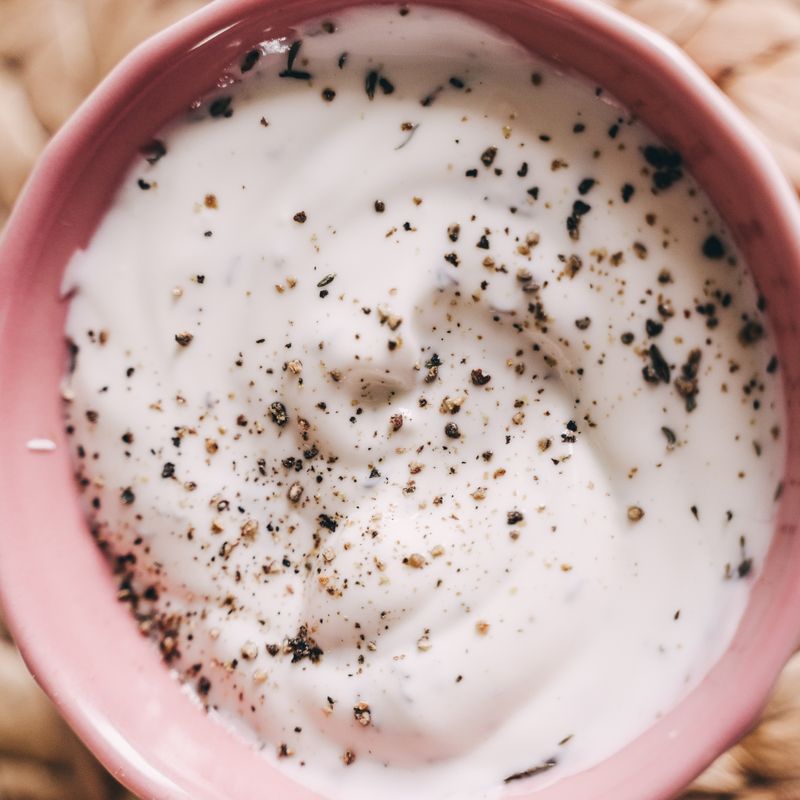
Greek Yogurt Lemon Dressing
A bright, creamy Mediterranean dressing made with tangy Greek yogurt, fresh lemon juice, and fragrant dill. Whisked together with garlic and olive oil, this dressing coats salads, roasted vegetables, and grain bowls with a light, herbaceous richness. It comes together in minutes and keeps for up to a week in the refrigerator.
- Prep
- 8 min
- Cook
- —
- Total
- 8 min
- Makes
- 1 cup (240 ml), about 12 tablespoons
Steps
Before you start
- Have all ingredients at room temperature for the smoothest blend
- Use full-fat or 2% Greek yogurt for the richest texture
- Zest the lemon before juicing it if you want to add extra citrus brightness
Combine yogurt and lemon
- Pour the Greek yogurt into a medium bowl.
- Add the freshly squeezed lemon juice and whisk together until smooth and well combined.
- The yogurt may seem thick at first, but the lemon juice will help loosen it slightly.
+ Show details− Hide details
Ready when: Mixture is smooth with no lumps
Tip: If the yogurt is too thick, whisk more vigorously—the mechanical action helps break it down.
Add garlic and olive oil
- Stir in the finely minced garlic and extra-virgin olive oil, whisking until the oil is fully incorporated and the dressing comes together as a cohesive, creamy mixture.
- The oil should emulsify slightly with the yogurt and lemon juice.
+ Show details− Hide details
Ready when: Oil is no longer visible on the surface; dressing is uniform and creamy
Tip: Whisk steadily to help the oil emulsify; if it breaks and looks separated, whisk a little longer.
Fold in herbs and season
- Gently fold in the chopped dill and the optional lemon zest.
- Taste the dressing and season with kosher salt and freshly ground black pepper to your preference.
- The dressing should taste bright, garlicky, and herbaceous—adjust lemon juice or salt as needed.
+ Show details− Hide details
Ready when: Herbs are evenly distributed; dressing tastes balanced and flavorful
Tip: Taste as you season—it's easier to add more salt than to remove it. The dressing will taste tangier as it rests.
Use or store
- Transfer the dressing to a glass jar or container with a lid.
- Use immediately on salads, grain bowls, or roasted vegetables, or refrigerate until ready to serve.
- The dressing will thicken slightly as it sits; thin with a teaspoon of water or more lemon juice if needed before serving.
+ Show details− Hide details
Ready when: Dressing is in a sealed container
Tip: If the dressing separates or looks watery after a day, simply whisk again before using.
Good to know
Tips
- For a thinner dressing, whisk in an extra tablespoon of lemon juice or 1–2 teaspoons of water to reach your desired consistency.
- If using dried dill instead of fresh, use half the amount (1½ teaspoons) as it's more concentrated; add it in Step 3.
- Toast the minced garlic briefly in a small skillet with the olive oil before mixing to mellow its bite and add warmth, then let cool slightly before stirring into the yogurt.
- This dressing pairs beautifully with cucumber, tomato, and arugula salads, roasted beets, or spread on grilled chicken and fish.
Make ahead
Yes. Make this dressing up to 5 days ahead and store it in an airtight container in the refrigerator. The flavors deepen as it sits, so making it a few hours ahead is ideal. Whisk or shake well before serving if separation occurs.
Storage & reheating
Room temperature: Not recommended; yogurt-based dressings should be chilled. Refrigerator: Up to 5 days in an airtight glass container. Freezer: Not recommended; the texture becomes grainy when thawed.
Substitutions
- fresh dill → fresh mint or parsley. Use the same amount as dill for a more herbaceous or grassy flavor. Mint adds brightness; parsley is more mild.
- plain Greek yogurt → sour cream or labneh. Sour cream will be more tangy and thinner; labneh (strained yogurt) will be thicker and richer. Adjust consistency with a little water or more lemon juice.
- fresh lemon juice → lime juice or white wine vinegar. Use the same amount for lime juice (results in a more tropical flavor) or start with 1 tablespoon of vinegar and taste, adding more as needed.
- extra-virgin olive oil → avocado oil or grapeseed oil. These neutral oils will tone down the Mediterranean flavor but still emulsify well. Use the same amount.
More dressings
See all →



Find more like this
- Meal
- Lunch
- Cuisine
- Mediterranean
- Method
- No-Cook