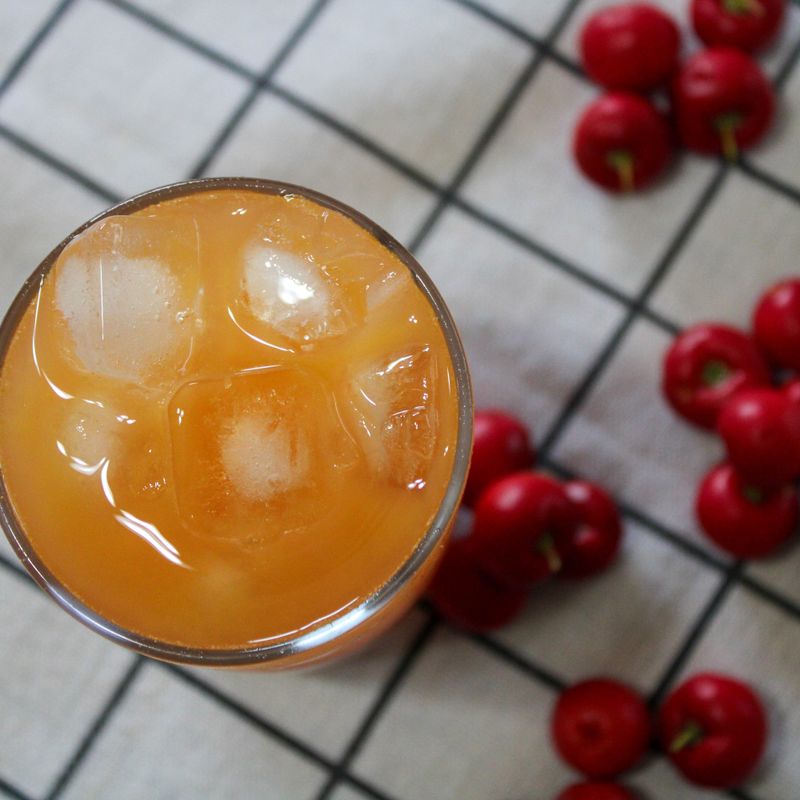
Greek Sour Cherry Syrup Juice
A traditional Greek cherry syrup (vissinada) made from tart sour cherries simmered with honey and lemon. The concentrate yields a deep, complex sweet-tart flavor that keeps for months and transforms into a refreshing drink when mixed with cold water or sparkling water. This recipe captures the essence of summer in a bottle—the kind of syrup Greeks have made for generations.
- Prep
- 15 min
- Cook
- 35 min
- Wait
- 30 min
- Total
- 1 hr 20 min
- Makes
- About 1½ cups (360 ml) syrup, serving 4 as a concentrate with water
Steps
Before you start
- Wash and pit the sour cherries fresh (or use frozen, thawed)
- Have jars or bottles ready for storage
- This recipe uses either fresh or frozen sour cherries; they work equally well
- Read through to understand the syrup will thicken as it cools
Combine cherries and honey
- Place the pitted sour cherries and honey into a 3-quart (2.8 L) heavy-bottomed pot.
- Stir gently with a wooden spoon to combine.
- Let the mixture sit at room temperature for 10 minutes so the honey begins to soften and the cherries release their juice.
+ Show details− Hide details
Ready when: Visible juice pools at the bottom, honey is partially dissolved
Tip: Don't skip this resting step—it helps the cherry juice extract naturally and prevents sticking
Add water and lemon juice
- Pour 1 cup (240 ml) water and 3 tablespoons (45 ml) fresh lemon juice into the pot.
- Stir well to combine all ingredients.
- Add the optional lemon zest if using.
+ Show details− Hide details
Ready when: All ingredients are evenly mixed
Tip: The lemon juice prevents fermentation and brightens the cherry flavor
Bring to a boil over medium-high heat
- Place the pot over medium-high heat and bring the mixture to a rolling boil, stirring occasionally.
- This should take 4–6 minutes.
- You'll notice foam rising to the surface.
+ Show details− Hide details
Ready when: Vigorous boiling throughout the pot
Tip: Stir occasionally to ensure even heating and prevent the bottom from scorching
Reduce heat and simmer
- Lower the heat to medium-low and maintain a gentle, steady simmer.
- Cook uncovered for 25–30 minutes, stirring every 5–7 minutes.
- The mixture will gradually thicken and deepen in color.
- Skim off any foam that rises to the surface with a spoon.
+ Show details− Hide details
Ready when: Syrup coats the back of a spoon and drips slowly; reaches 220°F (104°C) if using a thermometer
Tip: Use a candy thermometer if you have one for accuracy—220°F signals proper gel stage. If you don't have one, the spoon-coating test works just as well
Check for doneness
- Remove from heat.
- Dip a wooden spoon into the syrup and hold it horizontally over the pot.
- The syrup should run off slowly in a sheet rather than dripping in separate drops.
- If it's still too thin (dripping quickly), return to low heat for another 3–5 minutes.
+ Show details− Hide details
Ready when: Syrup coats the back of a spoon in a cohesive sheet
Tip: Syrup thickens more as it cools, so don't over-reduce—it will become too stiff
Strain the syrup
- Pour the hot syrup through a fine-mesh strainer lined with cheesecloth set over a bowl or measuring cup, pressing gently on the solids with the back of a spoon to extract all liquid.
- Discard the solids.
- You should have about 1½ cups (360 ml) of finished syrup.
+ Show details− Hide details
Ready when: Clear syrup drips through; solids are fully pressed
Tip: For a completely smooth syrup, pass through cheesecloth. For a rustic version with more body, skip straining and use as is
Cool and bottle
- Let the strained syrup cool to room temperature (about 30 minutes), then transfer to clean glass jars or bottles.
- Cap tightly and store in a cool, dark place or the refrigerator.
+ Show details− Hide details
Ready when: Syrup has no steam rising and feels cool to the touch
Tip: Allow complete cooling before capping to prevent condensation inside the jar, which can promote mold
Prepare to serve
- To make the drink, pour 2–4 tablespoons (30–60 ml) of syrup into a glass, add ½ to ¾ cup (120–180 ml) cold water or sparkling water, and stir well.
- Taste and adjust the ratio to your preference.
- Serve over ice.
+ Show details− Hide details
Ready when: Syrup is fully dissolved and drink is evenly colored
Tip: Use sparkling water for a more festive drink, or adjust the syrup-to-water ratio based on how tart you like it
Good to know
Tips
- This is a Greek classic (vissinada) that keeps for months—make a large batch in season and enjoy it year-round
- The ratio of syrup to water is flexible: start with 1 part syrup to 4 parts water, then adjust to your sweetness preference
- For a more herbaceous version, add a sprig of fresh mint or a small piece of cinnamon stick during simmering, then remove before bottling
- If your syrup crystallizes in storage (sugar naturally forms crystals), simply warm it gently over low heat or microwave for 10–15 seconds to dissolve
Make ahead
The syrup is best made ahead—it actually improves in flavor over 2–3 days as the cherry taste deepens. Make a large batch in June or July when sour cherries are abundant, then enjoy throughout the year.
Storage & reheating
Room temperature in a cool, dark cupboard: up to 3 months. Refrigerator in a sealed glass jar: up to 6 months. Freezer in a sealed container or ice cube trays: up to 1 year. Thaw in the refrigerator before using. No reheating needed—simply mix with cold water.
Substitutions
- sour cherries, fresh or frozen, pitted → Tart cherry juice concentrate (unsweetened), thawed if frozen. Use ½ cup (120 ml) concentrate in place of fresh cherries; reduce honey to ¾ cup (170 g) and skip the first resting step. Reduce simmering time to 10–15 minutes.
- raw or pasteurized honey → Granulated sugar. Use 1 cup (200 g) sugar instead of honey. Add it to the pot with the water in step 2 and stir to dissolve. The flavor will be slightly less complex but equally delicious.
- fresh lemon juice → White wine vinegar or apple cider vinegar. Use 2 tablespoons (30 ml) vinegar instead of lemon juice for a sharper acidity and deeper preservation properties. Taste and adjust before bottling.
- sour cherries, fresh or frozen, pitted → Frozen or canned sour cherries in light syrup, drained. Use the same weight. Drain thoroughly to avoid too much liquid. If using canned in heavy syrup, rinse well and reduce honey to ¾ cup (170 g).
More juices
See all →
Find more like this
- Meal
- Drink
- Cuisine
- Greek
- Method
- Stovetop
- Quick & Easy
- 5 Ingredients or LessEasy