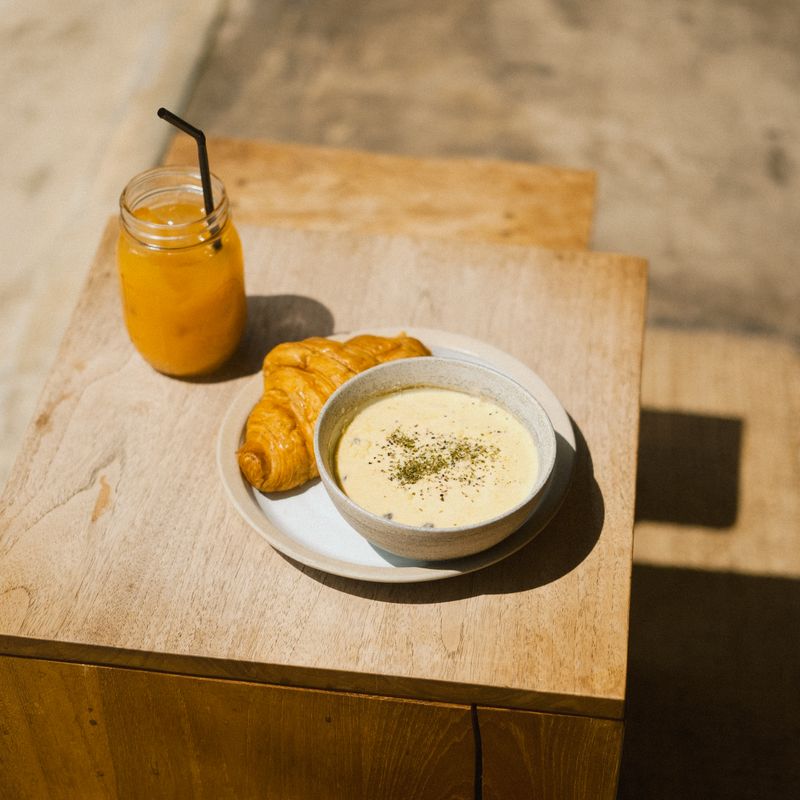
Greek Lemon Chicken Chowder with Orzo
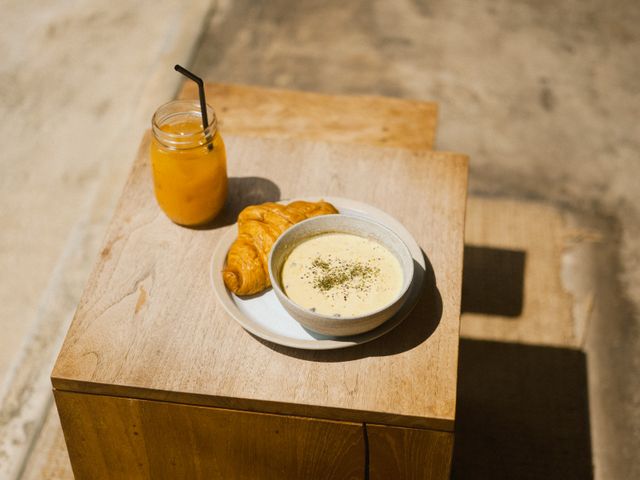
A silky, bright chowder inspired by avgolemono: browned chicken thighs, tender potatoes and orzo in a lemony broth enriched with egg yolks and a splash of half-and-half, finished with plenty of fresh dill.
- Prep
- 30 min
- Cook
- 45 min
- Wait
- 10 min
- Total
- 1 hr 25 min
- Makes
- About 9 cups (2.1 L), 6 generous bowls
Steps
Before you start
- Take the egg yolks out of the fridge 20–30 minutes ahead so they are not cold when they meet the hot broth.
- Zest the lemons before you juice them; it is nearly impossible the other way around.
- Read step 8 first: the egg yolk mixture must be tempered slowly, and the chowder must never boil after the yolks go in.
- Have all vegetables diced before you turn on the heat so nothing burns while you chop. This recipe is made entirely on the stovetop; no oven is needed.
Prep and season
- Zest the lemons into a small bowl, then juice them and strain out the seeds; set both aside for step 8.
- Dice the onion, celery, carrots and potatoes, and mince the garlic.
- Pat the chicken thighs very dry with paper towels and season all over with 1 teaspoon of the kosher salt and a generous grind of black pepper.
+ Show details− Hide details
Ready when: Chicken surface looks dry, not wet or shiny; all vegetables are cut to the sizes listed.
Tip: Keep the potato cubes in a bowl of cold water if prepping ahead, then drain well before using.
Sear the chicken
- Heat the olive oil in a 5½- to 6-quart heavy-bottomed pot over medium-high heat until it shimmers, about 2 minutes.
- Add the thighs in a single layer without crowding (work in two batches if needed).
- Cook undisturbed for 4 minutes, then flip and cook 4 minutes more.
- The chicken does not need to be cooked through.
- Move it to a plate.
+ Show details− Hide details
Ready when: Both sides are deep golden brown and the thighs release easily from the pot.
Tip: If the thighs stick, give them another 30 seconds; they release once the crust forms.
Soften the vegetables
- Reduce the heat to medium.
- Add the onion, celery and carrots to the same pot with the browned bits and cook, stirring often, for 7 to 8 minutes.
- Use your spoon to scrape up the browned fond as the vegetables release moisture.
+ Show details− Hide details
Ready when: Onion is translucent and soft, carrots are slightly tender, and the bottom of the pot is mostly clean.
Tip: If the bits on the bottom start to look dark brown or smell acrid, lower the heat and add a splash of broth.
Cook garlic and flour
- Add the garlic and cook, stirring constantly, for 30 seconds.
- Sprinkle in the flour and stir for 1 minute so no dry streaks remain and the raw flour smell fades.
+ Show details− Hide details
Ready when: Garlic smells fragrant (not browned) and the vegetables look evenly coated in a pasty layer.
Simmer chicken and potatoes
- Gradually pour in the broth while stirring to dissolve the flour with no lumps.
- Add the potatoes, oregano, bay leaf and the browned chicken with any juices from the plate.
- Bring to a boil over high heat, then reduce to medium-low so the surface bubbles gently.
- Partially cover and simmer 15 minutes, stirring once or twice.
+ Show details− Hide details
Ready when: A potato cube slides off a knife tip with no resistance and the thickest thigh reads at least 165°F (74°C); 175°F (80°C) is ideal for tender thighs.
Tip: Keep it at a gentle simmer; a hard boil toughens the chicken and breaks up the potatoes.
Shred the chicken
- Lift the thighs onto a cutting board or plate and shred into bite-size pieces with two forks, discarding any gristle.
- Leave the pot at a bare simmer while you do this.
+ Show details− Hide details
Ready when: Chicken pulls apart easily into pieces about ¾ inch (2 cm) in size.
Cook the orzo
- Raise the heat to medium so the broth bubbles gently.
- Stir in the orzo and cook 8 minutes, stirring every 2 minutes to prevent sticking on the bottom.
- Fish out and discard the bay leaf.
+ Show details− Hide details
Ready when: Orzo is tender with a slight bite, and the chowder coats the back of a spoon.
Tip: Orzo keeps absorbing liquid as it sits; if the pot looks very thick, thin it with ½ cup (120 ml) hot broth or water later.
Temper the yolks
- Turn the heat to low.
- In a large bowl, whisk the egg yolks with the lemon juice and zest until smooth.
- Whisking constantly, add 1 ladleful (about ¾ cup/180 ml) of hot broth from the pot in a very thin stream.
- Repeat with a second ladleful, then a third, until the bowl feels warm to the touch.
- Stir the half-and-half into the pot.
+ Show details− Hide details
Ready when: The yolk mixture is pale yellow, smooth and warm, with no scrambled bits.
Tip: Pour slowly and never stop whisking; adding hot liquid quickly will scramble the yolks.
Finish the chowder
- Slowly pour the tempered yolk mixture into the pot while stirring.
- Add the shredded chicken.
- Cook over low heat, stirring gently, 2 to 3 minutes until hot and slightly thickened.
- Do not let it boil.
- Stir in the chopped dill and season with the remaining ½ teaspoon salt and more pepper to taste.
+ Show details− Hide details
Ready when: Chowder is steaming, creamy and pale golden, reading about 160°F (71°C); no visible bubbling.
Tip: Boiling after the yolks are added can make the chowder curdle. If you see small flecks, remove from heat and whisk vigorously.
Rest and serve
- Take the pot off the heat and let it stand 5 minutes so the flavors settle and the chowder thickens slightly.
- Taste and add salt or a little more lemon juice if you want it brighter.
- Ladle into warm bowls and top with dill sprigs and black pepper.
+ Show details− Hide details
Ready when: Chowder is thick enough to coat a spoon but still pourable.
Good to know
Tips
- Strain the lemon juice and add it only through the yolk mixture; adding it straight to the pot can curdle the dairy.
- Dry chicken browns; wet chicken steams. Take the extra minute to pat the thighs dry.
- Taste before serving: lemon brightness varies, so add a teaspoon more juice if the chowder tastes flat, or more salt if it tastes dull.
- Serve with crusty bread or warm pita to catch the lemony broth.
Make ahead
Make the chowder through step 7 (before adding the half-and-half and the yolk mixture) up to 2 days ahead and refrigerate. Reheat gently to steaming, thin with a little broth if the orzo has thickened it, then complete steps 8–10 just before serving.
Storage & reheating
Room temperature: no more than 2 hours. Fridge: up to 3 days in an airtight container. Freezer: not recommended once finished with egg yolks and orzo, as the texture turns grainy. Reheat gently in a pot over low heat, stirring often, with a splash of broth or water to loosen. Do not boil.
Substitutions
- boneless, skinless chicken thighs → boneless, skinless chicken breasts. Reduce the simmer in step 5 to 12 minutes and cook to 165°F (74°C); breasts dry out faster and are less rich.
- dried orzo → long-grain white rice. Use ½ cup (100 g) rinsed rice and simmer 12–14 minutes until tender; it also works gluten-free if you swap the flour for 2 tbsp cornstarch.
- half-and-half → whole milk. Slightly lighter but still creamy; warm it first to avoid cooling the pot.
- fresh dill → fresh flat-leaf parsley with a little fresh mint. Use the same total volume; the flavor is less distinctly Greek but still fresh.