Greek Graviera and Roasted Orange Zest Dip
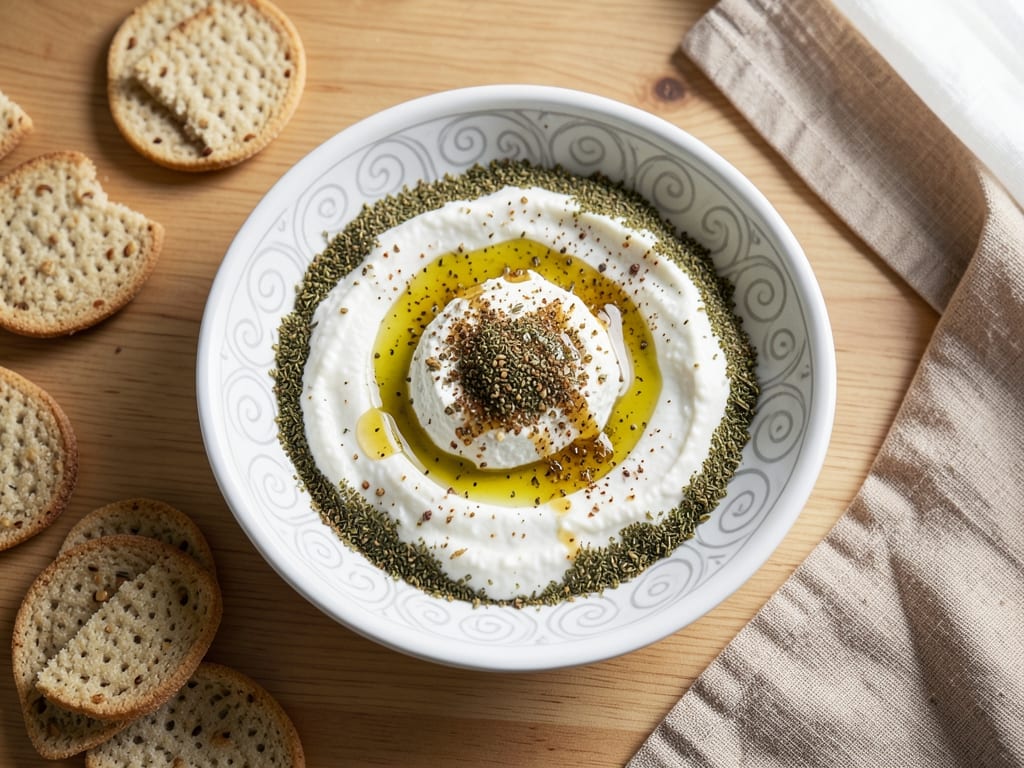
A bright, creamy dip built on finely grated Greek Graviera cheese combined with roasted orange zest, aromatic oregano, and quality olive oil. The gentle heat brings out the citrus oils while keeping the cheese smooth and spreadable. Serve warm or at room temperature with crudités, flatbread, or grilled bread for a striking appetizer that balances richness with fresh, sunny flavors.
- Prep
- 10 min
- Cook
- 8 min
- Wait
- 5 min
- Total
- 23 min
- Makes
- About 1¼ cups (300 ml)
Steps
Before you start
- Have your orange room temperature and scrubbed clean (organic if possible, to avoid wax)
- Measure and organize all other ingredients before you begin
- Have serving utensils and a warm serving bowl ready
Zest and prepare
- Using a microplane zester, remove the orange zest in thin, delicate strands directly over a small bowl.
- You want about 2 teaspoons of packed zest.
- Avoid the white pith—it will taste bitter.
- Set the zest aside.
- You won't need the orange flesh for this recipe.
+ Show details− Hide details
Tip: Work slowly and use light pressure when zesting to capture only the colored outer layer.
Toast orange zest gently
- Place a small heavy-bottomed skillet over medium-low heat.
- Add 1 tablespoon (15 ml) of the olive oil and the orange zest.
- Stir gently and heat for 1–2 minutes, just until the zest becomes fragrant and slightly darker—you'll smell the citrus oils wake up.
- Don't let it brown or sizzle aggressively; this is about warming and mellowing the zest, not cooking it crisp.
+ Show details− Hide details
Ready when: Zest becomes fragrant and darkens slightly, releasing citrus aroma
Tip: Keep the heat gentle—high heat will scorch the zest and turn it bitter.
Add aromatics
- Add the minced garlic and dried oregano to the warm oil and zest.
- Stir constantly for 30 seconds to 1 minute, until the garlic softens slightly and the oregano blooms.
- The pan should smell warm and herbal.
+ Show details− Hide details
Ready when: Garlic turns opaque and aromatics become fragrant
Tip: Don't let the garlic brown; we want it soft and mild, not sharp.
Combine with cheese
- Remove the skillet from heat.
- Immediately add the grated Graviera cheese and red pepper flakes.
- Stir with a wooden spoon or rubber spatula until the cheese begins to soften and the mixture becomes cohesive, about 1 minute.
- The residual heat will gently warm the cheese without melting it into a slick mass.
+ Show details− Hide details
Ready when: Cheese softens and begins to clump together; mixture becomes creamy
Tip: Stir constantly to prevent the cheese from overheating and turning oily.
Finish and rest
- Drizzle the remaining olive oil (about 3 tablespoons / 45 ml) over the mixture and stir gently until the dip comes together into a chunky-creamy consistency.
- Season carefully with sea salt and fresh cracked black pepper to taste.
- Transfer to a shallow serving bowl and let it rest at room temperature for 5 minutes so the flavors meld.
+ Show details− Hide details
Ready when: Dip is chunky-creamy and well seasoned
Tip: Taste before adding salt—Graviera is already salty, so season gently at first.
Serve
- Serve the dip while still warm or at room temperature, drizzled with a small additional glug of olive oil if desired, and accompanied by toasted bread, crudités, or grilled flatbread.
+ Show details− Hide details
Tip: The dip will firm up as it cools; if you prefer it softer, warm it gently before serving again.
Good to know
Tips
- Graviera is a hard, aged cheese that grates easily and melts slowly, which is why it works so well here. Fresh or soft cheeses will become oily or fall apart. If you can't find Graviera, look for Kefalotyri or other hard Greek cheeses.
- Roasting the orange zest briefly in warm oil transforms it from raw and pithy to fragrant and subtle—don't skip this step or use zest straight from the microplane.
- This dip is best served warm or just barely cool. If it sits in the refrigerator, the cheese will firm up quite a bit; a gentle reheat restores the creamy texture.
- Pair this dip with crunchy vehicles like toasted pita chips, vegetable crudités (especially radishes, cucumber, and bell peppers), or grilled bread rubbed with garlic.
Make ahead
Prepare the ingredients (zest the orange, grate the cheese, mince the garlic) up to 8 hours ahead and store in separate airtight containers in the refrigerator. Make the dip up to 2 hours before serving; warm gently in a skillet over low heat, stirring often, if needed.
Storage & reheating
Room temperature: best served within 2 hours. Refrigerator: store in an airtight container for up to 3 days; warm gently in a small skillet over low heat before serving. Freezer: not recommended, as the cheese texture will suffer upon thawing.
Substitutions
- Graviera cheese, aged → Pecorino Romano or Kefalotyri cheese. Both are firm, salty Greek or Mediterranean cheeses with a similar sharp character and grating texture. Use the same weight and grate finely.
- orange, untreated → lemon zest. Lemon will provide a brighter, more acidic citrus note instead of orange's sweetness. Use the same amount and follow the same roasting method.
- dried oregano, preferably Greek → dried thyme or dried marjoram. Thyme brings an earthy note, while marjoram is milder and more floral. Use the same quantity.
- extra virgin olive oil → good-quality Greek or Spanish olive oil. Choose a robust oil if you like a peppery finish, or a milder one for smoothness. The quality of the oil matters greatly here since it's a main flavor driver.