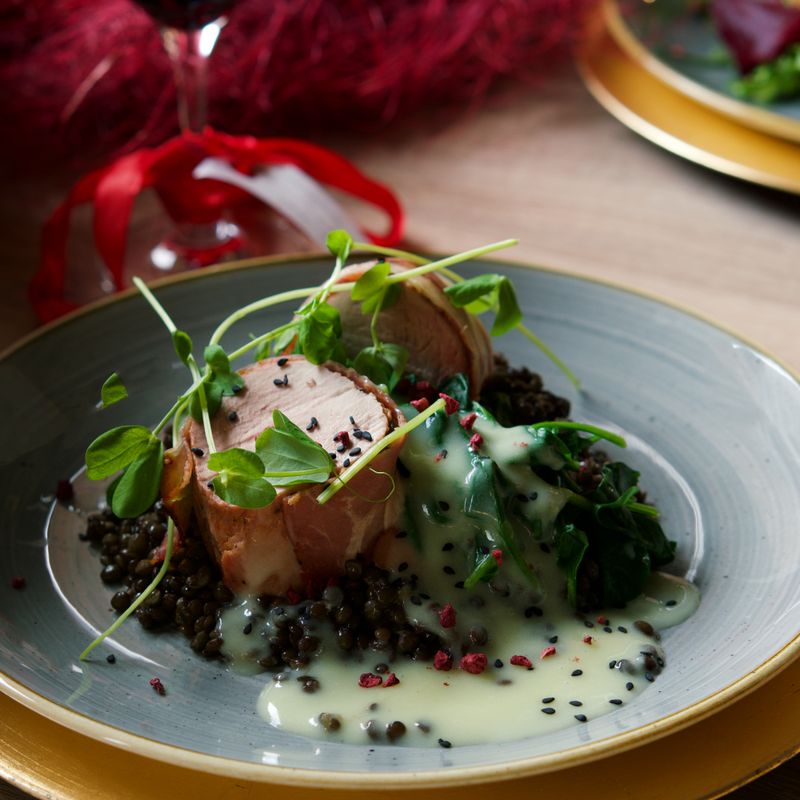
French Lentils with Bacon and Red Wine
Tender French green lentils braised with crispy bacon, aromatic vegetables, and red wine for a rich, earthy side dish. The wine adds acidity and depth while the bacon contributes savory fat and flavor. This rustic French preparation holds up beautifully as a warm side or at room temperature, making it perfect for entertaining.
- Prep
- 15 min
- Cook
- 55 min
- Wait
- 5 min
- Total
- 1 hr 15 min
- Makes
- 4 servings (1½ cups each)
Steps
Before you start
- Read through the recipe so you understand the timing
- Sort and rinse the lentils before you start cooking
- Prepare all vegetables—onion, carrot, celery—diced into small, uniform pieces, so they cook evenly
- Have your red wine and broth measured and ready at hand
Cook bacon until crispy
- Arrange the bacon slices in the bottom of a large heavy-bottomed pot or Dutch oven (5-quart).
- Cook over medium heat, stirring occasionally with a wooden spoon, for 10–12 minutes until the bacon is crispy and the fat is fully rendered.
- Transfer the bacon to a paper towel-lined plate and let it cool completely.
- Once cool, chop into ½-inch pieces.
- Leave approximately 2 tablespoons of bacon fat in the pot; discard any excess if there is more.
+ Show details− Hide details
Ready when: Bacon is deeply golden and crispy; fat is clear and fully rendered
Tip: Don't pour off all the bacon fat—it's the flavor foundation for this dish. Thick-cut bacon takes longer to crisp than standard bacon, so be patient.
Sauté aromatic vegetables
- Add the diced onion, carrot, and celery to the bacon fat in the pot.
- Cook over medium heat, stirring occasionally, until the vegetables are softened and beginning to turn golden, about 7–8 minutes.
- Add the minced garlic and cook for 1 more minute until very fragrant.
+ Show details− Hide details
Ready when: Vegetables are soft with light golden edges; garlic aroma is strong and sweet
Tip: Keep the heat at medium to prevent browning too quickly. You want soft, caramelized vegetables, not charred ones.
Add lentils and wine
- Add the rinsed lentils to the pot and stir constantly for about 1–2 minutes, coating them well with the bacon fat and vegetable mixture.
- This light toasting helps them stay intact during braising.
- Pour in the red wine, scraping the bottom of the pot with the wooden spoon to release any browned bits (fond).
- Let the wine simmer gently for 1–2 minutes until slightly reduced.
+ Show details− Hide details
Ready when: Wine has reduced by about one-quarter and lentils are coated with fat; fond is scraped from the bottom
Tip: The wine adds acidity to prevent the lentils from becoming mushy, and it also deepens the flavor dramatically. Don't skip this step.
Add broth and braise
- Pour the vegetable broth into the pot, add the bay leaves and thyme sprigs, and bring to a gentle simmer over medium heat.
- Once simmering, reduce the heat to medium-low, partially cover the pot with the lid (leave it slightly ajar), and simmer gently for 35–45 minutes, stirring occasionally to ensure even cooking.
- The lentils are done when they are tender but still hold their shape (not mushy or falling apart), and the liquid has reduced by about half.
- Taste a lentil to confirm tenderness.
+ Show details− Hide details
Ready when: Lentils are tender but intact; liquid has reduced to a light sauce coating the bottom of the pot
Tip: Stir every 10–15 minutes and check that the liquid isn't reducing too quickly. If the pot seems dry before the lentils are tender, add a splash of water or broth.
Finish and season
- Remove the pot from the heat.
- Discard the bay leaves and thyme sprigs.
- Stir in the chopped bacon, and season generously with sea salt and freshly ground black pepper to taste.
- Let the lentils rest in the pot, covered, for 5 minutes.
- This allows the flavors to meld.
- Stir once more, adjust seasoning if needed, and serve warm or at room temperature.
- Garnish with fresh parsley if desired.
+ Show details− Hide details
Ready when: Bacon is evenly distributed; flavors are balanced and cohesive
Tip: Taste the lentils before adding salt. The bacon fat and broth already contribute significant sodium, so you may need less salt than expected.
Good to know
Tips
- French green lentils (Lentilles de Puy) are the best choice for this recipe because they hold their shape beautifully during the long braise, whereas brown or red lentils tend to break down or become mushy.
- The wine is key—it prevents starch from gelatinizing too quickly and keeps the lentils tender without becoming mushy. The acidity also brightens the earthiness of the lentils.
- This dish is excellent served warm as a side to roasted chicken, lamb, or duck. It's equally delicious at room temperature as part of a composed salad or charcuterie board.
- If you prefer a brothier consistency, add a splash of extra broth or wine at the end of cooking. If you want it drier and more compact, simmer uncovered for the last 10 minutes.
Make ahead
This dish can be made up to 2 days ahead and reheated gently on the stovetop. The flavors actually improve as they sit overnight, making it ideal for entertaining.
Storage & reheating
Room temperature: up to 4 hours in a covered pot. Refrigerator: up to 4 days in an airtight container; reheat gently on the stovetop over medium-low heat with a splash of broth or water if the mixture seems dry. Freezer: up to 3 months in a freezer-safe container; thaw overnight in the refrigerator and reheat on the stovetop.
Substitutions
- thick-cut bacon → Pancetta or prosciutto. Use the same weight and chop the same way. Pancetta is less smoky; prosciutto is more delicate and may need less cooking time.
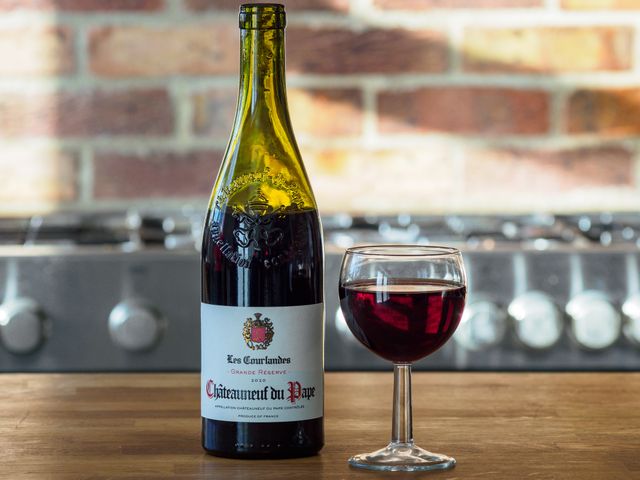
- dry red wine (Burgundy or Côtes du Rhône) → Dry white wine or additional vegetable broth. Use the same amount. White wine will produce a lighter, more delicate flavor; extra broth creates a richer, less acidic dish.
- French green lentils (Lentilles de Puy) → Brown or green lentils. Use the same amount, but reduce simmering time by 5–10 minutes. French lentils are preferred because they hold their shape better and have a firmer, less starchy texture.
- low-sodium vegetable broth → Chicken broth. Use the same amount. Chicken broth will make the dish slightly richer and more savory.