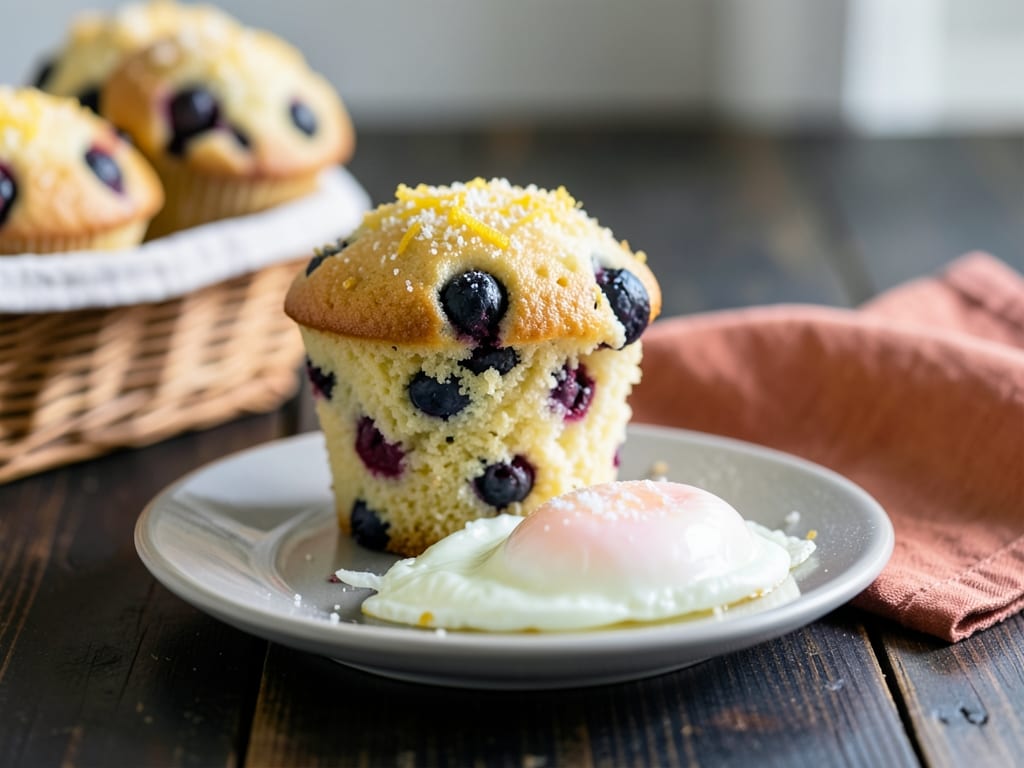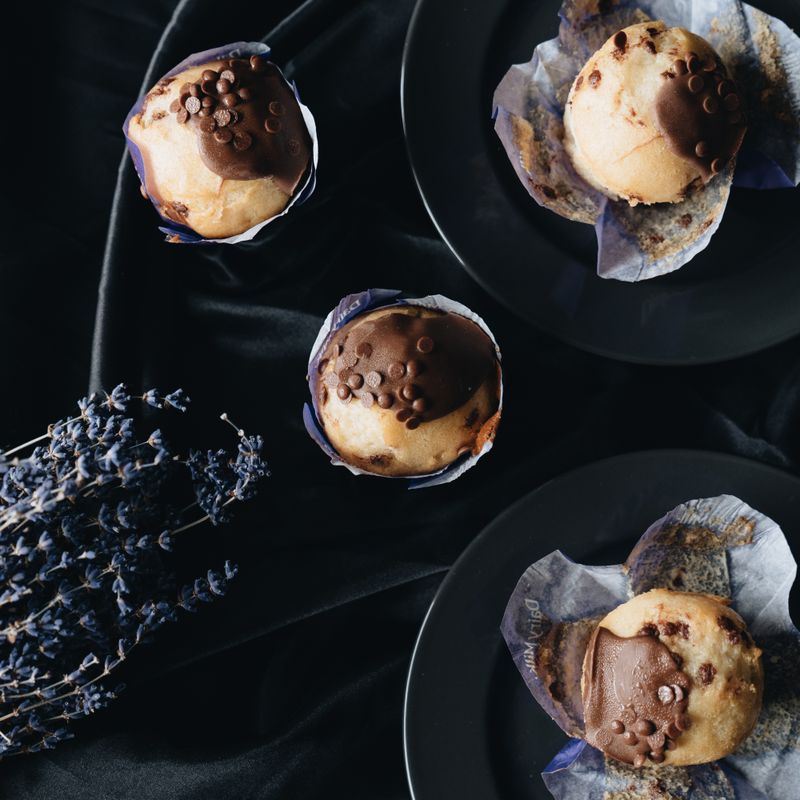
French Lavender Honey Muffins
Delicate muffins perfumed with dried culinary lavender and sweetened with honey, brightened by fresh lemon zest. The creaming method produces a tender crumb with subtle floral notes balanced by the tartness of lemon. A honey-lavender glaze finishes these elegant treats.
Steps
Before you start
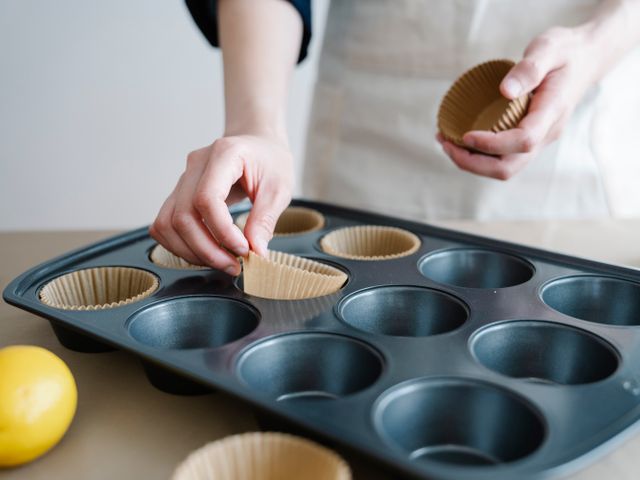
- Preheat oven to 375°F (190°C) and line a 12-cup muffin tin with paper liners
- Use culinary-grade dried lavender buds (not craft or potpourri lavender)
- Have all ingredients at room temperature for proper creaming
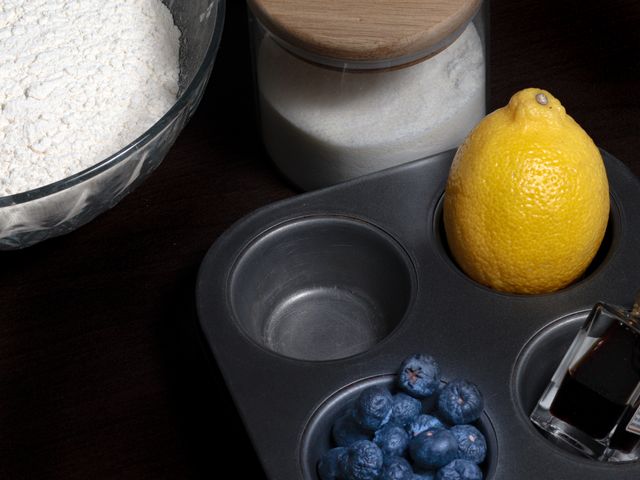
- Finely zest the lemon before cutting and juicing it
Cream butter and honey
- In a large bowl, combine the softened butter and honey.
- Using a wooden spoon or hand mixer, beat together for 2–3 minutes until the mixture is light, pale, and fluffy.
- The texture should be noticeably lighter than when you started.
+ Show details− Hide details
Ready when: Mixture is light, pale, and fluffy
Tip: This creaming step is critical—do not skip it. It aerates the batter and creates a tender muffin crumb.
Incorporate eggs and zest
- Add the eggs one at a time, beating well after each addition to fully combine.
- Stir in the lemon zest until evenly distributed throughout the batter.
- The mixture should look smooth and slightly thick.
+ Show details− Hide details
Ready when: Mixture is smooth and well combined
Tip: Adding eggs slowly and beating thoroughly prevents curdling and ensures a fine, even crumb.
Mix dry ingredients
- In a separate medium bowl, whisk together the flour, baking powder, salt, and crushed lavender buds.
- Whisk vigorously for about 30 seconds to distribute the lavender and leavening evenly.
- Break up any small clumps of lavender with your fingertips as you whisk.
+ Show details− Hide details
Ready when: Dry mixture is uniform with no visible clumps
Tip: Crushing the lavender slightly releases its oils and distributes the flavor more evenly. Whisk thoroughly to prevent dense pockets.
Combine wet and dry
- Pour the lemon juice into the butter-egg mixture.
- Add the dry flour mixture to the wet ingredients in two additions, alternating with the buttermilk: first half of the dry mixture, then all the buttermilk, then the remaining dry mixture.
- Fold gently with a rubber spatula after each addition until just combined.
- Do not overmix; the batter should be slightly lumpy.
+ Show details− Hide details
Ready when: All ingredients are incorporated with some lumps remaining
Tip: Overmixing develops gluten and creates tough, dense muffins. Stop as soon as no dry flour is visible.
Fill muffin cups
- Divide the batter evenly among the 12 lined muffin cups, filling each about three-quarters full.
- A standard ice cream scoop (about 3 tablespoons) works well for even portions.
- Tap the tin gently on the counter a few times to release any air bubbles.
+ Show details− Hide details
Ready when: All cups are filled evenly; no batter remains
Tip: Filling to three-quarters full leaves room for the muffins to rise without overflowing or becoming flat-topped.
Bake the muffinsOven 375°F / 190°C
- Place the muffin tin in the preheated 375°F (190°C) oven and bake for 18–20 minutes.
- The muffins are done when a toothpick inserted into the center of one emerges clean or with just a few moist crumbs, and the tops are light golden brown.
- The muffins should smell fragrant and slightly sweet, with a hint of lavender.
+ Show details− Hide details
Ready when: Toothpick inserted into center comes out clean or with a few moist crumbs; tops are light golden brown
Tip: Do not open the oven door during the first 15 minutes. Sudden temperature drops can cause the muffins to fall or not rise fully.
Cool in the tin
- Remove the muffin tin from the oven and set it on a wire rack.
- Let the muffins cool in the tin for 5 minutes, then carefully turn them out onto the rack to cool completely.
- This prevents them from steaming and becoming soggy.
+ Show details− Hide details
Ready when: Muffins release cleanly from the tin and are stable enough to handle
Tip: Cooling in the tin initially helps them set without drying out. The 5-minute wait is crucial; turning them out too early may cause them to break.
Make the glaze
- While the muffins cool, prepare the glaze.
- In a small saucepan over low heat, warm the honey with the finely crushed lavender buds for about 1 minute, stirring gently.
- Remove from heat and stir in the water until smooth.
- The glaze should be pourable but still coat the back of a spoon.
+ Show details− Hide details
Ready when: Glaze is smooth, pourable, and warm
Tip: Keep the heat low to avoid caramelizing the honey, which will darken the glaze and change its flavor.
Glaze the muffins
- Once the muffins have cooled to room temperature, drizzle the warm honey-lavender glaze over the top of each muffin.
- Use the back of a spoon to gently spread it in a thin, even layer.
- Let the glaze set for 2–3 minutes before serving.
+ Show details− Hide details
Ready when: Glaze has set and no longer runs off the muffins
Tip: Apply the glaze while it is still warm; it will flow more easily and create a glossy finish.
Good to know
Tips
- Culinary lavender is essential—craft lavender, potpourri, or ornamental varieties may be treated with pesticides or chemicals. Source from baking supply shops, specialty spice retailers, or online suppliers that specify 'food-grade' lavender.
- If your muffins sink in the center, the oven temperature may be too low, or they may have been overbaked initially. Check your oven with an oven thermometer and reduce baking time by 1–2 minutes next time.
- For deeper lavender flavor, steep the lavender buds in the buttermilk for 15–20 minutes before using, then strain. This infuses the buttermilk with lavender essence without adding texture.
- The creaming method depends on proper emulsification of butter and honey. If your kitchen is very cold, let the butter soften for an extra 15–30 minutes to ensure it is truly softened but not melted.
Make ahead
Bake the muffins up to 2 days ahead and store covered at room temperature. Glaze them no more than a few hours before serving so the glaze remains fresh and glossy.
Storage & reheating
Room temperature: in an airtight container for up to 2 days. Refrigerator: in an airtight container for up to 4 days. Freezer: wrap individually in plastic wrap and foil for up to 2 months. To reheat, wrap a frozen muffin in foil and warm in a 300°F (150°C) oven for about 8 minutes, or thaw at room temperature for 1 hour and warm in a 325°F (160°C) oven for 5 minutes. Do not reheat glazed muffins in the microwave, as the glaze can become too soft.
Substitutions
- raw or raw wildflower honey → agave nectar or maple syrup. Use the same volume. Agave is milder and more neutral; maple will add a distinct flavor. The muffins may be slightly denser with either substitute.
- buttermilk → 0.5 cup (120 ml) whole milk mixed with 1 tablespoon (15 ml) lemon juice or white vinegar. Let the mixture sit for 5 minutes to curdle slightly before using. This approximates the acidity and texture of true buttermilk.
- culinary dried lavender buds → finely grated or minced fresh lavender leaves (use 1.5 times the volume). Fresh lavender is more potent than dried. Reduce the amount slightly if using very aromatic varieties. This will give a fresher, slightly less herbal note.
- lemon, zest only → orange zest from 1 large orange (about 1 tablespoon grated). Orange is less tart and creates a slightly sweeter, warmer flavor profile. The floral-citrus balance will shift slightly in favor of the lavender.