Lemon Poppy Seed Muffins with Greek Yogurt
Tall, domed, tender muffins scented with fresh lemon zest and speckled with poppy seeds. Greek yogurt keeps the crumb moist, and a quick lemon glaze adds a bright finish.
- Prep
- 25 min
- Cook
- 20 min
- Wait
- 35 min
- Total
- 1 hr 20 min
- Makes
- 12 standard muffins
Steps
Before you start
- Take the eggs, yogurt and milk out of the fridge 30 minutes ahead so they mix smoothly and don't re-solidify the melted butter.
- You need about 3 large lemons: zest 2 of them first, then juice all 3 (you need 90 ml / 6 tbsp juice in total).
- Melt the butter and let it cool for 5 minutes so it is warm, not hot, when it meets the eggs.
- Position an oven rack in the center and preheat the oven to 400°F (200°C) before you start mixing.
Prep oven and tinOven 400°F / 205°C
- Position a rack in the center of the oven and heat to 400°F (200°C).
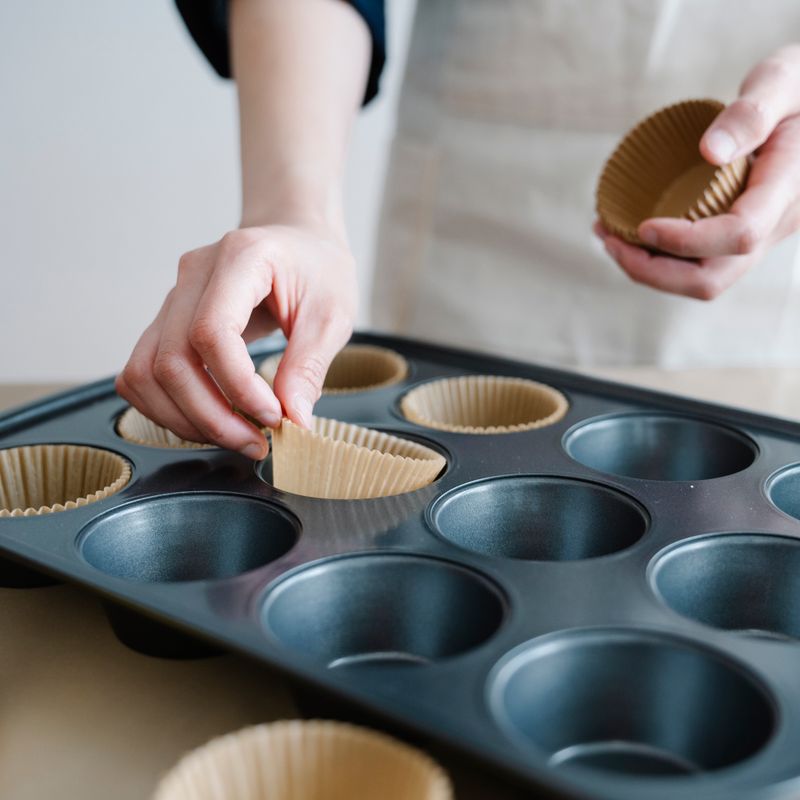
- Line all 12 cups of a standard muffin tin with paper liners.
+ Show details− Hide details
Ready when: Oven reads 400°F (200°C) on its display or an oven thermometer.
Tip: Do not grease the paper liners; the muffins release fine without it.
Rub zest into sugar
- In a large bowl, combine the granulated sugar and lemon zest.
- Rub them together between your fingertips for about 1 minute, pressing the zest into the sugar.
+ Show details− Hide details
Ready when: The sugar looks damp and pale yellow and smells strongly of lemon.
Tip: Rubbing releases the lemon oils, which gives much more flavor than stirring the zest in later.
Whisk dry ingredients
- In a medium bowl, whisk together the flour, poppy seeds, baking powder, baking soda and salt for 30 seconds until evenly combined.
+ Show details− Hide details
Ready when: No streaks of baking powder or clumps of flour remain, and the poppy seeds are evenly scattered.
Mix wet ingredients
- Add the eggs to the lemon sugar and whisk for about 1 minute until smooth and slightly thickened.
- Whisk in the yogurt, milk, lemon juice and vanilla until combined.
- Slowly pour in the cooled melted butter while whisking, until the mixture is glossy and uniform.
+ Show details− Hide details
Ready when: The mixture is smooth with no visible butter pools or egg streaks. It may look slightly curdled from the lemon juice, which is normal.
Tip: If the butter is still hot, it can scramble the eggs, so make sure it has cooled.
Fold batter together
- Pour the wet mixture over the dry ingredients.
- Using a rubber spatula, fold just until the flour disappears, about 12 to 15 strokes.
- The batter will be thick and lumpy.
+ Show details− Hide details
Ready when: No dry flour streaks remain; a few small lumps are fine.
Tip: Overmixing develops gluten and makes muffins tough and tunneled, so stop as soon as the flour is absorbed.
Fill the muffin cups
- Divide the batter among the 12 lined cups, using about ⅓ cup (80 ml) each, so the cups are filled nearly to the top.
- Level lightly with the back of a spoon if needed.
+ Show details− Hide details
Ready when: Each cup is filled to within about ⅛ inch (3 mm) of the rim.
Tip: An ice cream scoop makes this fast and keeps the muffins the same size so they bake evenly.
Bake with a hot startOven 400°F / 205°C
- Place the tin in the 400°F (200°C) oven and bake for 5 minutes.
- This high heat makes the batter spring up quickly and form tall domes.
+ Show details− Hide details
Ready when: The tops have risen above the rim and look puffed but are still pale.
Tip: Don't open the oven door during this time, or you will lose heat and doming.
Finish bakingOven 350°F / 175°C
- Without removing the tin, reduce the oven temperature to 350°F (175°C).
- Bake for 14 to 16 minutes more, until the muffins are golden at the edges and a toothpick inserted in the center of a muffin comes out clean or with a few dry crumbs.
+ Show details− Hide details
Ready when: Tops are light golden, spring back when gently pressed, and a toothpick comes out clean or with a few dry crumbs.
Tip: Rotate the tin 180 degrees at the 10-minute mark if your oven bakes unevenly.
Cool the muffins
- Let the muffins cool in the tin for 5 minutes, then lift them out and set them on a wire rack.
- Cool for 20 minutes until just barely warm to the touch.
+ Show details− Hide details
Ready when: Muffin tops feel just barely warm, not hot.
Tip: Leaving them in the tin longer than 5 minutes traps steam and makes the liners soggy.
Glaze and set
- In a small bowl, whisk the powdered sugar and 2 tablespoons lemon juice until smooth and thick but pourable, like white school glue.
- Spoon about 1 teaspoon over each muffin top, or dip the tops into the glaze, and let it set for 10 minutes.
+ Show details− Hide details
Ready when: The glaze is opaque and no longer wet or sticky when lightly touched.
Tip: If the glaze is too thin and runs off, whisk in 1 more tablespoon of powdered sugar; if too thick, add lemon juice ½ teaspoon at a time.
Good to know
Tips
- Use fresh lemons, not bottled juice, which tastes flat and can be harsh.
- Fold the batter gently and stop when the flour just disappears; lumpy batter makes tender muffins.
- For bakery-style tall tops, fill the cups nearly full and keep the 400°F (200°C) start for the first 5 minutes.
- Measure flour by spooning it into the cup and leveling, or better, weigh it; packed flour makes dry, dense muffins.
Make ahead
Mix the dry ingredients and rub the zest into the sugar the night before; keep them covered at room temperature. Bake the muffins up to 1 day ahead and glaze them shortly before serving.
Storage & reheating
Room temperature: store glazed muffins in an airtight container for up to 2 days, or 3 days unglazed. Fridge: up to 5 days in an airtight container; bring to room temperature before eating. Freezer: freeze unglazed muffins in a zip-top bag for up to 3 months. Thaw at room temperature for 1 hour, or reheat from frozen wrapped in foil at 325°F (160°C) for 12 to 15 minutes, then glaze.
Substitutions
- plain whole-milk Greek yogurt → Full-fat sour cream or plain whole-milk yogurt. Use the same amount. Low-fat yogurt works but gives a slightly less rich crumb.
- unsalted butter → Neutral oil such as canola or light olive oil. Use ½ cup (120 ml). The muffins will be a little more moist but with less buttery flavor.
- whole milk → Buttermilk or any unsweetened plant milk. Use the same amount; the texture will be nearly identical.
- poppy seeds → Omit, or use 1 tbsp chia seeds. Without poppy seeds these become plain lemon muffins; chia gives a similar look but a milder texture.