
French Cider and Roasted Celery Root Risotto
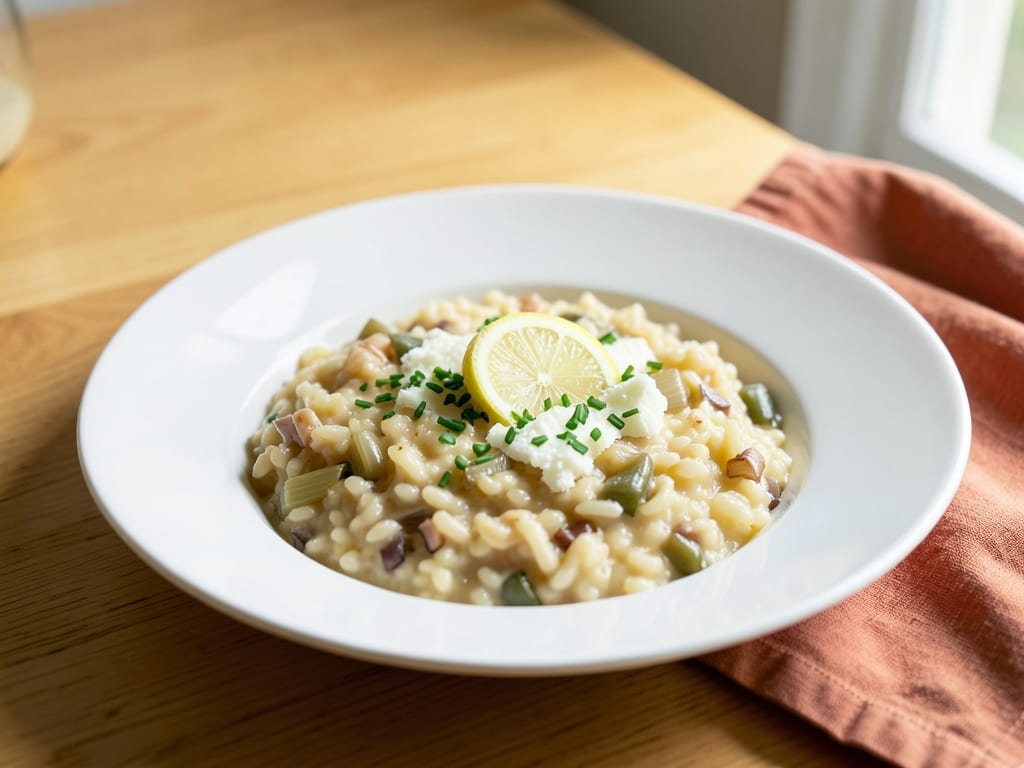
A creamy Arborio risotto enriched with dry apple cider, roasted celery root, and Gruyère cheese. The natural sweetness of cider balances earthy roasted celery root, creating a sophisticated side dish that's equally at home alongside roasted poultry or served on its own.
- Prep
- 20 min
- Cook
- 35 min
- Wait
- 30 min
- Total
- 1 hr 25 min
- Makes
- 4 servings (about 1¼ cups per serving)
Steps
Before you start
- Preheat the oven to 425°F (220°C) so it's ready when you prep the celery root
- Have your stock simmering in a separate pot; warm stock is essential for proper risotto cooking
- Cut celery root and have all other ingredients prepped before you begin stirring the rice
Roast the celery rootOven 425°F / 220°C
- Toss the celery root cubes with olive oil, salt, and pepper on a large rimmed baking sheet.
- Spread in a single layer.
- Roast at 425°F (220°C) for 20–25 minutes, stirring halfway through, until the cubes are tender, golden, and slightly caramelized on the edges.
- Set aside.
+ Show details− Hide details
Ready when: Celery root is golden brown and fork-tender
Tip: Spread the celery root in a single layer so it roasts evenly rather than steams. Don't skip stirring halfway to ensure all sides brown.
Heat stock and prepare shallots
- While the celery root roasts, bring the vegetable stock to a gentle simmer in a small saucepan and keep it warm on low heat throughout cooking.
- Mince the shallots finely.
- Have the wine, cider, thyme, and nutmeg ready.
+ Show details− Hide details
Tip: Warm stock helps maintain the cooking temperature of the rice and ensures even, creamy risotto. Cold stock will halt the cooking process.
Toast the rice
- In a large heavy-bottomed pot, melt butter over medium heat.
- Add the shallots and cook for 1–2 minutes, stirring often, until softened and fragrant but not brown.
- Add the Arborio rice and stir constantly for 1–2 minutes until the grains are coated in butter and the edges turn translucent.
- You should hear a slight crackling sound.
+ Show details− Hide details
Ready when: Rice grains are opaque at the edges, rice sounds slightly crackling when stirred
Tip: Toasting the rice creates a firmer texture and prevents a mushy risotto. Don't let the shallots or rice brown—that will make the risotto taste bitter.
Deglaze with wine and cider
- Pour in the white wine and stir constantly for 1–2 minutes until the liquid is mostly absorbed.
- Then add the apple cider and stir for another 1–2 minutes, again until most of the liquid is absorbed.
- This awakens the rice and infuses it with subtle apple flavor.
+ Show details− Hide details
Ready when: Liquid is mostly absorbed and rice appears dry again
Tip: Keep the heat steady and stir constantly—this prevents the rice from sticking to the bottom of the pot.
Add stock gradually, stirring constantly
- Begin adding the warm stock one ladle at a time (about ¾ cup or 180 ml per ladle).
- Stir constantly, allowing each addition to be mostly absorbed before adding the next.
- Add the thyme sprigs after the first ladle.
- After about 18–20 minutes of steady stirring and adding stock, the rice should be creamy and tender but still slightly firm to the bite (al dente).
- Taste a grain—it should have a small firm core.
+ Show details− Hide details
Ready when: Rice is creamy and al dente with a slight firmness in the center of each grain
Tip: Constant stirring is essential—it releases starch from the rice, creating the signature creamy texture of risotto. Don't walk away from the pot.
Finish with cheese and aromatics
- Remove the pot from the heat and fish out the thyme sprigs.
- Add the roasted celery root, grated Gruyère, and nutmeg.
- Stir vigorously for 30–60 seconds until the cheese melts and the risotto becomes even creamier and glossy.
- The risotto should flow slightly on the plate rather than hold a stiff shape.
+ Show details− Hide details
Ready when: Risotto is glossy, creamy, and flows slightly on a plate; cheese is fully melted
Tip: Vigorous stirring after removing from heat incorporates air and the cheese, creating the most luxurious texture. Never add cold cheese to hot risotto slowly—add it all at once and stir hard.
Season and serve
- Taste and adjust the seasoning with kosher salt and freshly ground black pepper.
- Divide among bowls and garnish with fresh chopped parsley if desired.
- Serve immediately while steaming hot.
+ Show details− Hide details
Tip: Risotto waits for no one—it begins to firm up and lose its creamy flow as it cools, so serve in prewarmed bowls immediately.
Good to know
Tips
- The secret to silky risotto is a combination of constant stirring, warm stock, and patience. Rush the process or let the pot sit, and you'll get a gluey mess or a lumpy one.
- Gruyère cheese adds nutty, complex flavor that complements the roasted celery root and apple cider far better than Parmigiano-Reggiano. However, if you only have Parm, use it—risotto will still be excellent.
- Roasting the celery root separately ensures it stays distinct and flavorful rather than dissolving into the creamy rice. It also adds color contrast and textural variety.
- If your risotto seems too thick at the end, add a splash of warm stock or water and stir. If it's too loose, you haven't added enough stock or let it cook long enough—stir in more warm stock gradually until it reaches the right consistency.
Storage & reheating
Store leftovers in an airtight container in the refrigerator for up to 3 days. Reheat gently on the stovetop over low heat with a splash of warm stock or water, stirring frequently, until creamy again. Do not freeze risotto—the texture becomes grainy and unpleasant upon thawing.
Substitutions
- dry apple cider → dry white wine or light vegetable stock. The risotto will lose the subtle apple sweetness and autumn character, but it will still be delicious and creamy. Use the same volume.
- Gruyère cheese, finely grated → Emmental, Comté, or aged Cheddar cheese, finely grated. Any firm, nutty cheese with good melting properties will work. Avoid soft cheeses like brie, which won't emulsify the same way.
- celery root (celeriac) → roasted parsnips, butternut squash, or mushrooms. Parsnips and squash offer sweetness and earthiness; mushrooms (sautéed rather than roasted) provide umami. Adjust roasting time based on what you choose.
- Arborio rice → Carnaroli rice or Vialone Nano rice. These short-grain Italian varieties have similar starch content and will create the same creamy risotto. Avoid long-grain rice, which will not yield the proper texture.
More risotto
See all →



Find more like this
- Meal
- Dinner
- Cuisine
- French
- Main ingredient
- Basmati Rice