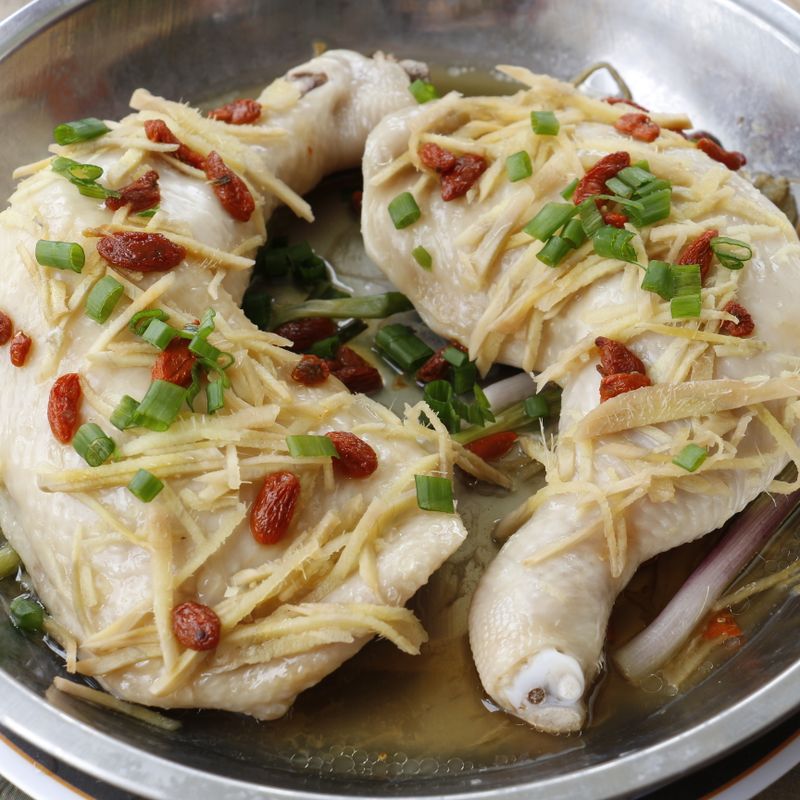
Filipino Chicken and Ginger Broth
A light, aromatic Filipino broth built on a base of simmered chicken, fresh ginger, and warming turmeric. The broth becomes deeply flavorful as bone-in chicken thighs release their richness into the liquid. Fish sauce adds savory depth without fishiness. Serve hot, simply or with rice for a soothing meal.
- Prep
- 15 min
- Cook
- 35 min
- Total
- 50 min
- Makes
- 4 servings, about 8 cups broth
Steps
Before you start
- Pat the chicken dry with paper towels so it browns properly
- Peel and slice the ginger while the onion cooks—it's quick work
- Have all your ingredients prepped and water measured before you begin
- Use a pot with a heavy bottom so aromatics sauté evenly without burning
Sauté the aromatics
- Heat the vegetable oil in a large pot over medium-high heat (2–3 minutes, until shimmering).
- Add the quartered onion and cook for 3–4 minutes, stirring occasionally, until the edges turn translucent.
- Add the smashed garlic cloves and cook for 1 minute, stirring, until fragrant.
- Then add the ginger matchsticks and cook for another 2 minutes, stirring frequently, until the ginger becomes slightly softened and perfumes the pot.
+ Show details− Hide details
Ready when: Ginger is soft and aromatic; onion edges are translucent
Tip: Don't let the garlic brown—it will turn bitter. Keep stirring and watch carefully.
Bloom the turmeric
- Sprinkle the ground turmeric over the aromatics and stir constantly for about 30 seconds.
- The turmeric will coat the oil and ginger, releasing its warm, earthy oils.
- You'll smell a rich spice aroma—this is the turmeric blooming.
+ Show details− Hide details
Ready when: Turmeric is fully incorporated and aromatic
Tip: Blooming spices in oil amplifies their flavor—don't skip this step.
Brown the chicken
- Add the chicken pieces (patted dry) to the pot, stirring to coat them with the oil and turmeric mixture.
- Cook for 4–5 minutes, stirring occasionally, until the chicken is lightly browned on all sides.
- You don't need a deep sear—just enough color to build flavor.
+ Show details− Hide details
Ready when: Chicken is light golden brown on all sides
Tip: Dry chicken browns better than wet; that's why patting it is crucial.
Add water and bring to a boil
- Pour in the water and stir, scraping up any browned bits from the bottom of the pot.
- Increase the heat to high (if not already there) and bring the broth to a boil, about 5 minutes.
- As it reaches a boil, foam and impurities will rise to the surface.
+ Show details− Hide details
Ready when: Water comes to a rolling boil and foam rises
Tip: Skim off the gray foam with a spoon—it keeps the broth clear and clean-tasting.
Skim and reduce heat
- Once the broth is boiling, use a spoon or ladle to skim away the gray foam and any impurities floating on top (about 1–2 minutes of skimming).
- Then reduce the heat to medium-low and maintain a gentle simmer—small, steady bubbles breaking the surface, not a rolling boil.
+ Show details− Hide details
Ready when: Foam is removed and broth simmers gently
Tip: Skimming removes impurities and keeps the broth clear rather than cloudy.
Simmer the chickenOven 165°F / 75°C
- Let the broth simmer gently, uncovered, for 20–25 minutes.
- The chicken will become tender as it cooks and releases its collagen into the broth, thickening and enriching it slightly.
- You can stir occasionally if you like, but it's not necessary.
- The broth is ready when the chicken is very tender—the meat pulls away from the bone easily—and a meat thermometer inserted into the thickest part reads 165°F (74°C).
+ Show details− Hide details
Ready when: Chicken is tender and pulls from the bone easily; internal temperature is 165°F (74°C)
Tip: A gentle simmer extracts flavor without boiling away the delicate aromatics. Resist the urge to crank the heat.
Season with fish sauce
- Stir in the fish sauce thoroughly, distributing it evenly through the broth.
- Fish sauce adds a savory, umami depth that is characteristic of Filipino broths.
- Taste a small spoonful of broth and adjust: if it tastes a bit flat, add another ½ tablespoon fish sauce.
- If it tastes too strong, add a splash of water.
- Remember, fish sauce should not taste fishy—it should enhance and deepen the overall flavor.
+ Show details− Hide details
Ready when: Fish sauce is fully incorporated and broth is well-seasoned
Tip: Start with less fish sauce than you think you need. You can always add more, but you can't take it out.
Add greens (optional)
- If you're using fresh spinach or bok choy, add it now and stir for 1–2 minutes until fully wilted.
- If adding jalapeño slices for heat, add them now and let them infuse for 1 minute.
- These additions are optional but add freshness and complexity.
+ Show details− Hide details
Ready when: Greens are wilted and soft; jalapeño slices are infused
Tip: Add greens at the very end so they stay bright green and don't become mushy.
Taste and finish
- Taste the broth again and make any final adjustments to salt or fish sauce.
- The broth should taste balanced—warm from the ginger and turmeric, savory from the fish sauce, and rich from the chicken.
- Ladle into warm bowls and serve hot, with steamed rice on the side if desired.
+ Show details− Hide details
Ready when: Broth is balanced and well-seasoned
Tip: Taste before serving—a final seasoning check prevents bland broth.
Good to know
Tips
- Use a pot with a heavy, thick bottom so the aromatics sauté evenly without hot spots that burn the ginger or garlic.
- Fresh ginger and fish sauce are essential to this broth's authentic flavor—they're not optional. Good-quality fish sauce makes a real difference; avoid very cheap brands.
- The broth deepens in flavor as it sits, especially overnight. Make it a day ahead if you have time; reheat gently on the stovetop.
- Don't skip skimming the foam. It takes 2 minutes and makes a significant difference in the clarity and cleanliness of the final broth.
Make ahead
Prepare the broth up to 2 days ahead and store in the refrigerator. Reheat gently on the stovetop over medium heat, stirring occasionally. Do not boil vigorously, as this can make the broth cloudy. If you've added greens or jalapeño, add them fresh when reheating so they don't become mushy.
Storage & reheating
Room temperature: up to 2 hours in a covered pot. Refrigerator: up to 3 days in an airtight container. Freezer: up to 2 months in a freezer-safe container (leave ½ inch headspace for expansion). To reheat, thaw in the refrigerator overnight if frozen, then warm gently on the stovetop over medium heat until steaming, about 8–10 minutes.
Substitutions
- bone-in, skin-on chicken thighs → bone-in chicken breasts or a mixture of thighs and breasts. Breasts are leaner and cook in about 15–18 minutes; thighs are richer and stay tender longer. Both work well.
- fish sauce (patis) → low-sodium soy sauce in equal volume, or a mix of soy and a splash of rice vinegar. The broth will have a different flavor profile—less umami but still savory and delicious. Adjust to taste.
- fresh ginger root → 1 tablespoon (5 g) ground dried ginger. Dried ginger is more concentrated; use sparingly. Add it during the turmeric step. The flavor will be spicier and less fresh.
- ground turmeric → 1 teaspoon (3 g) ground cumin or a pinch of saffron. Cumin will give a warmer, earthier broth; saffron adds color and subtle floral notes. Neither is traditional, but both are delicious.
More chicken soups
See all →
Find more like this
- Meal
- Lunch
- Main ingredient
- Chicken Thighs
- Method
- Stovetop