Dukkah: Egyptian Nut & Spice Blend
Dukkah is a warm, aromatic Egyptian condiment made from toasted hazelnuts, sesame seeds, and spices. Each component is toasted separately to develop its own flavor, then ground into a coarse blend that's neither powder nor chunky—ideal for dipping warm bread into olive oil or sprinkling over yogurt, eggs, and roasted vegetables. This recipe is quick to make and stores for months.
- Prep
- 5 min
- Cook
- 18 min
- Wait
- 10 min
- Total
- 33 min
- Makes
- 1 cup (about 220 g), roughly 16 servings as a 1-tablespoon condiment
Steps
Before you start
- Measure all ingredients and have them ready before you start toasting, since each component moves quickly on the heat.
- Use a dry skillet—no oil is needed.
- Have a small bowl nearby to transfer each toasted batch as it finishes.
Toast the hazelnuts
- Place the hazelnuts in a 10-inch (25 cm) dry skillet over medium heat.
- Stir and shake the pan frequently so they toast evenly without burning, about 8–10 minutes.
- You'll know they're done when they smell warm and nutty, and the skin darkens slightly.
- Pour them into a small bowl and let cool for 2–3 minutes.
- Once cool enough to handle, gently rub the nuts between your hands or in the palm of your hand to loosen and remove as much skin as you like (this is optional; a little skin left on is fine and traditional).
+ Show details− Hide details
Ready when: Fragrant, skin darkens slightly, and nuts feel warm and taste nutty when broken
Tip: Watch closely in the last minute—hazelnuts can go from golden to burnt quickly. If any are very dark, pick them out.
Toast the sesame seeds
- Wipe out the skillet if any hazelnut skin bits remain.
- Add the sesame seeds and toast over medium heat, stirring constantly with a wooden spoon, for 3–4 minutes.
- They'll turn from pale tan to light golden and smell nutty.
- Pour into the bowl with the hazelnuts.
+ Show details− Hide details
Ready when: Light golden color and nutty aroma; seeds sound slightly papery when stirred
Tip: Sesame seeds toast very quickly, so stay at the stove and stir constantly to prevent burning.
Toast the coriander seeds
- Add the coriander seeds to the same skillet over medium heat.
- Stir and toast for 2–3 minutes until fragrant and slightly darker.
- Pour into the bowl with the other toasted ingredients.
+ Show details− Hide details
Ready when: Noticeably fragrant with a warm, slightly floral aroma; seeds are darker than raw
Tip: Listen for a subtle popping sound—this indicates the oils are releasing.
Toast the cumin seeds
- Add the cumin seeds to the skillet over medium heat and stir constantly for 1–2 minutes.
- They'll smell warm and slightly earthy.
- Add them to the bowl with the other toasted items.
+ Show details− Hide details
Ready when: Fragrant with a warm, earthy aroma; color deepens slightly
Tip: Don't toast cumin as long as coriander—it can become bitter if overdone.
Cool the toasted components
- Spread all the toasted nuts and seeds on a clean plate or small tray and let them cool to room temperature, about 5 minutes.
- This allows the heat to dissipate evenly and prevents the hot ingredients from cooking further when you grind them.
+ Show details− Hide details
Tip: A cool blend grinds more evenly and preserves delicate flavors.
Grind the dukkah
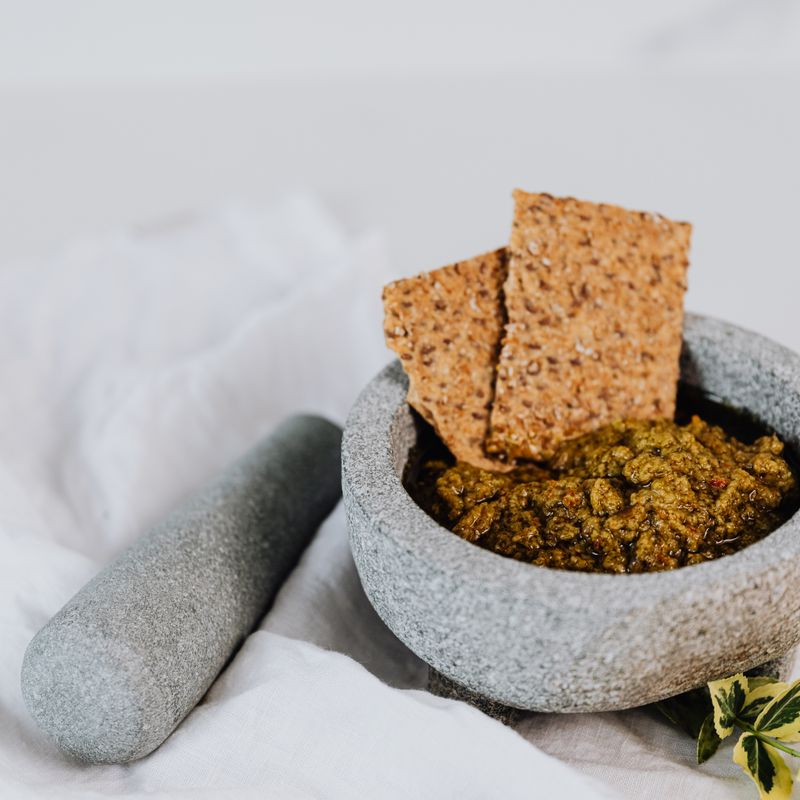
- Transfer the cooled nuts and seeds to a spice grinder, mortar and pestle, or food processor.
- Add the black peppercorns and salt.
- Pulse or grind until the mixture is coarse and crumbly—you want some texture remaining, not a fine powder.
- This usually takes 10–15 pulses in a food processor or 1–2 minutes of grinding in a spice grinder.
- The ideal consistency is somewhere between granola and fine sand, with little flecks of nuts and seeds still visible.
+ Show details− Hide details
Ready when: Coarse, crumbly texture with visible nut and seed pieces; not a fine powder
Tip: If you over-grind, you'll end up with a paste and lose the appealing texture. Stop early rather than late, and pulse gently.
Finish and store
- If using dried mint, crush it gently between your fingers and stir into the dukkah.
- Transfer the blend to a small airtight container or jar.
- Label with the date if you like.
+ Show details− Hide details
Tip: Add dried mint only if you have it on hand; it's traditional but optional and enhances the blend's complexity.
Good to know
Tips
- Dukkah is meant to be a dipping condiment: serve in a small shallow bowl alongside warm bread and good olive oil. Tear off a piece of bread, dip it in the olive oil, then dip the oily bread into the dukkah. The combination of flavors and textures is the whole point.
- Toast each component separately because they have different optimal toasting times. If you toss them all in together, the sesame seeds will burn before the hazelnuts are golden.
- The freshness of the spices matters more for dukkah than for most recipes. Buy coriander and cumin seeds whole from a source with good turnover (not the back of a dusty cabinet), and toast them just before making the blend.
- Dukkah is wonderful sprinkled over creamy yogurt, soft cheese, hummus, roasted cauliflower, salads, or scrambled eggs. It's also delicious on avocado toast.
Make ahead
Yes, dukkah is made ahead and stores for months. It actually improves slightly after a day or two as flavors meld.
Storage & reheating
Room temperature in an airtight jar or container: up to 3 months (best used within 4–6 weeks for maximum freshness and aroma). Refrigerator: up to 6 months. Freezer: not necessary; room-temperature storage works very well. No reheating needed—serve directly from the jar. If stored properly, the oils in the hazelnuts and sesame seeds will keep the blend fresh longer than whole spices alone.
Substitutions
- hazelnuts, raw unsalted, whole → unsalted almonds, or unsalted roasted peanuts. Almonds are closer in texture and flavor to hazelnuts. Peanuts are more assertive but delicious; use the same weight (135 g). Avoid salted nuts, as the salt content will make the final blend too salty.
- sesame seeds, unhulled → unsalted sunflower seeds. Use the same weight (70 g). Sunflower seeds are slightly larger, so grind a bit longer to reach the same texture.
- coriander seeds, whole → ground coriander. Use 1 tablespoon (7 g) ground coriander instead. Add it at the end rather than toasting, as pre-ground spice will scorch if heated. This is less ideal flavor-wise, but works in a pinch.
- black peppercorns, whole → Aleppo pepper flakes or Marash pepper. Use the same amount (1 teaspoon, 6 g) for a more complex, slightly fruity heat instead of sharp black pepper heat. Omit salt increase as these peppers add their own depth.