Crust-Only Custard Tart
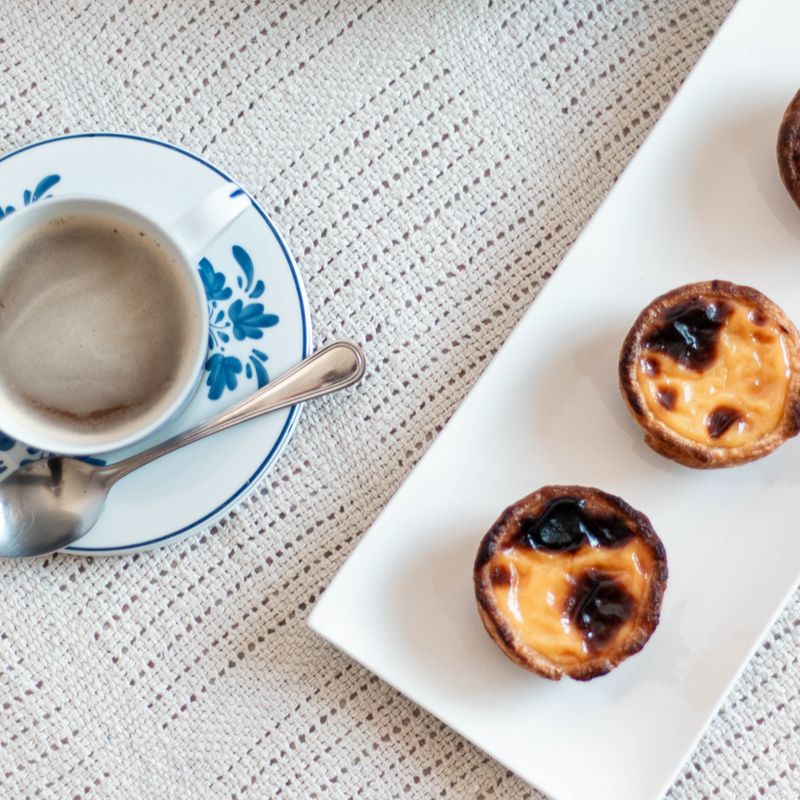
A traditional British custard tart with a buttery, crisp pastry shell and creamy, gently spiced custard filling. The filling is custard-only—no other garnish or topping—allowing the silky, delicate flavor to shine. Baked until the pastry is golden and the custard is just set with a slight jiggle at the center, it's best served warm or at room temperature with a dusting of nutmeg.
Steps
Before you start
- Preheat the oven to 400°F (200°C) 15 minutes before baking
- Remove eggs and milk from the refrigerator 20 minutes ahead so they reach room temperature
- Have a 9-inch (23 cm) tart pan with a removable bottom ready
Make the pastry dough
- In a large mixing bowl, whisk together the all-purpose flour (160 g), fine sea salt (1.5 g), and granulated sugar (12 g).
- Add the cold butter cubes and, using your fingertips, rub the mixture together until it resembles coarse breadcrumbs with some pea-sized pieces of butter still visible—this creates a flaky pastry.
- Make a small well in the center, add the room-temperature egg yolk and 2.5 tbsp (37 ml) ice water, and gently mix with a fork until the dough just comes together.
- Form it into a ball, wrap in plastic wrap, and refrigerate for at least 30 minutes.
+ Show details− Hide details
Ready when: Dough is cohesive and holds together when squeezed gently
Tip: Keep all ingredients cold; warm dough will be tough. If the mixture seems dry, add ice water 1 tsp at a time.
Roll and line the tart pan
- On a lightly floured surface, roll the dough into a circle about ⅛ inch (3 mm) thick and 11 inches (28 cm) in diameter.
- Transfer it to a 9-inch (23 cm) tart pan with a removable bottom, gently pressing it into the corners and up the sides.
- Trim any overhang.
- Prick the bottom all over with a fork to prevent puffing.
- Place on a baking sheet and refrigerate while you prepare the custard.
+ Show details− Hide details
Ready when: Dough is evenly pressed into the pan with no air pockets
Tip: Let the dough soften slightly (2–3 minutes) if it's too cold to roll without cracking; a warm rolling pin helps too.
Prepare the custard filling
- In a mixing bowl, whisk together the 4 room-temperature large eggs, 1.5 cups (360 ml) whole milk, ¼ cup (50 g) granulated sugar, 1 tsp (5 ml) vanilla extract, and ¼ tsp (0.5 g) freshly grated nutmeg until smooth and fully combined.
- Do not overbeat; you want minimal bubbles in the custard for a smooth finish.
+ Show details− Hide details
Ready when: Custard is uniform in color and consistency with a few small bubbles on the surface
Tip: Whisk gently and briefly to avoid incorporating too much air, which creates bubbles that bake into the surface.
Fill and bake the tartOven 400°F / 205°C
- Preheat the oven to 400°F (200°C).
- Pour the custard filling into the prepared tart shell on the baking sheet, filling it to about ¼ inch (6 mm) below the rim.
- Carefully transfer the baking sheet to the preheated oven and bake for 30–35 minutes, until the pastry edges are deep golden brown and the custard is just set but still has a slight jiggle in the very center when you gently shake the pan.
- The custard continues to set as it cools.
+ Show details− Hide details
Ready when: Pastry is deep golden; custard is set around the edges but still trembles slightly in the center when shaken
Tip: Overbaking causes the custard to become rubbery. Watch carefully in the final few minutes; the center should be just barely set.
Cool and finish
- Remove the tart from the oven and place it on a wire rack or cool surface for 10 minutes.
- While still warm, dust the top lightly with a pinch of freshly grated nutmeg for color and aroma.
- Allow the tart to cool to room temperature (about 45–60 minutes) before removing it from the pan.
- This makes it easier to slice and allows the custard to firm up fully.
+ Show details− Hide details
Ready when: Tart is fully cool to the touch and custard is completely set but still silky
Tip: Serve warm or at room temperature; chilled custard tart will be firmer but still delicious.
Good to know
Tips
- Avoid opening the oven door during the first 25 minutes of baking; the sudden temperature drop can cause the custard to crack or cook unevenly.
- For a silkier custard, strain the whisked mixture through a fine sieve before pouring it into the shell to remove any air bubbles.
- If the pastry edges start browning too quickly, loosely tent the tart with foil for the final 10–15 minutes of baking.
- Use a metal tart pan with a removable bottom for even heat distribution and easy removal; ceramic or glass pans may require slightly longer baking.
Make ahead
The pastry dough can be made up to 2 days ahead, wrapped tightly, and refrigerated. The lined tart shell (unfilled) can be prepared several hours ahead and kept chilled. The finished tart is best served the same day it is baked but keeps well for 2 days.
Storage & reheating
Room temperature: up to 1 day, loosely covered. Refrigerator: up to 2 days, covered. Freezer: up to 1 month, wrapped well; thaw in the refrigerator overnight before serving. To reheat: warm gently in a 300°F (150°C) oven for 10–15 minutes until just warm through.
Substitutions
- whole milk → Heavy cream or a 1:1 blend of milk and cream. Using cream or a cream mixture enriches the custard and gives it a richer, silkier texture; increase the custard filling recipe slightly if using all heavy cream to avoid overfilling.
- vanilla extract → Almond extract (use ½ tsp) or omit for pure custard flavor. Almond extract adds a subtle floral note; omitting vanilla keeps the custard more traditional and lets the nutmeg shine.
- freshly grated nutmeg → Ground mace or a pinch of ground cloves. Mace provides a warm, slightly more delicate spice; cloves are more assertive and should be used sparingly.
- all-purpose flour → All-purpose flour blended with ¼ cup whole wheat flour. Whole wheat adds nuttiness and a slightly more complex flavor, though the pastry may be slightly denser.