Creamy Garlic Parmesan Pasta Sauce
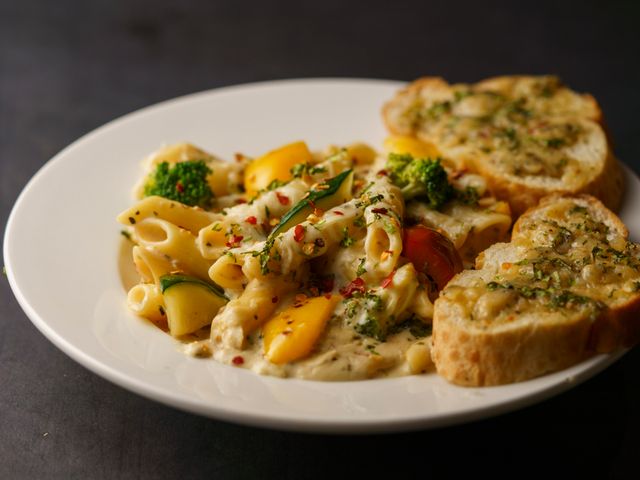
A silky, rich sauce built on butter-softened garlic, heavy cream and freshly grated Parmesan. It comes together in one skillet in about 40 minutes, including boiling the pasta, and coats a pound of pasta without breaking or turning grainy.
- Prep
- 10 min
- Cook
- 17 min
- Wait
- 15 min
- Total
- 42 min
- Makes
- About 2 ¾ cups sauce (enough for 1 lb / 450 g pasta, 4 servings)
Steps
Before you start
- Grate the Parmesan yourself from a block on the finest holes of a box grater or a Microplane; pre-shredded cheese contains anti-caking starch and makes the sauce grainy.
- Bring the pasta water to a boil first, so the pasta is ready when the sauce is.
- Have all ingredients measured before you turn on the heat; the garlic goes from fragrant to bitter in seconds.
- Keep the heat at medium-low or lower once the cream is added. Boiling cream with cheese can cause the sauce to split.
Boil pasta water
- Fill a 6-quart (5.7 L) pot with 4 quarts (3.8 L) of water, add the 2 tablespoons kosher salt, cover and bring to a rolling boil over high heat.
+ Show details− Hide details
Ready when: Large, rolling bubbles break the surface constantly
Tip: Do the grating and mincing in the next step while the water heats.
Grate and prep
- Finely grate the Parmesan into a bowl and mince the garlic.
- Measure the cream, salt, pepper and nutmeg (if using) so they are ready by the stove.
+ Show details− Hide details
Ready when: Cheese looks light and fluffy, like snow
Tip: Fine grating is key: fine shreds melt in seconds and don't clump.
Cook the pasta
- Add the pasta to the boiling water and cook according to package directions, stirring in the first minute to prevent sticking, until al dente (tender with a slight bite at the center).
- Before draining, scoop out 1 cup (240 ml) of pasta water.
- Drain the pasta and leave it in the colander while you make the sauce.
+ Show details− Hide details
Ready when: A strand bitten in half has a faint pale dot in the center, or is just tender
Tip: Pull the pasta 1 minute early since it keeps cooking in the sauce.
Melt butter, add garlic
- Melt the butter in a 12-inch (30 cm) deep skillet over medium-low heat.
- When it is foamy, add the garlic and stir constantly for 45–60 seconds.
+ Show details− Hide details
Ready when: Garlic smells sweet and fragrant and looks pale and soft, not browned
Tip: Brown garlic turns bitter. If it colors, lift the pan off the heat or start again.
Add cream and simmer
- Pour in the cold cream while stirring, then add the salt, pepper and nutmeg.
- Raise the heat to medium and bring to a gentle simmer with small bubbles around the edge.
- Cook, stirring occasionally, for 4–5 minutes.
+ Show details− Hide details
Ready when: The cream coats the back of a spoon and a finger drawn through it leaves a clear line
Tip: Don't let it boil hard; vigorous boiling can make the cream greasy.
Melt in the Parmesan
- Reduce the heat to low.
- Add the Parmesan a handful at a time, whisking after each addition until fully melted before adding the next.
- Continue for about 2 minutes total.
+ Show details− Hide details
Ready when: Sauce is smooth, velvety and pale gold with no visible cheese strands
Tip: If the sauce looks grainy, remove it from the heat and whisk in 2 tablespoons of warm pasta water.
Toss with pasta
- Add the drained pasta to the skillet with the sauce over low heat.
- Toss with tongs for 1 minute, adding pasta water 2 tablespoons at a time until the sauce clings in a glossy coat.
- The sauce will thicken as it cools, so keep it slightly looser than you want.
+ Show details− Hide details
Ready when: Sauce coats each strand in a glossy layer and pools only slightly in the pan
Tip: Starchy pasta water helps the sauce emulsify and cling; use it rather than extra cream.
Season and serve
- Taste and add salt or pepper as needed (the cheese is salty, so season gradually).
- Divide among four warm bowls, then top with parsley and extra Parmesan.
- Serve right away.
+ Show details− Hide details
Ready when: Sauce is creamy and flows loosely when stirred
Tip: Serve immediately; the sauce tightens quickly as it cools.
Good to know
Tips
- Always grate Parmesan from a block; pre-grated cheese resists melting smoothly.
- Add the cheese on very low heat. High heat makes cheese proteins tighten and turn the sauce grainy or oily.
- For a more garlic-forward flavor, add 1 more clove; for a milder one, cook the garlic gently for a full minute without browning.
- Add protein easily: stir in sliced cooked chicken, shrimp, or sautéed mushrooms and a handful of baby spinach in step 7.
Make ahead
The sauce (through step 6) can be made up to 2 days ahead and refrigerated in an airtight container. Reheat gently over low heat, whisking in milk or pasta water 1 tablespoon at a time to loosen it.
Storage & reheating
Room temperature: no more than 2 hours. Fridge: store sauced pasta or plain sauce in airtight containers up to 3 days. Freezer: not recommended, since cream sauces can separate. Reheat in a skillet over low heat with a splash of milk or cream, stirring until smooth and hot; avoid the microwave at full power.
Substitutions
- Parmigiano-Reggiano cheese → Pecorino Romano. Sharper and saltier; reduce the added salt to a pinch and taste before adding more.
- heavy cream → half-and-half. Lighter and more prone to splitting; keep the heat low and simmer only 2–3 minutes. Sauce will be thinner.
- unsalted butter → extra-virgin olive oil. Use 3 tablespoons (45 ml) for a slightly fruitier base for the garlic.
- dried fettuccine or other pasta → short pasta such as penne or rigatoni, or gluten-free pasta. Cook to al dente and reserve extra pasta water, as gluten-free pasta absorbs more sauce.