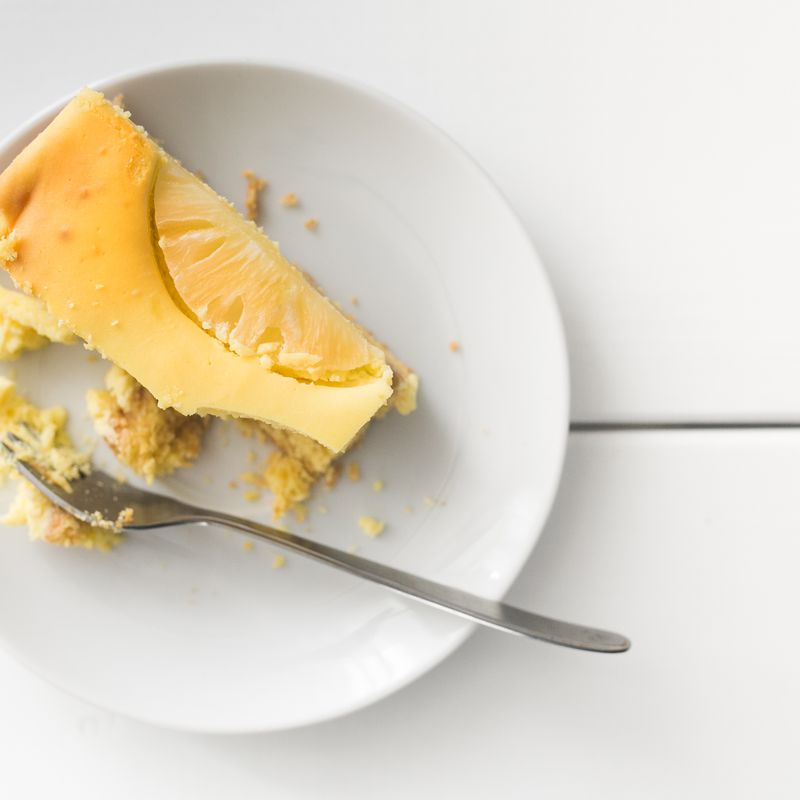
Classic Pineapple Upside-Down Cake
A buttery vanilla cake baked over a layer of brown sugar caramel, pineapple rings, and glossy maraschino cherries. Flipped out of the pan, it reveals a jewel-like, sticky-sweet top and a tender, moist crumb.
- Prep
- 30 min
- Cook
- 45 min
- Wait
- 20 min
- Total
- 1 hr 35 min
- Makes
- 1 9-inch (23 cm) round cake (8 slices)
Steps
Before you start
- Take the butter, eggs, and milk out of the fridge about 1 hour ahead so they reach room temperature (about 68°F / 20°C). This gives a smooth batter and an even crumb.
- Use a 9×2-inch (23×5 cm) metal round pan with solid sides, not a springform pan. The caramel is liquid and will leak from a springform.
- Buy canned pineapple rings packed in juice (not heavy syrup). You need 7 rings and about ¼ cup (60 ml) of the juice.
- Place the oven rack in the center position and preheat to 350°F (175°C) before you begin.
Prep oven and fruitOven 350°F / 175°C
- Position a rack in the center of the oven and preheat to 350°F (175°C).
- Open the can of pineapple and pour the juice into a measuring cup; measure out ¼ cup (60 ml) for the batter and set it aside.
- Lay the 7 pineapple rings and the 7 cherries on a double layer of paper towels and blot the tops firmly.
- Dry fruit helps the caramel cling instead of turning watery.
+ Show details− Hide details
Ready when: Oven is fully preheated and the fruit feels tacky-dry, not wet, when touched.
Tip: Keep the leftover juice to drink or use in a glaze. Don't use more than ¼ cup in the batter or the cake can turn gummy.
Make caramel topping
- Melt the 6 tbsp (85 g) topping butter in a small saucepan over medium-low heat.
- Add the brown sugar and stir with a spatula for 2 to 3 minutes, just until the mixture is smooth, bubbling gently around the edges, and no gritty sugar remains.
- Pour it into the 9×2-inch (23×5 cm) cake pan and tilt the pan so it spreads in an even layer over the bottom.
+ Show details− Hide details
Ready when: The caramel is smooth, glossy, and sugar granules have dissolved.
Tip: Don't boil the mixture. Boiling can make the caramel too hard to release after baking.
Arrange the fruit
- Place one pineapple ring in the center of the caramel and arrange the other 6 rings around it, slightly touching, so they form a ring against the pan's edge.
- Press a cherry into the hole of each ring.
- Set the pan on a rimmed baking sheet.
+ Show details− Hide details
Ready when: The rings sit flat and snug against the caramel with no large gaps.
Tip: If the rings don't fit perfectly, trim one to fill gaps. The fruit will shift slightly in the oven, so a snug fit looks best.
Whisk dry ingredients
- In a medium bowl, whisk together the flour, baking powder, and salt for about 20 seconds until evenly combined.
- In a measuring cup, stir the milk and the ¼ cup (60 ml) reserved pineapple juice together.
- It may look slightly curdled from the juice's acidity; this is fine.
+ Show details− Hide details
Ready when: No streaks of baking powder remain in the flour.
Cream butter and sugar
- In a large bowl, beat the room-temperature butter and granulated sugar with an electric mixer on medium-high speed for 3 minutes, scraping the bowl halfway through, until the mixture is pale yellow, fluffy, and noticeably increased in volume.
+ Show details− Hide details
Ready when: The mixture is pale, fluffy, and looks like thick frosting, with no visible sugar crystals.
Tip: Cold butter won't trap air. If it is still cool, cream it an extra minute.
Beat in eggs and vanilla
- Add the eggs one at a time on medium speed, beating for 30 seconds after each and scraping the bowl.
- Beat in the vanilla.
- The batter should look smooth and thick.
+ Show details− Hide details
Ready when: The mixture is smooth and uniform, with no slick pools of egg.
Tip: If it looks curdled, keep mixing on medium for 20 seconds. It will come together once the flour goes in.
Fold in flour and liquid
- With the mixer on low, add the flour mixture in three parts, alternating with the milk-juice mixture in two parts, beginning and ending with flour (flour, liquid, flour, liquid, flour).
- Mix just until each addition disappears.
- Finish by folding once or twice with a spatula, scraping the bottom of the bowl.
+ Show details− Hide details
Ready when: The batter is thick, smooth, and spoonable, with no dry flour streaks.
Tip: Stop mixing as soon as the flour disappears. Overmixing makes the cake tough.
Fill pan and bakeOven 350°F / 175°C
- Dollop the batter over the fruit in spoonfuls, then gently spread it to the edges with an offset spatula or the back of a spoon, taking care not to drag the pineapple out of place.
- Bake the pan on its baking sheet at 350°F (175°C) for 40 to 45 minutes.
+ Show details− Hide details
Ready when: The top is deep golden brown, springs back when lightly pressed, and a toothpick inserted in the center comes out clean or with a few dry crumbs. Caramel will be bubbling at the edges.
Tip: If the top browns too fast before 35 minutes, loosely tent with foil.
Cool briefly, then flip
- Set the pan on a wire rack and cool for exactly 10 minutes.
- Run a thin knife around the edge of the cake.
- Place the serving plate upside down over the pan.
- Holding both firmly with oven mitts, flip them over in one confident motion.
- Leave the pan in place for 1 minute, then lift it off slowly.
- Nudge any stray fruit or caramel back into place with a spoon.
+ Show details− Hide details
Ready when: The pan lifts away cleanly and the pineapple and caramel are intact on top.
Tip: Don't wait longer than 15 minutes or the caramel will harden and stick to the pan. If it does, warm the bottom of the pan briefly on a burner for 20 seconds.
Rest and serve
- Let the cake rest on the plate for 10 minutes so the glossy caramel sets slightly and the crumb finishes firming.
- Slice into 8 wedges using a serrated knife and serve warm or at room temperature.
+ Show details− Hide details
Ready when: The caramel looks glossy and tacky, not runny.
Tip: A bit of whipped cream or vanilla ice cream balances the sweetness.
Good to know
Tips
- Blot the fruit well. Extra moisture thins the caramel and can make the cake soggy on top.
- Time the flip carefully: 10 minutes of cooling is the sweet spot for clean release.
- Set the pan on a rimmed baking sheet in the oven to catch any bubbling caramel and keep your oven clean.
- Check the cake at 40 minutes; ovens vary, and the cake should be golden, springy, and pass the toothpick test.
Make ahead
"Bake the cake up to 1 day ahead, flip it onto a plate, cool completely, then cover and keep at room temperature. Warm individual slices briefly before serving. You can also make the caramel and arrange the fruit in the pan up to 2 hours ahead; hold at room temperature, then add batter and bake."
Storage & reheating
"Room temperature: covered, up to 2 days. Refrigerator: up to 5 days in an airtight container; bring to room temperature or warm slices in a 300°F (150°C) oven for 8 to 10 minutes, or microwave for 15 to 20 seconds. Freezer: wrap individual slices tightly and freeze up to 2 months; thaw overnight in the fridge before reheating."
Substitutions
- canned pineapple rings in juice → fresh pineapple, sliced into ⅓-inch (8 mm) rings with the core removed. Pat dry well and expect slightly more moisture; use the same ¼ cup of any pineapple juice from a carton for the batter.
- maraschino cherries → pecan halves or dried tart cherries. Pecans add crunch; dried cherries add a tangy contrast. Use about 7 pieces or 1 tbsp in each ring.
- light brown sugar → dark brown sugar. Gives a deeper, more molasses-like caramel flavor.
- whole milk → buttermilk. Use the same amount; it adds tang and the baking powder will still work well.
More cakes
See all →
Find more like this
- Meal
- Dessert
- Cuisine
- American
- Diet
- VegetarianHalal
- Quick & Easy
- Easy