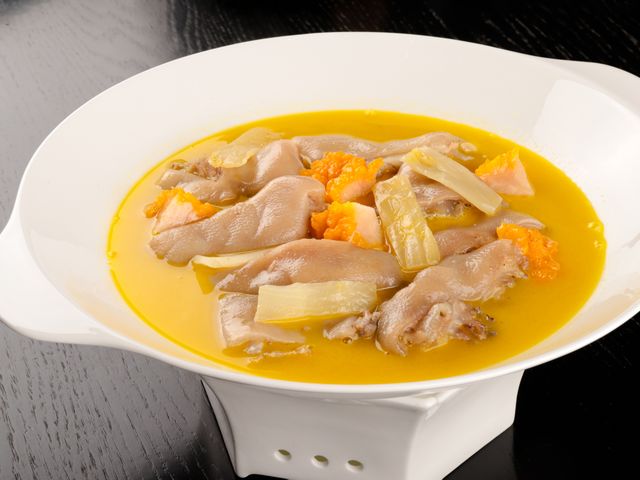
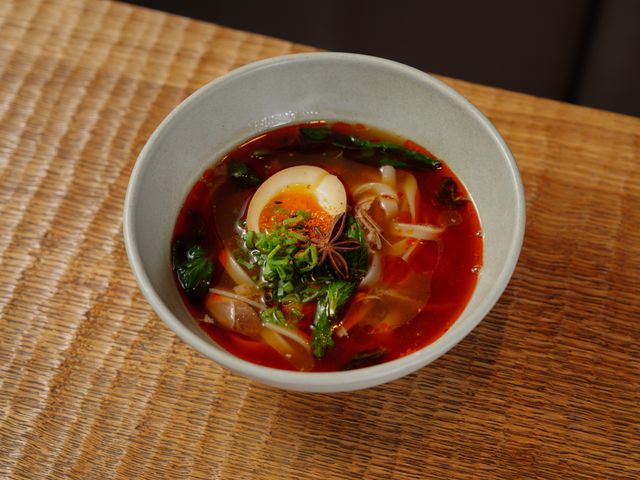
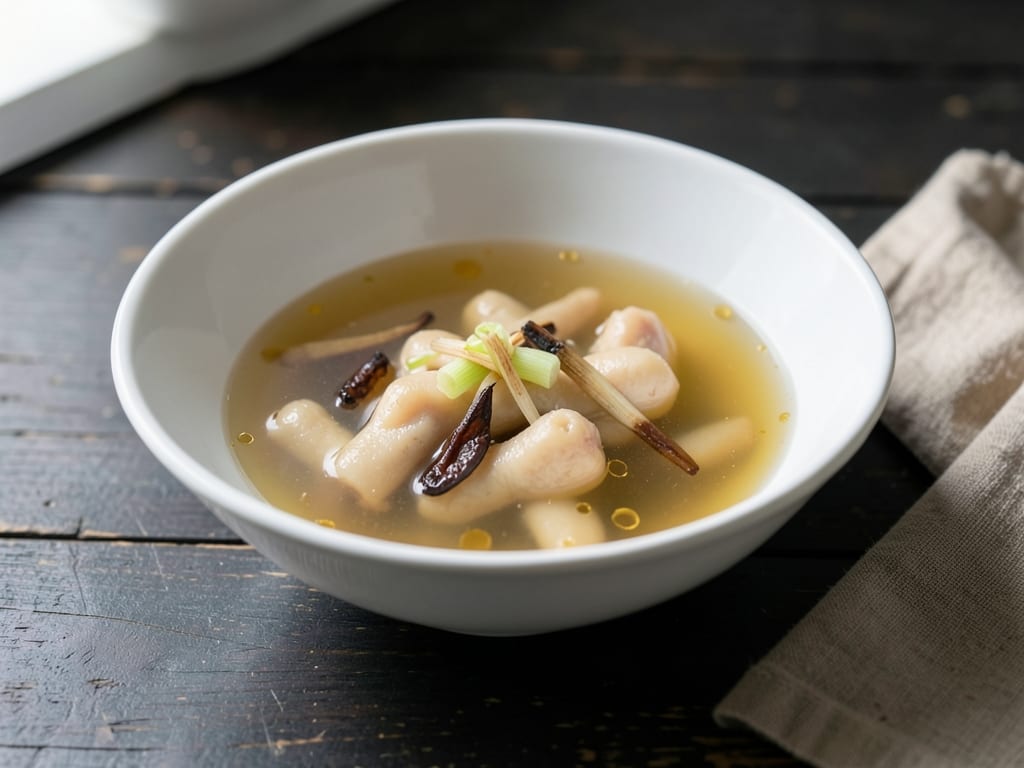
Chinese Scallop and Ginger Broth
A warming, umami-rich broth made with rehydrated dried scallops, fresh ginger, and traditional Chinese aromatics. The scallops infuse the broth with deep seafood flavor, while goji berries, red dates, and dried mushrooms add sweetness, color, and additional nourishment. This broth is often served as a soup course or used as a base for other dishes.
- Prep
- 15 min
- Cook
- 45 min
- Wait
- 30 min
- Total
- 1 hr 30 min
- Makes
- 6 cups (1.4 L) broth
Steps
Before you start
- Inspect dried scallops for any sand or grit and rinse them lightly under cool water
- Measure all ingredients before you begin so the broth simmers unattended
- Choose a tall, narrow pot rather than a wide shallow one to minimize evaporation during simmering
Soak dried mushrooms
- Pour 1 cup (240 ml) of warm water over the dried shiitake mushrooms in a small bowl.
- Let them soak for 15–20 minutes until softened and fully rehydrated.
- Reserve the soaking liquid, straining it through a fine mesh to catch any sand.
+ Show details− Hide details
Ready when: Mushroom caps are tender and flexible
Tip: The soaking liquid is liquid gold—it adds deep umami flavor, so never discard it.
Bring water to boil
- In an 8-quart pot, bring the 8 cups (1900 ml) of cold water to a rolling boil over high heat.
- This takes about 10 minutes.
+ Show details− Hide details
Ready when: Vigorous bubbles break rapidly across the entire surface
Add scallops and aromatics
- Once water is at a boil, immediately add the rinsed dried scallops and ginger halves.
- Return to a boil, then reduce heat to low.
- Skim off any foam or impurities that rise to the surface with a slotted spoon for the first 2–3 minutes.
- This removes bitterness and clarifies the broth.
+ Show details− Hide details
Ready when: Scallops are submerged and water returns to boil
Tip: Scallop broth foams more than chicken broth; patient skimming makes a clearer, cleaner-tasting final product.
Simmer with mushrooms and dates
- Add the softened shiitake mushrooms, reserved mushroom soaking liquid, and pitted red dates to the pot.
- Stir gently to combine.
- Return heat to maintain a gentle simmer—just barely visible bubble activity.
- Cover the pot partially to allow some steam to escape while retaining moisture.
+ Show details− Hide details
Ready when: Scallops begin to break apart slightly at the edges; mushrooms and dates have softened completely
Tip: A partial cover prevents evaporation from reducing your broth volume too much; you want about 6 cups (1.4 L) remaining.
Add goji berries
- Stir in the rinsed goji berries.
- Continue simmering gently for another 10 minutes.
- The goji berries will plump slightly and brighten the broth visually.
+ Show details− Hide details
Ready when: Goji berries are plump and the broth is fragrant with scallop, ginger, and date aromas
Tip: Don't add goji berries too early; they can become mushy if simmered too long and lose their bright color.
Taste and season
- Taste the broth.
- The natural umami from the scallops and mushrooms should dominate, with warmth from the ginger and subtle sweetness from the dates and goji berries.
- Stir in sea salt gradually—typically ½ to ¾ teaspoon (3–5 g)—until you reach your preferred seasoning level.
- Remember that some saltiness is expected in Chinese broths, but it should not overpower the delicate scallop flavor.
+ Show details− Hide details
Ready when: Broth is well-seasoned and balanced in flavor
Tip: Taste as you go; you can always add more salt, but you can't remove it. Start conservative.
Strain the broth (optional)
- For a cleaner presentation, pour the broth through a fine-mesh strainer lined with cheesecloth into a large bowl or pot, leaving the solids behind.
- Some cooks prefer to serve the broth with all solids included for maximum nutrition and flavor.
- If straining, you may save the scallops separately (they're edible and delicious in congee or noodle soup) and discard the ginger and mushroom stems.
+ Show details− Hide details
Ready when: Broth is separated from solids
Tip: If leaving solids in for serving, remove and discard the ginger pieces, as they can be bitter if bitten into directly.
Good to know
Tips
- Dried scallops vary in size and quality; larger, thicker scallops (sometimes labeled 'grade 1' or 'premium') have better flavor and will produce a more robust broth. Avoid scallops with a grayish tint or strong fishy smell.
- This broth is traditionally served as a medicinal or tonic soup in Chinese cuisine, believed to nourish the body and build resilience. It is often part of weekend family meals in Cantonese and Fujian cooking.
- For a richer, more concentrated broth, simmer for up to 2 hours total instead of 45 minutes, using a partial cover. Expect the final volume to reduce to about 5 cups (1.2 L).
- Pair this broth with other tonic ingredients like Chinese wolfberries (same as goji), cordyceps, ginseng, or astragalus root for a deeper 'herbal' broth experience—add these ingredients in the last 20 minutes of simmering.
Storage & reheating
Store in an airtight container in the refrigerator for up to 5 days, or in the freezer for up to 3 months. The broth will gel slightly when chilled due to the scallop gelatin, which is normal and indicates quality. To reheat, thaw in the refrigerator if frozen, then gently warm over medium heat in a saucepan until steaming. Do not bring to a rolling boil, as prolonged reheating can muddy the delicate flavor.
Substitutions
- dried shiitake mushrooms → dried oyster mushrooms or dried black fungus (wood ear mushrooms). Oyster mushrooms offer similar umami but a slightly lighter, more delicate flavor; wood ear adds textural interest but less flavor. Adjust quantity to 4–5 oz (115 g) of oyster mushrooms.
- red dates (jujubes) → dried jujubes or dried longans. Both provide natural sweetness and the same aromatic warmth. Longans are slightly more perfumed; use the same quantity.
- goji berries → dried ginseng slices or dried wolfberries (same as goji berries, an alternative brand source). Ginseng adds a more warming, medicinal note and is often preferred in Chinese herbal broths. Use 10–12 thin slices.
- dried scallops (conpoy) → dried flounder or dried cod (hai bao or other white fish). These dried fish offer a different but equally valid umami base. Use 3–4 oz (85–115 g) and follow the same method. The broth will be slightly lighter in color and more delicate in flavor.