Duck and Star Anise Broth
A fragrant, deeply savory Chinese-style broth made by simmering duck carcass with star anise, ginger, and aromatics for hours. The star anise adds a subtle licorice note that complements the rich duck flavor without overpowering it. This broth serves as an excellent base for noodle soups, braises, or can be enjoyed on its own. The long, gentle simmer extracts collagen and gelatin for a silky mouthfeel.
- Prep
- 15 min
- Cook
- 3 hr
- Wait
- 3 hr 5 min
- Total
- 6 hr 20 min
- Makes
- About 6 cups (1.4 L) of broth
Steps
Before you start
- Use a cooked duck carcass (leftover from roasted duck or from a butcher). If using raw duck bones, bring broth to 165°F (74°C) and maintain that temperature for at least 30 seconds before reducing heat
- Fill a large pot with cold water before starting
- Gather all aromatics and have them prepped
- You'll need about 3 hours of hands-off simmering time
Blanch the duck carcass
- Place the chopped duck carcass in your large stockpot and cover with cold water.
- Bring to a boil over high heat (about 5–7 minutes).
- Once boiling, drain the carcass in a colander and rinse it under cold running water, scrubbing away any gray foam or impurities.
- This step removes blood and impurities that would make the broth cloudy and bitter.
- If using raw duck bones, this step will also bring them safely to temperature.
+ Show details− Hide details
Ready when: Water reaches a rolling boil
Tip: Don't skip this blanching step—it's essential for clear, clean-tasting broth and ensures safety if using raw bones.
Start the long simmer
- Rinse out your stockpot and fill with 10 cups (2400 ml) of fresh cold water.
- Return the cleaned duck carcass to the pot.
- Bring to a boil over high heat, then immediately reduce to low heat and adjust so the broth maintains a bare simmer with just a few small bubbles breaking the surface.
- Add the star anise, ginger slices, scallion pieces, soy sauce, and rice wine.
- Stir gently to combine.
+ Show details− Hide details
Ready when: Broth maintains a bare simmer with minimal steam
Tip: A gentle simmer is critical—a rolling boil will emulsify fat and make the broth cloudy. Skim any foam that rises in the first 15–20 minutes of simmering.
Finish simmering and strain
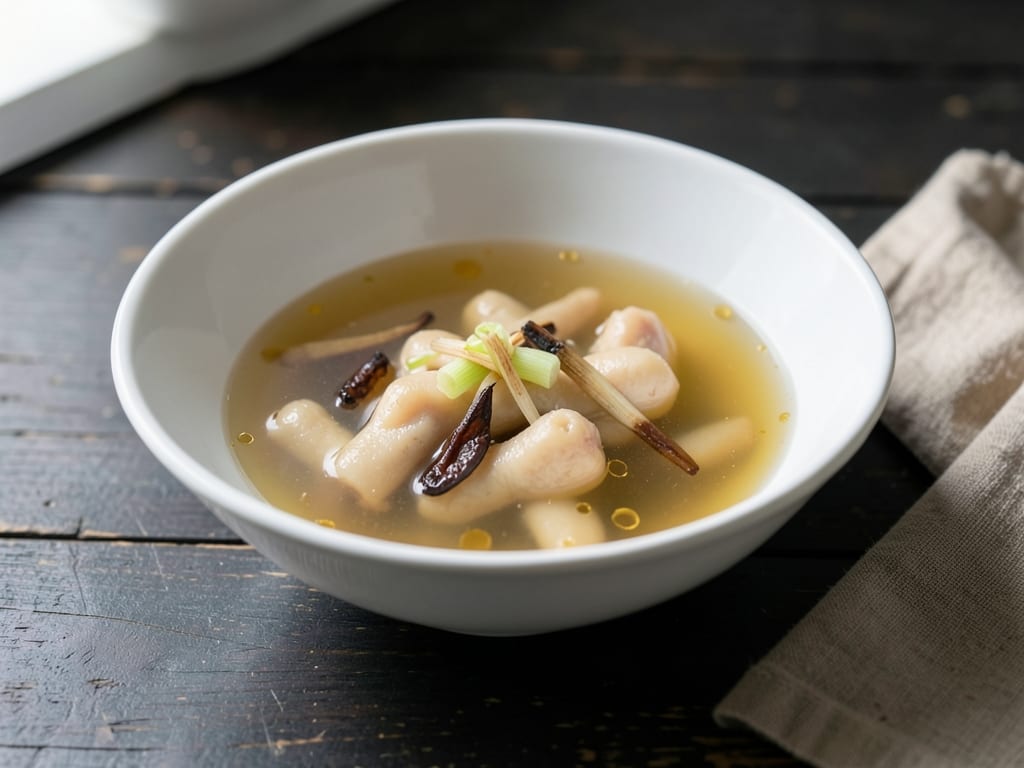
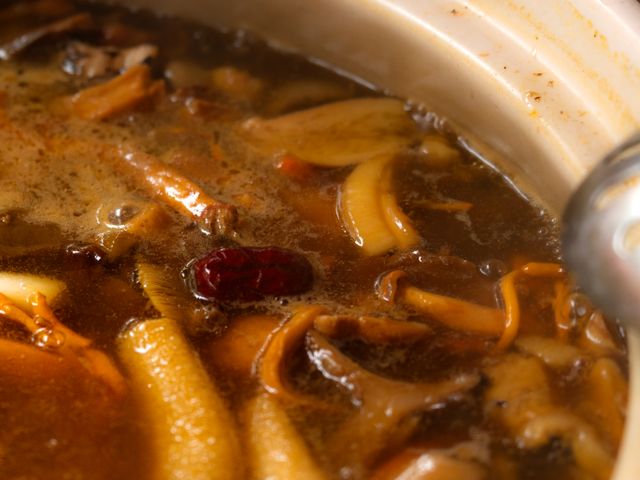
- After 3 hours, the broth should be golden amber and deeply aromatic.
- The duck meat should be falling off the bones.
- Remove from heat and let cool for 5 minutes.
- Set a fine-mesh strainer lined with cheesecloth over a large heatproof bowl.
- Carefully pour the broth through, pressing gently on the solids to extract as much liquid as possible.
- Discard the solids (carcass, aromatics).
- You should have about 6 cups (1.4 L) of clear, fragrant broth.
+ Show details− Hide details
Ready when: Broth is golden amber, meat is tender and falling off bones, and aromatics have infused the liquid
Tip: If your broth looks cloudy, carefully strain it again through fresh cheesecloth or a coffee filter for a clearer result.
Season to taste
- Pour the strained broth back into a clean pot.
- Taste carefully.
- Add kosher salt and white pepper to taste—start with ¼ teaspoon salt and adjust upward.
- The soy sauce will have added salinity, so go slowly.
- You want the duck and star anise flavors to shine, not be masked by seasoning.
+ Show details− Hide details
Ready when: Broth tastes balanced with clear duck and anise flavor and gentle saltiness
Tip: White pepper is traditional in Chinese broths and won't show dark specks like black pepper would.
Good to know
Tips
- For extra clarity, chill the finished broth overnight in the refrigerator, then skim off any fat that solidifies on top before reheating and serving.
- If you don't have a duck carcass, ask a butcher in advance—many will have them available or can save one from a recently butchered bird.
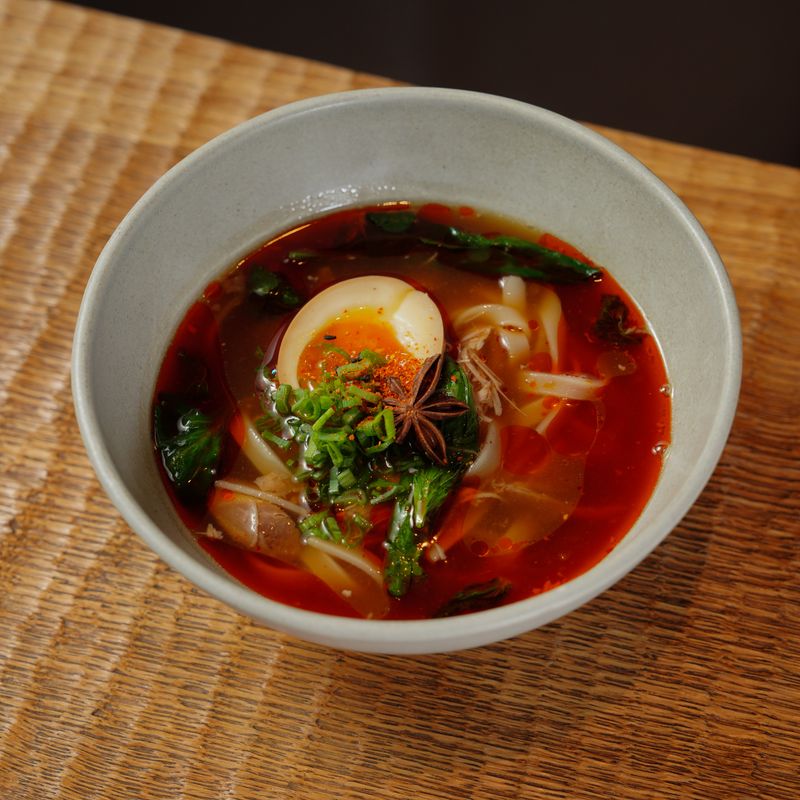
- This broth is perfect spooned over tender noodles, used as a base for a simple egg drop soup, or enjoyed on its own as a warming, elegant first course.
- The longer you simmer, the more concentrated and silky the broth becomes. If you prefer a lighter broth, reduce simmering time to 2 hours; for a more intense broth, simmer for up to 4 hours.
Make ahead
Yes. Make the broth up to 4 days ahead and refrigerate, or freeze for up to 3 months. The flavor actually improves after a day or two as the spices continue to infuse. Reheat gently over low-medium heat until steaming.
Storage & reheating
Refrigerate in an airtight container for up to 4 days. The broth will gel when cold due to collagen from the carcass—this is a sign of good quality. Freeze in quart (1 L) containers or ice cube trays for up to 3 months. Thaw in the refrigerator overnight or reheat from frozen over low heat. To reheat, place in a pot and warm gently over medium-low heat, stirring occasionally, until steaming (about 10–15 minutes).
Substitutions
- star anise → 3–4 pieces of cassia bark (Chinese cinnamon) or ½ teaspoon five-spice powder. If star anise is unavailable, cassia provides a warm, slightly sweet note. Five-spice powder is more intense, so use less.
- Shaoxing rice wine (or dry sherry) → dry sherry or dry white wine. Shaoxing rice wine adds an authentic depth, but dry sherry works well as a substitute. Avoid cooking wines with added salt.
- duck carcass (cooked), chopped into 3–4 pieces → chicken carcass or a combination of chicken and duck bones. Chicken will yield a lighter, less rich broth. Use equal weight. The flavor will be milder but still delicious with the star anise.
- soy sauce (dark or regular) → tamari (for a gluten-free option) or coconut aminos. Tamari provides similar salinity and umami. Coconut aminos is lighter but still adds depth.