
Chinese Chicken and Cordyceps Broth
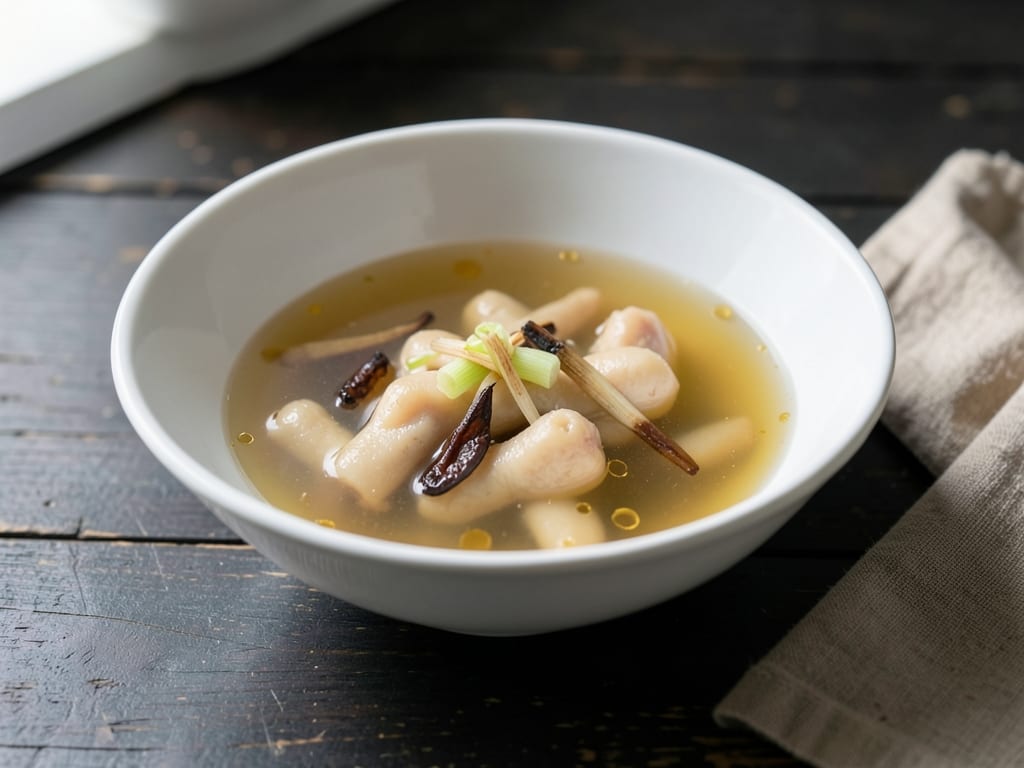
A slow-simmered medicinal broth combining whole chicken with prized cordyceps mushrooms, jujubes, goji berries, and ginger. This nutrient-dense broth is traditionally valued for its restorative and immune-supporting properties. The long, gentle simmer extracts deep flavors and creates a silky, golden broth with tender chicken that can be eaten alongside the broth or shredded for other dishes.
- Prep
- 15 min
- Cook
- 2 hr
- Total
- 2 hr 15 min
- Makes
- About 8 cups (2 liters) broth with shredded chicken
Steps
Before you start
- Pat the chicken dry with paper towels—this helps it brown and render fat more efficiently
- Rinse the cordyceps briefly under cool running water to remove any debris, then soak them in warm water for 5 minutes to soften slightly
- Have a fine-mesh strainer or cheesecloth ready if you want to strain the broth after simmering for a clearer finish
Blanch the chicken
- Bring a large pot of water to a rolling boil.
- Carefully place the whole chicken in the boiling water and blanch for 3 minutes.
- This process removes impurities and scum that would otherwise cloud the broth.
- Remove the chicken with tongs, rinse it thoroughly under cool running water, and gently rub the skin with your fingers under the water to remove any remaining residue.
- Pat the chicken dry.
+ Show details− Hide details
Ready when: Water is at a rolling boil; chicken is submerged
Tip: Blanching is crucial for a clear, refined-looking broth. Don't skip this step if clarity matters to you.
Toast the ginger
- While waiting for the blanch water, place a 6-quart Dutch oven or heavy pot over medium-high heat (no oil needed).
- Once hot, add the smashed ginger pieces and toast for 2 minutes, stirring occasionally.
- The ginger should become fragrant and lightly browned at the edges.
- This toasting deepens its flavor and reduces any sharp, raw edge.
+ Show details− Hide details
Ready when: Ginger is fragrant and light brown at the edges
Tip: Don't let the ginger burn—aim for a gentle color change, not blackening.
Build the broth base
- Add the blanched chicken to the pot with the toasted ginger.
- Pour in 10 cups (2.4 L) of water and 3 tablespoons (45 ml) of Shaoxing wine.
- Add the scallion pieces.
- Bring to a boil over high heat, then immediately reduce the heat to maintain a gentle simmer (just a few small bubbles breaking the surface).
- Skim any foam or impurities that rise to the top during the first 5 minutes of simmering.
+ Show details− Hide details
Ready when: Broth comes to a boil; impurities are skimmed away
Tip: Keep the heat gentle once you reduce it—a rolling boil will cloud the broth. You want to see only small bubbles breaking the surface.
Add cordyceps and jujubes
- After skimming, add the cordyceps mushrooms and halved jujubes to the pot.
- Stir to distribute them evenly.
- These ingredients will release their flavors and nutrients over the long simmer.
- Do not add the goji berries yet—they should be added near the very end to preserve their delicate flavor and color.
+ Show details− Hide details
Ready when: Ingredients are stirred in and distributed
Tip: Cordyceps can be pricey, so treat them gently. They'll soften as the broth simmers and release their essence.
Simmer gently for 2 hours
- Cover the pot with a lid, leaving it slightly ajar to allow minimal steam escape, and maintain a gentle simmer over low to medium-low heat.
- The broth should show only small bubbles at the surface—never a rolling boil.
- Simmer undisturbed for 2 hours.
- By this time, the chicken will be very tender, the cordyceps will have softened and imparted their earthy, slightly sweet flavor, and the broth will have become silky and golden.
+ Show details− Hide details
Ready when: Chicken is fall-apart tender; broth is silky and deep golden in color
Tip: Resist the urge to stir. A gentle, undisturbed simmer produces the clearest, most refined broth.
Add goji berries and finish
- In the final 2–3 minutes of cooking, add the rinsed goji berries directly to the pot.
- Stir gently to distribute them.
- They'll plump up slightly and add a subtle sweet note.
- Taste the broth and season with sea salt to your preference.
- Remember that the broth is already somewhat flavorful from the chicken, cordyceps, and jujubes, so taste before adding too much salt.
+ Show details− Hide details
Ready when: Goji berries are plump and glistening; salt is dissolved and broth tastes balanced
Tip: Add goji berries at the very end to preserve their bright red color and delicate flavor. Early addition causes them to fade.
Strain and serve (optional)
- If you prefer a clear, refined broth, carefully pour the entire contents through a fine-mesh strainer lined with cheesecloth into a large bowl or pot, discarding the solids.
- For a more rustic presentation, simply ladle the broth directly into bowls, leaving the solids in the pot.
- You can tear the chicken meat from the bones and add it back to the broth, or reserve it for another use (shredded chicken salad, fried rice, sandwiches).
+ Show details− Hide details
Ready when: Broth is separated from solids (if straining) or portioned directly into bowls
Tip: Cheesecloth prevents fine particles from passing through the strainer, creating a crystal-clear broth.
Good to know
Tips
- Blanching the chicken before simmering removes impurities and blood that would otherwise cloud the broth. This extra step is worth the effort for a refined, clear result.
- Keep the simmer gentle throughout. A rolling boil breaks down the chicken too quickly and creates an opaque, muddy-looking broth. Aim for small bubbles just barely breaking the surface.
- Cordyceps are expensive; source them from a reputable Chinese grocery store or online supplier. Avoid suspiciously cheap versions, which may be counterfeit or of poor quality.
- This broth freezes beautifully. Make a double batch and freeze portions in ice cube trays or small containers for quick reheating on busy days.
Make ahead
Prepare the broth up to 2 days ahead. Cool completely, then refrigerate in an airtight container. Reheat gently on the stovetop over medium-low heat until steaming. You can also freeze it for up to 3 months; thaw overnight in the refrigerator before reheating.
Storage & reheating
Room temperature: keep no more than 2 hours before refrigerating. Refrigerator: 3–4 days in an airtight container. When cooled, a layer of fat will solidify on top (this is desirable for flavor—remove it only if you prefer a lighter broth). Freezer: up to 3 months in a freezer-safe container or ziplock bag. Thaw overnight in the refrigerator. Reheat on the stovetop over medium-low heat, stirring occasionally, until steaming.
Substitutions
- dried cordyceps mushrooms → dried shiitake mushrooms or dried oyster mushrooms, torn into smaller pieces. Cordyceps are prized for their unique flavor and medicinal properties, but they are expensive. Shiitake or oyster mushrooms provide earthiness and umami, though the final broth will have a slightly different character.
- dried red jujubes (Chinese dates) → dried red dates (if using different jujubes) or 4–5 dried red ginseng slices. Red ginseng adds a warming quality and mild sweetness. Use fewer slices, as ginseng is potent. The flavor profile will be slightly more medicinal.
- Shaoxing wine or dry sherry → dry sherry or dry white wine. Shaoxing wine has a slightly sweet, funky depth. Dry sherry or white wine are lighter alternatives but still add aromatic balance to the broth.
- whole chicken, skin on → 2 lb (900 g) bone-in chicken thighs or a combination of chicken pieces (thighs and wings). Thighs and wings have more collagen and will produce a silkier broth. Reduce simmering time to 1.5 hours. The yield will be less broth but equally flavorful.
More broths
See all →
Find more like this
- Meal
- Lunch
- Cuisine
- Chinese
- Main ingredient
- Whole Chicken
- Method
- Stovetop
- Quick & Easy
- Easy