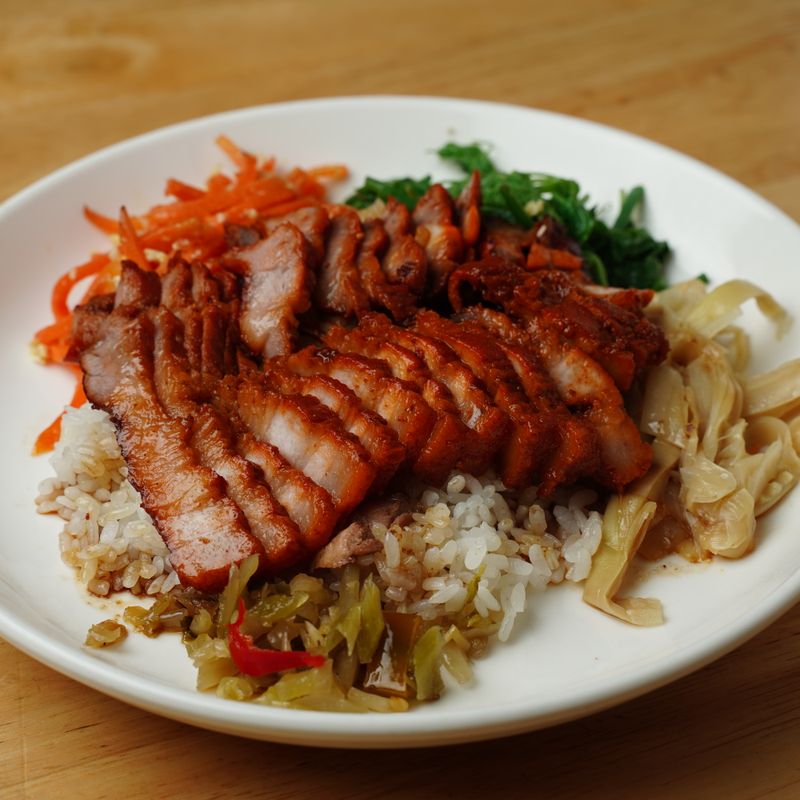
Chinese Black Vinegar and Pickled Ginger Rice
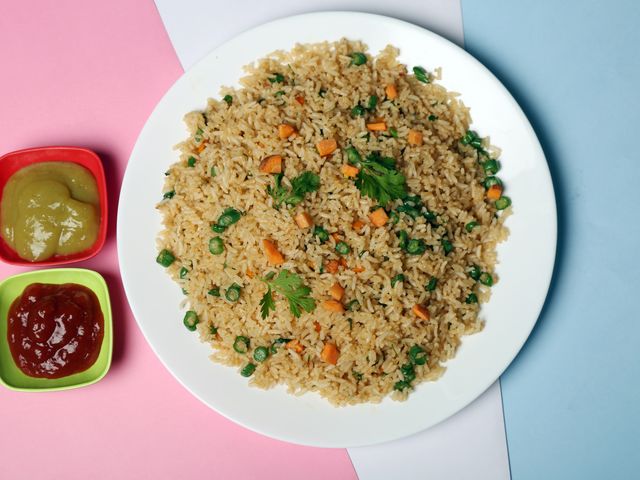
A savory-tangy pan-fried rice seasoned with deep, complex black vinegar and bright pickled ginger. The rice gets a light crust on the bottom while staying tender inside, and is finished with fresh scallions and a drizzle of sesame oil. This side complements stir-fries, grilled proteins, or can be served as a light main with vegetables.
Steps
Before you start
- Use cooked rice that is at least a few hours old or chilled—day-old rice works best for fried rice
- Have all ingredients prepped and within reach before you start cooking
- Taste as you season; black vinegar brands vary in intensity
Heat wok and add oil
- Place a large wok or 12-inch nonstick skillet over medium-high heat for 1 minute until hot.
- Add 2 tablespoons (30 ml) vegetable oil and swirl to coat the bottom and sides evenly.
+ Show details− Hide details
Ready when: Oil shimmers and moves freely in the pan
Tip: A hot wok ensures the rice gets a light crust rather than becoming mushy
Bloom garlic and ginger
- Add 2 minced garlic cloves and the chopped pickled ginger to the hot oil.
- Stir constantly for about 30 seconds until fragrant.
- Be careful not to burn the garlic.
+ Show details− Hide details
Ready when: Garlic and ginger are fragrant and the oil is infused with their aroma
Tip: Keep the heat high and stir so the garlic doesn't turn bitter
Add rice and stir-fry
- Add the 3 cups (480 g) cooled rice to the wok, breaking up any clumps as you add it.
- Toss and stir constantly for 3–4 minutes, making sure the rice gets coated with the oil and heated through.
- Listen for occasional crackling sounds—this means some rice grains are toasting on the bottom.
+ Show details− Hide details
Ready when: Rice is hot throughout and some grains are lightly toasted; individual grains are separate, not mushy
Tip: Don't stir constantly once the rice is heated—let it sit for 10-second intervals to develop flavor and a light crust
Add vinegar and soy sauce
- Pour the 3 tablespoons (45 ml) black vinegar and 1 tablespoon (15 ml) soy sauce over the rice.
- Immediately stir and toss for about 30 seconds to distribute the seasonings evenly.
- The aroma will become deep and tangy.
+ Show details− Hide details
Ready when: Vinegar is fully incorporated and aroma is strong and complex
Tip: Add vinegar off the heat if you prefer less-sharp acidity, but adding it while hot caramelizes the flavors slightly
Finish and season
- Remove the wok from heat.
- Drizzle 1 teaspoon (5 ml) toasted sesame oil over the rice and fold in the white and light green parts of the scallions (reserve the dark green parts for garnish).
- Taste the rice and adjust seasoning with salt and white pepper as needed.
+ Show details− Hide details
Ready when: Rice is fragrant, well-mixed, and seasoned to taste
Tip: Use white pepper rather than black to avoid visible specks, which is traditional in fried rice
Plate and serve
- Transfer the rice to a serving bowl or individual bowls.
- Garnish with the reserved dark green scallion tops.
- Serve immediately while hot.
+ Show details− Hide details
Tip: If eating later, store in an airtight container in the refrigerator and reheat gently in a wok or skillet to avoid drying out
Good to know
Tips
- Day-old or refrigerated rice is crucial: fresh, warm rice will become mushy when fried. Cold rice grains stay separate and develop a pleasant toasted crust.
- Black vinegar from brands like Chinkiang or Zhenjiang has a complex, slightly sweet depth. Taste your brand first; some are mellower, others very sharp. Start with 2 tablespoons (30 ml) and add more to taste.
- If the rice seems dry after adding vinegar, sprinkle a few drops of water and toss—the residual heat will evaporate it and release steam. Don't overdo it or the rice becomes sticky.
- This rice pairs beautifully with pan-seared fish, roasted chicken, or stir-fried vegetables. It also works as a light main course topped with a fried egg and extra pickled ginger.
Storage & reheating
Store leftovers in an airtight container in the refrigerator for up to 3 days. Reheat in a wok or skillet over medium-high heat with a splash of water or a light drizzle of oil, stirring frequently, for 2–3 minutes until hot and steam releases. Do not microwave, as this makes the rice dry and rubbery. Freezing is not recommended, as the vinegar flavor dulls and the texture becomes grainy.
Substitutions
- Chinese black vinegar (or balsamic vinegar) → balsamic vinegar or a mix of 2 tablespoons (30 ml) rice vinegar plus 1 tablespoon (15 ml) soy sauce. Balsamic is slightly sweeter; the vinegar blend is milder. Start with half the amount and adjust to taste.
- pickled ginger (pickled sushi ginger) → 1–2 teaspoons (3–6 g) minced fresh ginger plus a splash of rice vinegar and a pinch of sugar. Fresh ginger is sharper; add it at the same time as garlic and reduce the additional vinegar slightly so the total is not too sour.
- toasted sesame oil → garlic oil or omit if you dislike strong sesame flavor. Sesame oil adds richness; garlic oil offers a lighter alternative. Omitting changes the dish character but keeps it delicious.
- scallions (green onions) → white parts of a leek, sliced thin, or Chinese chives (if available). Both offer a mild onion flavor and look elegant. Add the same way as scallions, stirring the white parts in and garnishing with the green.