
Chickpea Flour Socca Pancakes
Crispy-edged, tender socca pancakes made from chickpea flour, a naturally gluten-free Mediterranean specialty. These savory pancakes feature earthy chickpea flavor enhanced by fresh rosemary and good olive oil, finished with a sprinkle of sea salt. They're wonderful as a quick breakfast, appetizer, or light lunch, served warm with a squeeze of lemon or alongside fresh greens.
- Prep
- 10 min
- Cook
- 16 min
- Wait
- 15 min
- Total
- 41 min
- Makes
- 8 pancakes (4 servings)
Steps
Before you start
- Have all ingredients measured and ready before you begin—the batter rests for 15 minutes to allow the chickpea flour to fully hydrate
- Use a non-stick or well-seasoned cast-iron skillet for best results and easy flipping
- Ensure your olive oil is at room temperature so it mixes smoothly into the batter
Mix the batter
- In a medium mixing bowl, whisk together the chickpea flour (1 cup/120 g), water (1.25 cups/300 ml), room-temperature olive oil (¼ cup/60 ml), chopped rosemary (1½ teaspoons/3 g), kosher salt (¾ teaspoon/4.5 g), and black pepper (¼ teaspoon) until completely smooth.
- No lumps should remain.
- The batter will be thin, similar to crêpe batter.
+ Show details− Hide details
Ready when: Batter is completely smooth with no flour lumps
Tip: Whisk vigorously for 1 minute to help hydrate the chickpea flour evenly, which will ensure tender pancakes.
Rest the batter
- Let the batter rest at room temperature for 15 minutes.
- This allows the chickpea flour to fully absorb the water and prevents a gritty texture.
- The batter will thicken slightly.
+ Show details− Hide details
Ready when: Batter has thickened and looks creamy
Heat the skillet
- Place a 10-inch (25 cm) non-stick or cast-iron skillet over medium-high heat.
- Once hot, add 2 tablespoons (30 ml) of olive oil for cooking.
- Let the oil heat for about 1 minute until it shimmers and moves freely across the pan.
+ Show details− Hide details
Ready when: Oil shimmers and moves freely across the pan
Tip: Use a cast-iron skillet if you have one—it distributes heat evenly and develops better browning on the pancakes.
Cook the first batch
- Pour ¼ cup (60 ml) of batter into the center of the hot skillet.
- The batter will spread outward quickly.
- Immediately tilt the pan in a circular motion to distribute the batter into a thin, even round about 6 inches (15 cm) across, similar to a crêpe.
- Cook for 2–3 minutes over medium-high heat without moving it.
+ Show details− Hide details
Ready when: Edges turn golden brown and look slightly crispy; the center is set but may appear slightly moist
Tip: Tilt the pan immediately after pouring—hesitation allows the bottom to set before the batter spreads, creating uneven pancakes.
Flip and finish cooking
- Using a thin spatula, carefully slide it under the edge of the pancake, then flip it in one swift motion.
- Cook for another 2–3 minutes on the second side until the bottom is golden brown and the pancake is firm to the touch.
+ Show details− Hide details
Ready when: Bottom is golden brown; pancake is firm and slightly springy when pressed in the center
Tip: If the first flip fails, the batter may not have cooked long enough on the first side. The edges should lift easily before attempting to flip.
Transfer and repeat
- Transfer the cooked pancake to a warm plate.
- Repeat steps 4 and 5 with the remaining batter, cooking 3 more pancakes for a total of 4 pancakes.
- You should have enough batter for 8 small pancakes (about 5 inches/13 cm across) if you prefer thinner ones, or adjust the pouring amount as desired.
+ Show details− Hide details
Ready when: All pancakes are cooked through and golden brown on both sides
Tip: Keep cooked pancakes warm by stacking them on a plate loosely covered with a clean kitchen towel while you finish cooking the rest.
Finish and serve
- Arrange the warm socca pancakes on a serving plate.
- If using fleur de sel, sprinkle a pinch over each pancake for a burst of briny flavor.
- Serve immediately with a wedge of fresh lemon for squeezing, or alongside a simple green salad with Dijon vinaigrette.
+ Show details− Hide details
Tip: Socca is best served warm, fresh from the pan. The crispy edges soften as it cools, so don't let it sit too long before eating.
Good to know
Tips
- Socca originated in Nice, France, where it's traditionally cooked in a large copper pan and served as a street food. This stovetop version captures that same crispy-edged, tender interior.
- For extra-crispy edges, increase the heat to high and cook for an additional 30 seconds on the first side, but watch closely to prevent burning.
- Serve socca with toppings such as crème fraîche, a fried egg, roasted vegetables, smoked salmon, or hummus for a more substantial meal.
- The batter is naturally gluten-free, vegan, and high in protein and fiber from the chickpea flour, making it a nutritious choice for any dietary preference.
Make ahead
The batter can be made up to 4 hours ahead and refrigerated in a covered container. Stir well before using, and add 1–2 tablespoons of water if it has thickened too much. Cook just before serving for the best crispy edges.
Storage & reheating
Socca pancakes are best eaten fresh and warm, but leftovers keep in an airtight container at room temperature for up to 1 day or in the refrigerator for up to 3 days. Reheat in a 350°F (175°C) toaster oven for 5 minutes, or warm in a dry skillet over medium heat for 1–2 minutes per side until crispy again. Do not freeze, as the texture becomes rubbery.
Substitutions
- fresh rosemary → 1 teaspoon dried rosemary, or 2 tablespoons chopped fresh basil or parsley. Dried herbs are more concentrated, so use less. Fresh herbs other than rosemary will give a lighter flavor profile but work well in socca.
- chickpea flour → fava bean flour or gram flour (besan), in the same amount. Both have a similar texture and mild nutty flavor. Gram flour is used in Indian cooking; fava bean flour is slightly earthier.
- extra-virgin olive oil → vegetable oil or avocado oil. Use refined versions to avoid overpowering flavor. The pancakes will lack the characteristic Mediterranean taste but will still cook well.
- kosher salt → sea salt or table salt in equal measure. Kosher salt is preferred for its larger crystals and more even distribution, but other salts work. Adjust table salt to ½ teaspoon (5 g) since it is denser.
More pancakes & waffles
See all →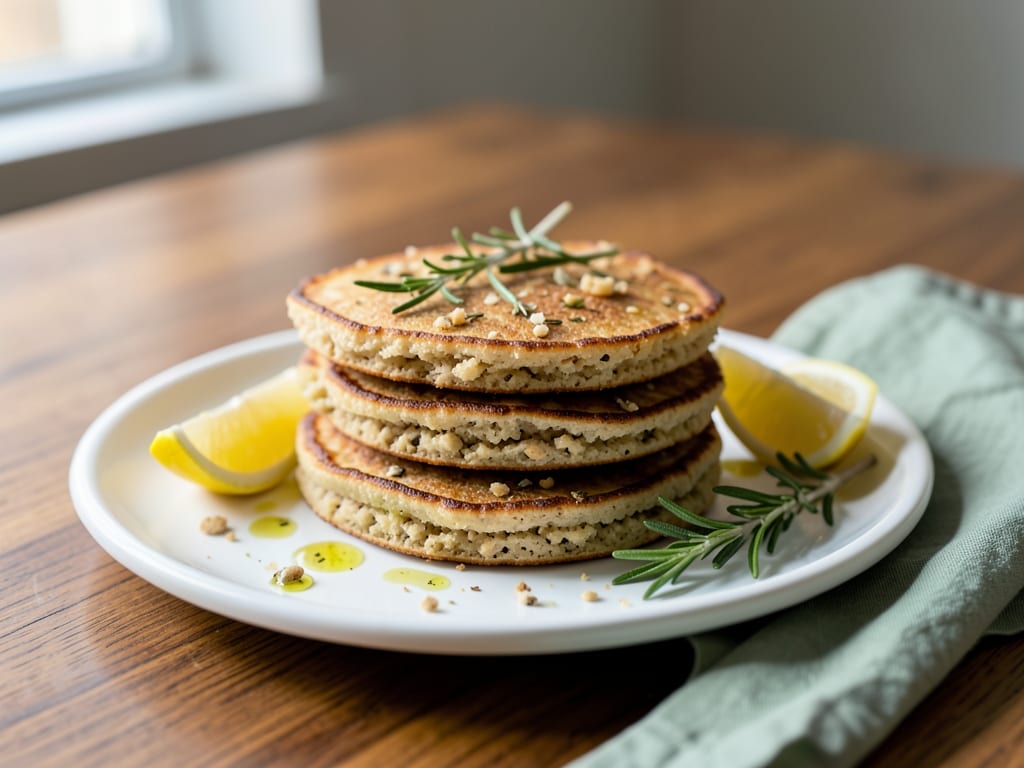



Find more like this
- Meal
- Breakfast
- Cuisine
- Mediterranean
- Main ingredient
- Chickpeas
- Method
- Stovetop
- Quick & Easy
- 5 Ingredients or LessEasy