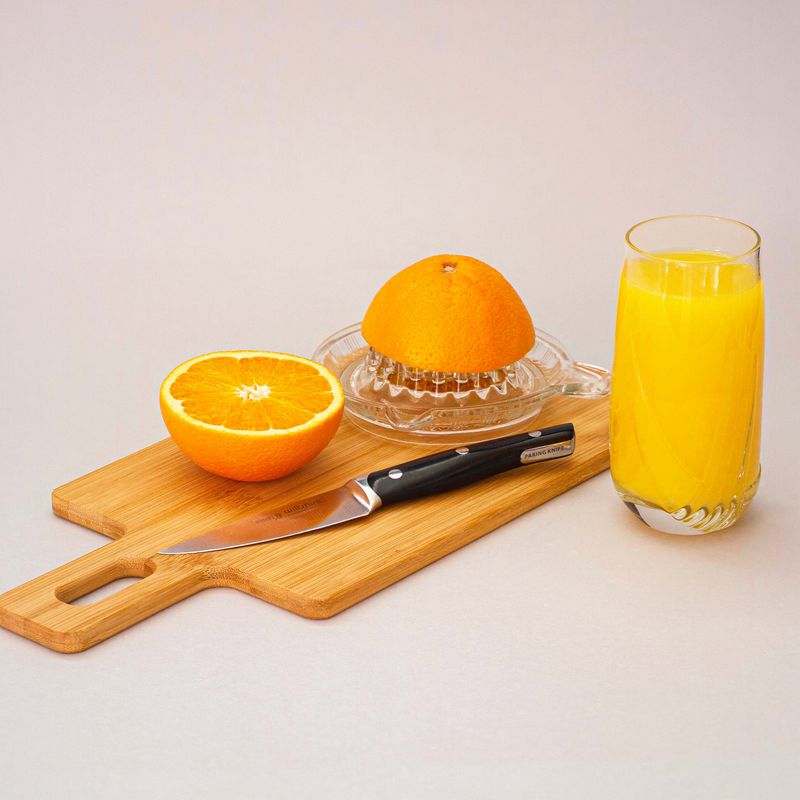
Bitter Orange Thyme Juice
A refreshing Mediterranean-inspired cold-pressed juice that combines the bright, slightly astringent notes of bitter oranges with fresh thyme and a touch of honey for balance. This herbal citrus juice is naturally energizing, with a complex flavor profile that works equally well on its own, over ice, or as a sophisticated mixer.
- Prep
- 10 min
- Cook
- —
- Wait
- 5 min
- Total
- 15 min
- Makes
- About 2 cups (480 ml) of juice
Steps
Before you start
- Chill the bitter oranges for 1 hour before juicing—cold citrus yields more juice
- Rinse fresh thyme under cold water and pat dry
- If using a manual citrus juicer, warm the oranges slightly by rolling them on the counter with firm pressure to soften fibers
Prepare the oranges
- Halve each bitter orange and remove any visible seeds.
- If using a manual juicer, roll the orange halves firmly on your work surface for 10–15 seconds to soften the membranes and ease juice extraction.
- This increases yield by breaking down cell walls slightly.
+ Show details− Hide details
Ready when: Oranges feel slightly softer and warmer to the touch
Tip: Cold oranges yield less juice—rolling and warming them slightly helps even a manual juicer extract more liquid
Cold press the oranges
- Using a cold press juicer, feed the orange halves through the chute, allowing the machine to extract the juice gently.
- If using a manual citrus juicer, place each orange half cut-side down on the juicer cone and press and twist firmly until no more juice flows.
- Avoid over-pressing, which extracts bitter compounds from the pith and seeds.
+ Show details− Hide details
Ready when: Juice runs clear and minimal liquid remains in the pressed pulp
Tip: Don't squeeze the pith—gentle, steady pressure from a cold press or firm (but not harsh) manual pressing keeps the juice smooth and prevents excessive bitterness
Strain the juice
- Pour the fresh orange juice through a fine-mesh strainer lined with cheesecloth into a medium bowl, catching any remaining pulp or seeds.
- Let it drain naturally for 2–3 minutes without pressing, so the juice flows freely.
- This step removes fine sediment and any bitter particles from the pith.
+ Show details− Hide details
Ready when: Liquid has passed through the strainer; the cloth catches fine pulp and sediment
Tip: Don't press the pulp through the strainer—let gravity do the work for a clearer, smoother juice
Infuse with thyme
- Add the stripped thyme leaves to the strained juice and stir gently.
- Let the mixture sit at room temperature for 3–5 minutes to allow the thyme to release its aromatic oils into the juice.
- This creates a harmonious herbal infusion without overwhelming the citrus.
+ Show details− Hide details
Ready when: Juice has a subtle herbaceous aroma and the thyme has darkened slightly
Tip: Don't steep for more than 5 minutes—extended contact with thyme can make the juice taste grassy or bitter
Sweeten and finish
- Strain out the thyme leaves through a fine-mesh strainer into a chilled glass pitcher.
- Stir in the raw honey until fully dissolved.
- Taste the juice and add chilled filtered water a tablespoon at a time if you prefer a lighter, more diluted consistency.
- The juice should taste pleasantly tart with a subtle herbal edge and gentle sweetness.
+ Show details− Hide details
Ready when: Honey is completely dissolved and juice is well combined
Tip: Add honey gradually and taste as you go—raw honey varies in sweetness, and over-sweetening masks the subtle bitter orange flavor
Serve
- Pour the juice into glasses filled with ice and serve immediately for maximum freshness and aromatic brightness.
- Alternatively, refrigerate in an airtight glass bottle and serve chilled within 24 hours.
+ Show details− Hide details
Ready when: Juice is chilled and poured
Tip: Serve the juice within a few hours of making it for the best flavor; citrus juices oxidize and lose aromatic complexity over time
Good to know
Tips
- Bitter oranges (Seville oranges) are most commonly found in late autumn and winter at farmers' markets or Mediterranean specialty shops. If you cannot find them, Jaffa oranges or blood oranges offer complexity, though with less astringency.
- This juice is excellent served over ice with sparkling water (1 part juice to 2 parts water), as an aperitif, or mixed into cocktails where its bitter-herbal profile complements spirits like gin, whiskey, or vermouth.
- For the clearest juice, let the strained liquid sit in the refrigerator for 30 minutes before serving—sediment will settle to the bottom and you can pour off the clear liquid.
- To intensify the herbal character, add a thin strip of thyme-infused honey by steeping 2–3 thyme sprigs in honey for 2–3 days before using in this recipe.
Storage & reheating
Store in an airtight glass bottle in the refrigerator for up to 24 hours. The juice begins to oxidize and lose its bright, herbal character after a few hours, so fresh is best. Do not freeze—the juice's delicate flavor profile and natural oils do not hold well through freezing.
Substitutions
- bitter oranges (also called Seville oranges), halved → Regular Valencia oranges mixed with juice of 1 lemon. Bitter oranges have a distinctive astringency; regular oranges are sweeter and lack that complexity. Adding lemon helps approximate the tartness and slight bitterness of Seville oranges.
- fresh thyme sprigs → Fresh oregano or marjoram, in equal quantity. These Mediterranean herbs have a similar woody, slightly peppery note. Use only the leaves and infuse for the same duration.
- raw honey → Agave nectar or maple syrup, in equal quantity. Both dissolve readily in cold juice. Agave is milder and won't mask the citrus; maple has a stronger flavor that will add earthiness.
- bitter oranges (also called Seville oranges), halved → Pomelo or grapefruit (pink or white). Both offer tartness and a slight bitterness, though they lack the delicate floral notes of bitter orange. Use the same weight.
More juices
See all →


Find more like this
- Meal
- Drink
- Cuisine
- Mediterranean
- Method
- No-Cook