
Plum Rose Hip Juice
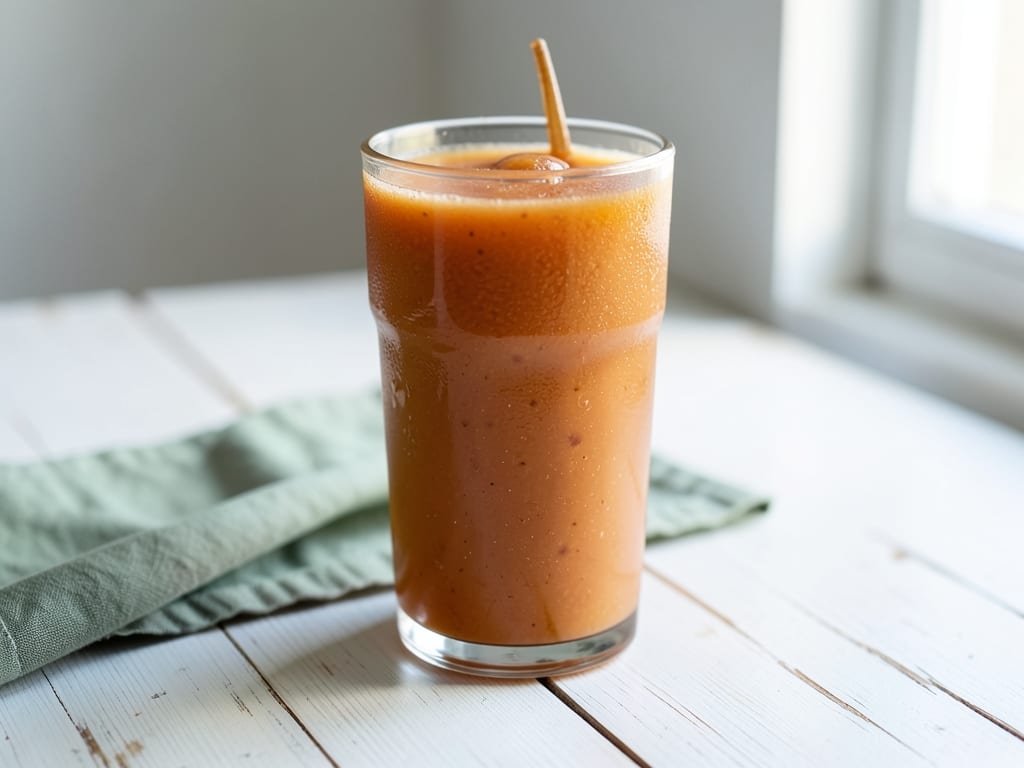
A vibrant, jewel-toned juice that marries the deep sweetness of fresh plums with the bright tartness of rose hips, steeped together to extract their full flavor and natural goodness. Finished with honey for balance and fresh lemon juice for complexity, this Mediterranean-inspired drink is both refreshing and nourishing—perfect served chilled or gently warmed.
- Prep
- 15 min
- Cook
- 20 min
- Wait
- 3 hr
- Total
- 3 hr 35 min
- Makes
- About 2 cups (480 ml)
Steps
Before you start
- Have a fine-mesh strainer lined with cheesecloth ready
- Use fresh, ripe plums at peak flavor
- Choose dried rose hips without additives
- Chill serving glasses 30 minutes ahead if serving cold
Prepare and combine ingredients
- In a medium stainless steel saucepan (2-3 quart capacity), combine the rinsed rose hips, quartered plums, and filtered water.
- Stir once with a wooden spoon to distribute the fruit evenly.
- The plums should be mostly submerged.
+ Show details− Hide details
Tip: Don't crush the plums now—they'll break down naturally as they heat, preserving a cleaner juice.
Simmer the fruit
- Set the pan over medium heat and bring to a gentle simmer.
- Once small bubbles appear around the edges, reduce heat to medium-low and simmer gently, uncovered, for 15–20 minutes.
- The plums will soften and begin to break apart, and the rose hips will soften.
- Stir occasionally.
- You'll notice the liquid turning a deep ruby-amber color as the fruit releases its pigments and flavor.
+ Show details− Hide details
Ready when: Plums are very soft and falling apart, liquid is deeply colored and fragrant
Tip: Keep the heat low to avoid boiling aggressively, which can make the juice cloudy and bitter.
Cool slightly and strain
- Remove the pan from heat and let the mixture cool for about 5–10 minutes until comfortable to handle.
- This helps prevent steam burns and allows the fruit to release a bit more flavor.
- Line a fine-mesh strainer with cheesecloth or clean muslin, positioning it over a clean bowl or glass jar.
- Carefully pour the entire contents of the pan through the lined strainer, letting gravity do the work.
- Do not press or squeeze the fruit—you want a clear, clean juice.
- Let it drip for 10–15 minutes until it stops flowing naturally.
+ Show details− Hide details
Ready when: All liquid has drained; you'll have clear to translucent juice with minimal sediment
Tip: If you press the pulp, you'll extract fine particles that cloud the juice and can create a gritty texture.
Sweeten and finish
- While the juice is still warm or at room temperature, stir in the honey and the juice of one fresh lemon.
- Stir well to ensure the honey dissolves completely.
- Taste the juice and adjust: add a touch more honey if it's too tart, or more lemon juice if it needs brightness.
- The juice should taste balanced—not cloyingly sweet, but with pleasant tartness underneath.
+ Show details− Hide details
Ready when: Honey is fully dissolved and juice tastes balanced
Tip: Add flavorings while the juice is still warm so honey dissolves without needing vigorous stirring.
Chill and serve
- Pour the finished juice into clean glass bottles or jars and refrigerate for at least 3 hours, or until chilled.
- The juice can be served cold straight from the fridge, or gently warmed over low heat if you prefer it warm.
- Serve in chilled glasses, optionally garnished with a thin curl of fresh lemon zest.
+ Show details− Hide details
Ready when: Juice is cold and ready to drink
Tip: For a lighter, more refreshing drink, dilute with sparkling or still water to taste just before serving.
Good to know
Tips
- For a deeper, more complex flavor, toast the dried rose hips in a dry skillet over medium heat for 2–3 minutes before adding them to the saucepan. This won't burn them; it brings out their natural earthy sweetness.
- If your rose hips feel very tough or seem old, soak them in cool water for 15 minutes before simmering to help them soften more readily.
- This juice is naturally high in vitamin C and antioxidants, especially from the rose hips. Avoid boiling to preserve these heat-sensitive compounds.
- For a sparkling version, dilute the finished juice with sparkling water (1 part juice to 2–3 parts water) just before serving for a refreshing, lighter drink.
Make ahead
The juice can be made up to 2 days ahead and chilled in the refrigerator. You can also prepare it in batches on the weekend to have fresh juice throughout the week. The flavor deepens slightly after 24 hours as the honey and lemon integrate fully.
Storage & reheating
Store in clean, sealed glass bottles or jars in the refrigerator for up to 5 days. For longer storage, freeze in ice cube trays for up to 3 months and thaw as needed. Do not store at room temperature for more than 2 hours. To reheat: warm gently over low heat or in a mug with hot water, never boiling, to preserve delicate flavors.
Substitutions
- raw or lightly processed honey → pure maple syrup or coconut nectar. Use equal amounts. Maple syrup will add a subtle woodsy note; coconut nectar is slightly less sweet and more neutral.
- dried rose hips (whole or cut) → hibiscus flowers or dried tart cherries. Use ½ cup (45 g) hibiscus or ¾ cup (90 g) dried cherries. Hibiscus adds tartness and a reddish hue; cherries add deeper sweetness.
- fresh lemon → fresh lime or orange. Lime adds tropical tartness; orange adds sweetness and a different flavor profile. Start with 1½ limes or 1 small orange, adjust to taste.
- fresh ripe plums, halved and pitted → ripe apricots, peaches, or nectarines. Use 1½ lbs (680 g) of any of these stone fruits. Apricots will be more tart and delicate; peaches and nectarines more floral and soft.
More juices
See all →


Find more like this
- Meal
- Drink
- Cuisine
- Mediterranean
- Main ingredient
- Lemons
- Method
- Stovetop
- Quick & Easy
- 5 Ingredients or LessEasyBeginner