Anchovy Dashi Pearl Barley Rice
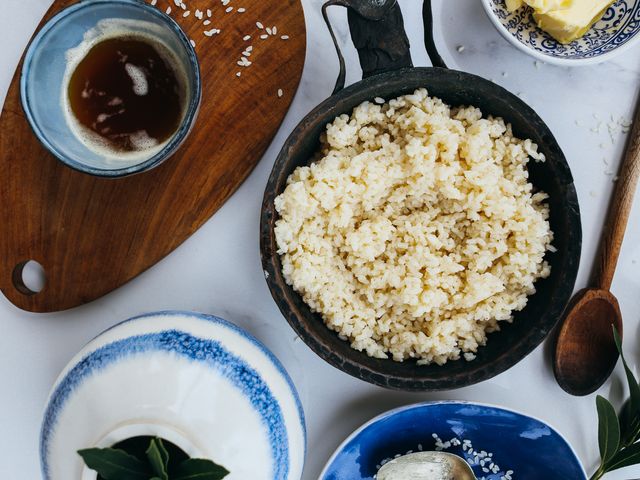
A refined Japanese-inspired grain dish that marries the earthy chew of pearl barley with the tender cling of short-grain rice, cooked in a deeply savory anchovy dashi enriched with kombu. The result is a sophisticated side that pairs beautifully with grilled fish, roasted vegetables, or light broths. Each spoonful delivers a balanced umami depth without being heavy.
- Prep
- 15 min
- Cook
- 30 min
- Wait
- 15 min
- Total
- 1 hr
- Makes
- 4 cups (about 4 servings as a side dish)
Steps
Before you start
- Rinse both the pearl barley and short-grain rice under cold water until water runs mostly clear (about 1 minute each)
- If making dashi from scratch, prepare it while the grains rinse
- Have all ingredients measured and ready before you begin cooking
Toast the pearl barley
- Place the rinsed pearl barley in a dry medium saucepan (2½-quart/2.4 L) over medium heat.
- Stir frequently for 2–3 minutes until the grains are fragrant and lightly golden.
- This step deepens the barley's nutty flavor.
+ Show details− Hide details
Ready when: Barley is fragrant and light golden, with a toasted aroma
Tip: Stir constantly to prevent burning; toasting takes only 2–3 minutes.
Add dashi and kombu
- Pour the anchovy dashi into the pan with the toasted barley.
- Add the kombu piece (gently wiped clean but not rinsed, to preserve its umami-rich surface) and the sake.
- Increase heat to medium-high and bring to a simmer, stirring occasionally.
+ Show details− Hide details
Ready when: Liquid begins to steam and small bubbles appear at the edge
Tip: Do not rinse the kombu; its surface holds essential flavor compounds.
Add rice and simmer barley
- Once the liquid simmers, add the rinsed short-grain rice to the pan, stirring to combine.
- Reduce heat to medium-low and simmer uncovered for 8–10 minutes, stirring occasionally.
- The barley should begin to soften but still have texture.
+ Show details− Hide details
Ready when: Liquid level drops slightly; barley grains are starting to yield to gentle pressure
Tip: Stir occasionally to prevent sticking and ensure even cooking.
Cover and finish cooking
- Place a tight-fitting lid on the saucepan and reduce heat to low.
- Simmer gently for 18–20 minutes until the rice is tender, the barley is chewy with no hard core, and the liquid is almost completely absorbed.
- Do not stir; the lid traps steam needed for proper texture.
+ Show details− Hide details
Ready when: Liquid is nearly absorbed; a grain of barley breaks cleanly between teeth with no chalky center; rice is tender and holds moisture
Tip: Resist the urge to lift the lid; steam loss will increase cooking time and affect texture.
Season and rest
- Remove from heat and remove the kombu.
- Sprinkle the fine sea salt and the white miso (if using) over the rice and barley.
- Stir gently with a wooden spoon to distribute seasoning evenly without breaking the grains.
+ Show details− Hide details
Ready when: Salt and miso are fully incorporated; no white streaks remain
Tip: Miso adds subtle depth—taste before adding if you prefer a lighter flavor.
Rest and fluff
- Cover the pan with the lid and let rest for 5 minutes.
- This allows flavors to meld and ensures uniform texture throughout.
- Gently fluff with a wooden spoon or rice paddle, being careful not to crush the grains.
+ Show details− Hide details
Ready when: Steam subsides; grains separate slightly when fluffed
Tip: A 5-minute rest improves texture and allows any remaining liquid to absorb fully.
Serve and garnish
- Transfer the barley rice to a serving bowl or individual portions.
- Top with sliced green onions and a sprinkle of toasted white sesame seeds, if desired.
- Serve warm as a side dish alongside grilled fish, roasted vegetables, or clear broths.
+ Show details− Hide details
Tip: Garnish just before serving to keep green onions fresh and sesame seeds crisp.
Good to know
Tips
- Rinsing the grains is essential: it removes excess starch that would make the final dish gluey. Rinse short-grain rice until the water runs mostly clear (about 1 minute), and rinse pearl barley for about 30 seconds until water flows clear.
- Toasting the pearl barley before cooking is not strictly necessary but highly recommended—it adds a toasty, complex dimension that elevates the dish from simple to sophisticated.
- Do not skip the rest period after cooking. These 5 minutes allow the grains to fully absorb any remaining liquid and the flavors to integrate, resulting in a more cohesive texture and taste.
- The ratio of barley to rice (3:4 by volume) can be adjusted to your taste: increase barley up to 1 cup for a nuttier, chewier texture, or reduce it to ½ cup for a rice-forward dish with subtle barley undertones.
Storage & reheating
Store leftovers in an airtight container in the refrigerator for up to 3 days. Reheat gently in a saucepan over medium-low heat with a splash of water (about 2 tablespoons per cup) to restore moisture, stirring frequently for 3–4 minutes until warm throughout. Do not microwave, as it can dry out the delicate grains.
Substitutions
- anchovy dashi (iriko dashi) → dashi made from kombu and bonito flakes (katsuobushi), or a light vegetable broth mixed with 1 teaspoon of fish sauce. If you don't have anchovy dashi on hand, use kombu–bonito dashi for a more traditional approach, or vegetable broth with fish sauce for a lighter umami base.
- short-grain rice (Japanese or sushi rice) → medium-grain rice (sushi rice or bomba rice). Medium-grain rice will have slightly less cling and a firmer bite; use the same amount. Avoid long-grain rice, which becomes mushy with barley.
- sake or dry sherry → dry white wine or mirin (sweet rice wine). Mirin adds subtle sweetness and can be used in equal amount; white wine will introduce more acidity and less umami sweetness.
- white miso (shiro miso) → a pinch of dashi powder (hon-dashi) or 1 teaspoon of soy sauce. Dashi powder adds umami without affecting texture; soy sauce will darken the dish slightly and add saltiness, so reduce the salt to ¼ teaspoon.