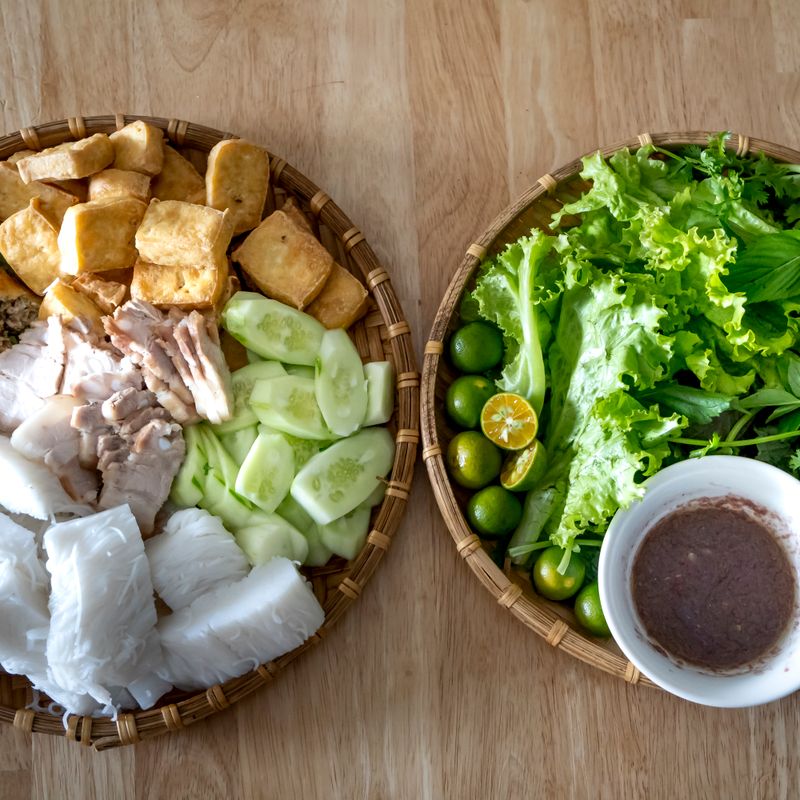
Vietnamese Roasted Peanut and Lime Leaf Dip
A fragrant Southeast Asian dip with toasted peanuts, fresh lime leaves, and coconut milk, finished with a whisper of fish sauce for depth. Serve with vegetable crudités, crispy rice crackers, or spring rolls for a bright, nutty appetizer.
Steps
Before you start
- If using whole peanuts, shell them first; if using raw peanuts, you'll roast them yourself; if using pre-roasted, skip straight to toasting in step 1
- Measure out fresh lime leaves and gently crush them by hand to release oils (or buy frozen/dried from Asian markets)
- Have all ingredients at room temperature for easier blending
Toast the peanuts
- Heat a small skillet (10-inch/25 cm) over medium heat.
- Add the peanuts and toast, stirring frequently, for 5–8 minutes until fragrant and slightly darker—if using pre-roasted peanuts, just 2–3 minutes to wake up the oils.
- Transfer to a plate to cool slightly.
+ Show details− Hide details
Ready when: Peanuts are fragrant and have deepened in color; you can smell the toasted aroma
Tip: Don't skip toasting—it intensifies the peanut flavor dramatically even if they're already roasted.
Toast the lime leaves
- In the same skillet, briefly warm the torn lime leaves over medium heat for 30 seconds to 1 minute, stirring gently, just to release their volatile oils.
- You'll smell the bright citrus aroma immediately.
- Transfer to a small plate.
+ Show details− Hide details
Ready when: Leaves darken slightly and release an intense lime-citrus perfume
Tip: Don't burn the leaves—you just want to wake up their essential oils, not brown them.
Blend the base
- Add the cooled peanuts and warm lime leaves to a food processor.
- Pulse until the mixture is broken down into a coarse paste (about 15–20 pulses).
- Pour in the coconut milk, minced garlic, fish sauce, lime juice, and palm sugar.
- Blend on medium speed for 2–3 minutes until smooth and creamy, stopping to scrape down the sides once or twice.
+ Show details− Hide details
Ready when: Mixture is smooth, creamy, and pale tan with flecks of lime leaf visible; no gritty texture
Tip: If your blender is struggling, add 2–3 tablespoons (30–45 ml) more coconut milk incrementally to loosen it up.
Taste and adjust
- Transfer the dip to a small serving bowl.
- Taste and adjust seasoning: add a squeeze more lime juice for brightness, a tiny pinch of salt for depth, or a few more drops of fish sauce if it needs more savory umami.
- If desired, stir in the sliced red chili for heat.
+ Show details− Hide details
Ready when: Flavors are balanced—you should taste peanut, lime, salt, and a faint funk from fish sauce without any single flavor overpowering
Tip: Remember fish sauce is salty, so go easy on added salt; you can always add more but can't take it out.
Good to know
Tips
- This dip is wonderful as a sauce for grilled vegetables, fresh spring rolls, or crispy rice crackers. It's also excellent dolloped on rice bowls or served alongside roasted or steamed shrimp.
- If you can't find fresh kaffir lime leaves, frozen ones (often sold in Asian markets) work just as well—no need to thaw them before toasting.
- The fish sauce may smell pungent on its own, but when blended into the dip, it acts as a savory backbone that enhances all the other flavors rather than dominating.
- Make this dip up to 24 hours ahead and refrigerate; the flavors will become even more harmonious as they rest together.
Storage & reheating
Refrigerate in an airtight container for up to 4 days. The flavors will meld and deepen overnight, making it even better the next day. Serve cold or bring to room temperature before serving. (Freezing is not recommended, as the coconut milk can separate upon thawing.)
Substitutions
- fresh or frozen kaffir lime leaves (or Thai lime leaves) → Zest of 1 lime mixed with 1 tablespoon (15 ml) coconut water or a splash of lime juice, plus a bay leaf if you have it. Not identical, but captures some of the citrusy, herbal quality; add the zest at the very end so it stays bright and aromatic.
- Vietnamese fish sauce (nuoc mam) → Soy sauce or tamari (use ½ teaspoon / 3 ml less to start, as it's less intense but saltier). You'll lose some of the funk and umami, but the dip will still be delicious—taste as you go.
- palm sugar (or light brown sugar) → Light brown sugar or honey (use the same amount). Honey will add a different sweetness profile; use slightly less if you prefer a less sweet dip.
- roasted unsalted peanuts (or raw peanuts) → Roasted unsalted cashews or a 50/50 mix of peanuts and cashews. Cashews will make a smoother, milder dip—you may want to add an extra ½ teaspoon (3 ml) of fish sauce or lime juice to keep it lively.
More dips & spreads
See all →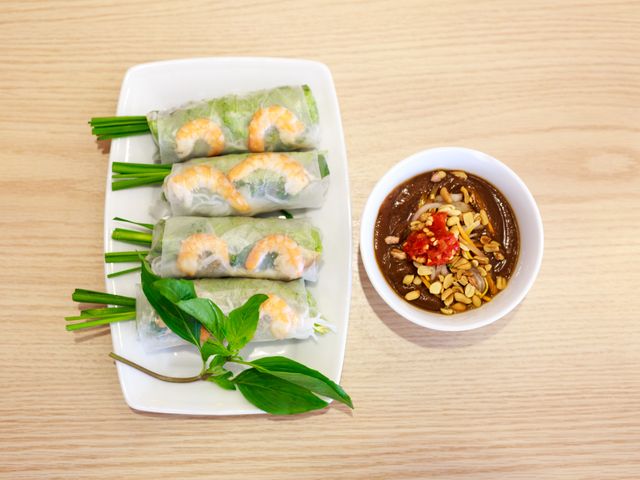


Find more like this
- Meal
- Snack
- Cuisine
- Vietnamese
- Method
- Stovetop