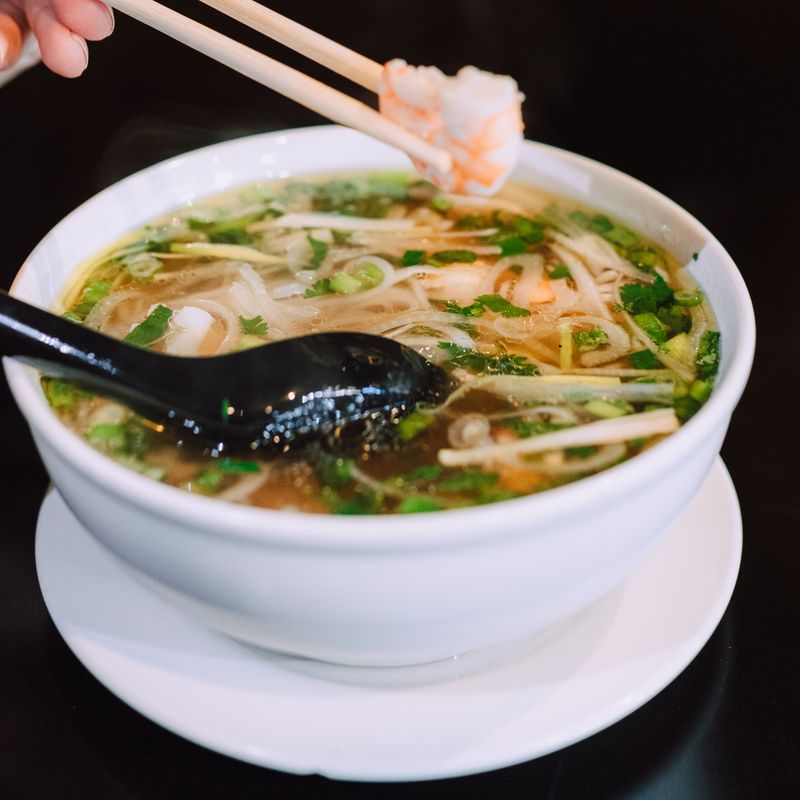
Vietnamese Lemongrass Shrimp and Glass Noodle Chowder
A fragrant, herbaceous chowder built on a lemongrass-infused broth with succulent shrimp, tender glass noodles, and aromatic herbs. This Vietnamese-inspired dish balances warm spice, bright citrus, and the delicate chewiness of rice noodles in a light, flavorful broth that's ready in under 30 minutes.
- Prep
- 15 min
- Cook
- 14 min
- Total
- 29 min
- Makes
- 4 servings (about 2 cups per bowl)
Steps
Before you start
- Peel and devein shrimp if not already done, keeping them cold
- Measure all ingredients before you start cooking
- Have a large pot or Dutch oven ready for the broth
Build the aromatic base
- Heat 1 tablespoon of oil in a large pot over medium heat.
- Add the minced garlic, sliced ginger, and sliced Thai chili.
- Stir constantly for 1 to 2 minutes until fragrant, being careful not to brown the garlic.
- The oil should shimmer around the aromatics.
+ Show details− Hide details
Ready when: aromatics are fragrant and begin to soften; garlic is still pale
Tip: Don't skip this step—blooming the aromatics in oil releases their essential oils and builds the chowder's foundation.
Add broth and lemongrass
- Pour the 6 cups of shrimp or chicken broth into the pot.
- Add the lightly bruised lemongrass pieces.
- Bring to a simmer over medium-high heat, then reduce heat to medium and let simmer for 5 minutes.
- The broth will take on a pale golden hue and subtle lemongrass aroma.
+ Show details− Hide details
Ready when: broth simmers gently with small bubbles breaking the surface; lemongrass softens and releases fragrance
Tip: Bruising the lemongrass—pressing it gently with the side of a knife before adding—helps release more flavor into the broth.
Season the broth
- Stir in the 1.5 tablespoons of fish sauce and 3 tablespoons of fresh lime juice.
- Taste the broth and adjust with a pinch of salt if needed.
- The broth should taste savory, tangy, and aromatic—not overly fishy.
+ Show details− Hide details
Ready when: fish sauce and lime juice are fully incorporated; broth tastes balanced
Tip: Add fish sauce first, then taste, then add lime juice—this prevents it from tasting too sharp or too funky.
Cook the glass noodles
- Add the 4 oz of glass noodles to the broth.
- Stir gently to separate the strands.
- Maintain a gentle simmer and cook for 3 to 4 minutes, stirring occasionally, until the noodles are translucent and tender but still slightly chewy.
- They will not fully soften until you eat them—they'll continue to absorb liquid.
+ Show details− Hide details
Ready when: noodles are translucent and bend without snapping; a strand is just tender when bitten
Tip: Glass noodles cook very quickly. Keep stirring gently so they don't clump together at the bottom of the pot.
Add the shrimp
- Slide the cold shrimp into the simmering broth, stirring gently to distribute them.
- Maintain a gentle simmer and cook for 3 to 4 minutes, until the shrimp are opaque throughout and firm to the touch.
- A shrimp is done when it has curled into a C-shape and shows no translucent gray in the center.
+ Show details− Hide details
Ready when: shrimp are opaque and curled into a C-shape; internal temperature reaches 145°F (63°C)
Tip: Do not overcook shrimp or they'll become rubbery. Remove them from heat as soon as they turn opaque—carryover heat will finish them.
Strain and serve
- Using a slotted spoon or mesh strainer, remove the lemongrass pieces from the pot and discard them.
- Ladle the chowder into four warm bowls, dividing the shrimp and noodles evenly.
- Top each bowl with torn Thai mint, torn cilantro, the white and light green parts of the scallions, and a light scatter of chili slices if desired.
+ Show details− Hide details
Ready when: chowder is evenly portioned and garnished
Tip: Add the fresh herbs right before serving so they stay vibrant and aromatic rather than wilting into the hot broth.
Good to know
Tips
- Bruise the lemongrass by pressing it gently with the side of a knife to crack the fibers and release more aromatic oils—this deepens the flavor of the broth.
- Shrimp cook very quickly and toughen if overcooked. Remove the pot from heat as soon as they turn opaque; the residual heat will finish them perfectly.
- For a creamier chowder, stir in 2 tablespoons of coconut milk at the end, but keep it subtle so the herbaceous broth remains the star.
- Taste the broth carefully before serving. Vietnamese chowders rely on balance—if it tastes too salty, add a squeeze of lime; if too sharp, add a touch more fish sauce to round it out.
Storage & reheating
Refrigerate in an airtight container for up to 2 days. Reheat gently over medium heat (do not boil) until warmed through, about 5 minutes. The noodles will absorb more broth as it sits; add a splash of water or broth when reheating if needed. Do not freeze, as shrimp texture deteriorates after thawing.
Substitutions
- fresh Thai mint or basil → fresh Thai basil or regular basil. Thai basil has a slightly anise-like flavor that's more authentic; regular basil works well but tastes a bit sweeter.
- glass (rice vermicelli) noodles, dried → rice vermicelli or thin rice noodles. Both cook faster (1–2 minutes) than glass noodles. Start checking for doneness earlier to avoid mushiness.
- shrimp or chicken broth → vegetable broth or unsalted chicken broth. Shrimp broth adds extra depth; vegetable or chicken broth work but will taste lighter. Increase fish sauce slightly if using vegetable broth.
- Thai red or green chili → 1/4 teaspoon red pepper flakes or a pinch of cayenne. Ground spices diffuse more evenly into the broth. Use sparingly—you can always add more at the table.
More chowders
See all →

Find more like this
- Meal
- Dinner
- Cuisine
- Vietnamese
- Main ingredient
- Shrimp
- Method
- Stovetop