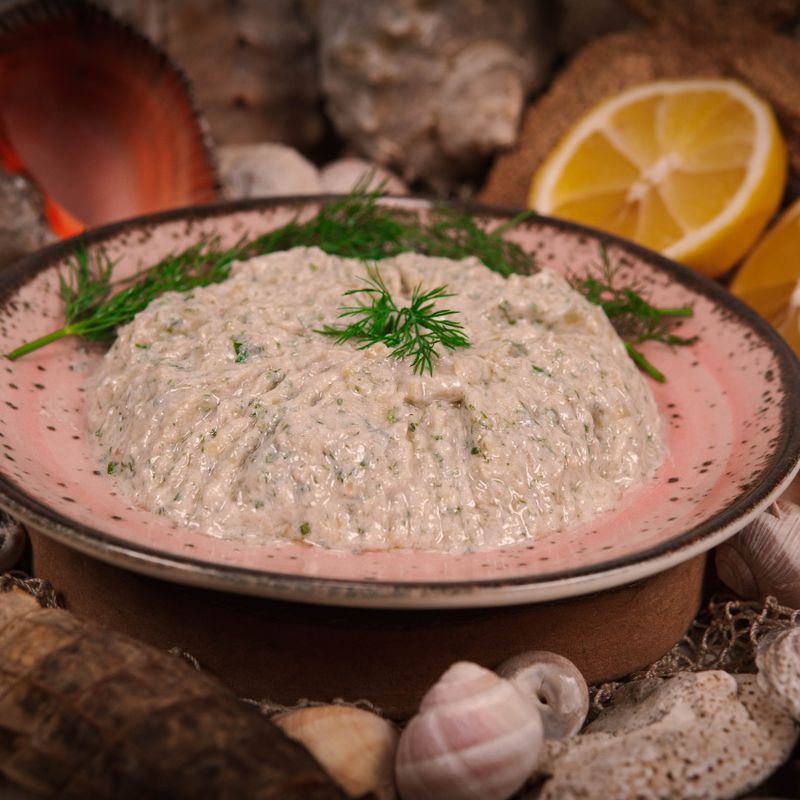
Turkish White Fish and Orzo Chowder with Dill
A silky Turkish-inspired chowder featuring flaky white fish simmered with orzo pasta, onions, and celery in a creamy fish broth base. Fresh dill and a touch of lemon bring brightness to this warming, restaurant-quality soup that's ready in under an hour.
- Prep
- 15 min
- Cook
- 30 min
- Total
- 45 min
- Makes
- 4 servings (about 10 cups total)
Steps
Before you start
- Use fresh cod or another firm white fish; avoid fish that's been thawed if possible
- Have fish broth at a simmer before you add the orzo
- Read through all steps—the timing is quick and everything comes together fast
Sauté aromatics
- Heat olive oil in a large 6-quart pot over medium heat for 1 minute.
- Add the diced onion and celery.
- Stir frequently and cook for 5 minutes, until the onion is translucent and soft.
- Add the minced garlic and stir constantly for 30 seconds until fragrant.
- Do not brown the vegetables—keep the heat at medium.
+ Show details− Hide details
Ready when: Onion is translucent and celery is soft; garlic is fragrant
Tip: Do not brown the vegetables or the broth will taste bitter. Keep heat moderate.
Add broth and bay leaf
- Pour in the fish broth (6 cups / 1.4 L) and add the bay leaf if using.
- Bring to a gentle simmer over medium-high heat, stirring occasionally.
- Once small bubbles are forming steadily at the surface, reduce heat to maintain a gentle simmer.
+ Show details− Hide details
Ready when: Broth is at a gentle simmer with small bubbles rising steadily
Tip: A gentle simmer, not a rolling boil, will keep the broth clear and delicate.
Cook orzo pasta
- Add the orzo pasta (¾ cup / 130 g) to the simmering broth and stir well.
- Cook uncovered at a gentle simmer for 9–10 minutes, stirring occasionally to prevent sticking.
- The orzo should be nearly tender but still have a slight firmness.
- Do not cook it until completely soft—it will soften more after the fish is added.
+ Show details− Hide details
Ready when: Orzo is tender with a slight firmness; tastes al dente
Tip: Stir the orzo every 2 minutes to prevent it from sinking and sticking to the bottom. Taste a piece to check doneness.
Add fish and cream
- Reduce heat to medium-low.
- Gently add the cod chunks (1.25 lbs / 560 g) to the simmering broth, stirring gently to distribute them evenly.
- Do not break up the fish.
- Slowly pour in the heavy cream (½ cup / 120 ml), stirring gently.
- The broth should look creamy but not curdled.
- Return the pot to a gentle simmer—do not boil.
+ Show details− Hide details
Ready when: Fish is just added; cream is incorporated smoothly
Tip: Add cream slowly and keep heat low to prevent it from breaking or curdling. Gentle cooking keeps the fish intact.
Poach fish until tender
- Maintain a gentle simmer (no boiling) and cook for 5–7 minutes, until the cod flakes easily when pressed with a spoon and is opaque throughout.
- Stir very gently once or twice to keep the broth moving, but try not to break up the fish pieces.
- The fish will be delicate.
+ Show details− Hide details
Ready when: Fish flakes easily and is opaque white; no translucent areas remain
Tip: Check the thickest pieces of fish for doneness. Overcooked fish will become dry and break apart into small pieces.
Finish with dill and lemon
- Remove the pot from heat.
- Gently stir in the chopped fresh dill (⅓ cup / 20 g) and lemon juice (from ½ lemon).
- Add the lemon zest for brightness.
- Taste and season with kosher salt and freshly ground black pepper to your preference.
- If using a bay leaf, remove it now.
+ Show details− Hide details
Ready when: Dill and lemon are incorporated; soup is seasoned to taste
Tip: Add lemon juice gradually and taste as you go—you can always add more but can't take it out. Fresh dill is added off-heat to preserve its delicate flavor and color.
Good to know
Tips
- For the clearest, most refined broth, use homemade fish stock if you have it, or a good-quality store-bought fish broth. Avoid bouillon cubes, which can be salty and cloudy.
- Keep a thermometer handy: cod reaches 145°F (63°C) when fully cooked. Use it to check the thickest piece without guessing.
- Turkish chowders often finish with a squeeze of lemon or a splash of good vinegar. Taste and adjust the acidity at the end—it brightens the entire soup.
- Serve with warm crusty bread and drizzle each bowl with a little extra olive oil and fresh dill. A crisp white wine like Sauvignon Blanc pairs beautifully.
Storage & reheating
Refrigerate in an airtight container for up to 2 days. To reheat, warm gently over medium-low heat, stirring occasionally; do not boil or the cream may break. Do not freeze; the fish texture and cream will suffer.
Substitutions
- cod fillet or halibut → halibut, haddock, or other firm white fish. Any mild white fish works; avoid oily fish like salmon which would overpower the dill. Cut into the same size chunks and check for doneness at the same time.
- heavy cream → half-and-half or whole milk. Half-and-half will give a lighter soup; whole milk will be thinner but still pleasant. Add it the same way, slowly and off-heat to avoid curdling.
- fish broth or light chicken broth → chicken broth or vegetable broth. Fish broth is ideal but a good-quality chicken broth works fine. Avoid beef broth, which is too heavy. Use the same quantity.
- fresh dill → fresh parsley or a mix of parsley and tarragon. Dill is classic in Turkish seafood, but parsley is a good alternative. Use the same quantity. Dried dill will be half as strong (use ⅙ cup / 10 g) but is less ideal.
More chowders
See all →


Find more like this
- Meal
- Dinner
- Cuisine
- Turkish
- Diet
- HalalSugar-Free
- Method
- Stovetop