Trinidadian Stewed Pigeon Peas
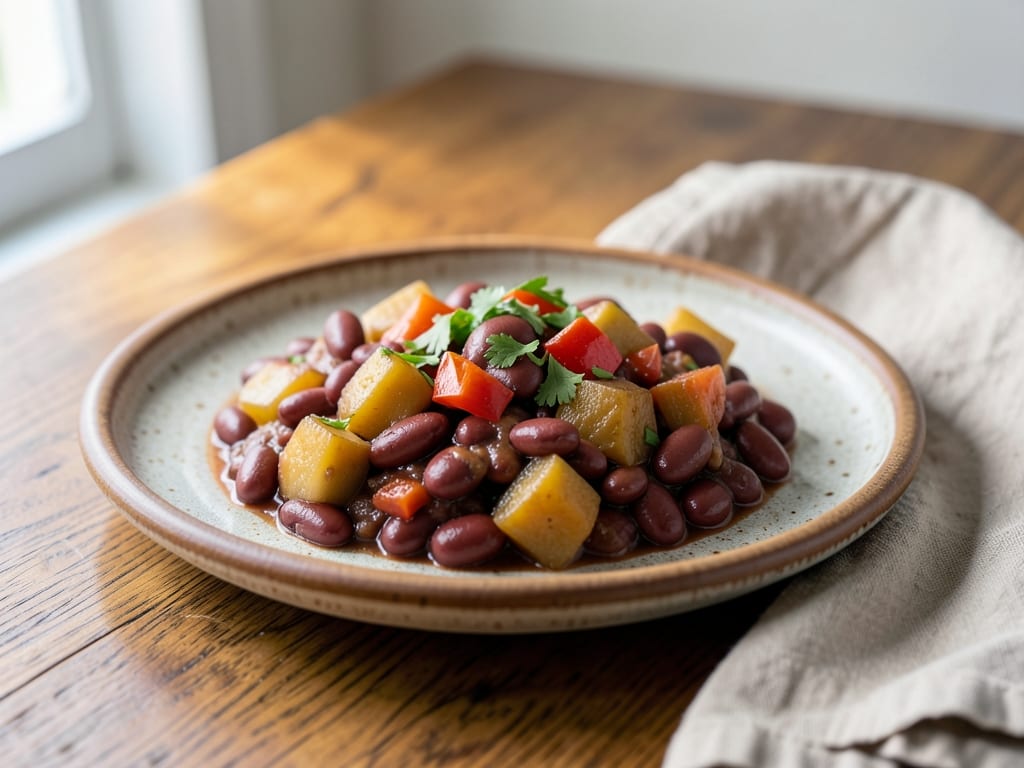
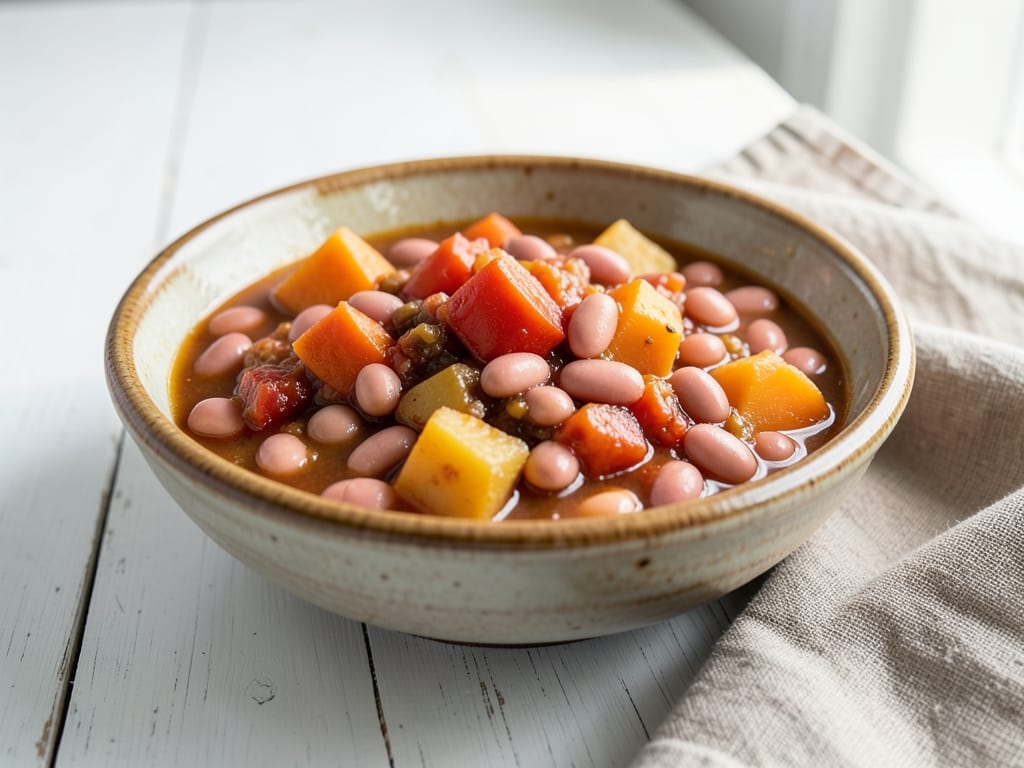
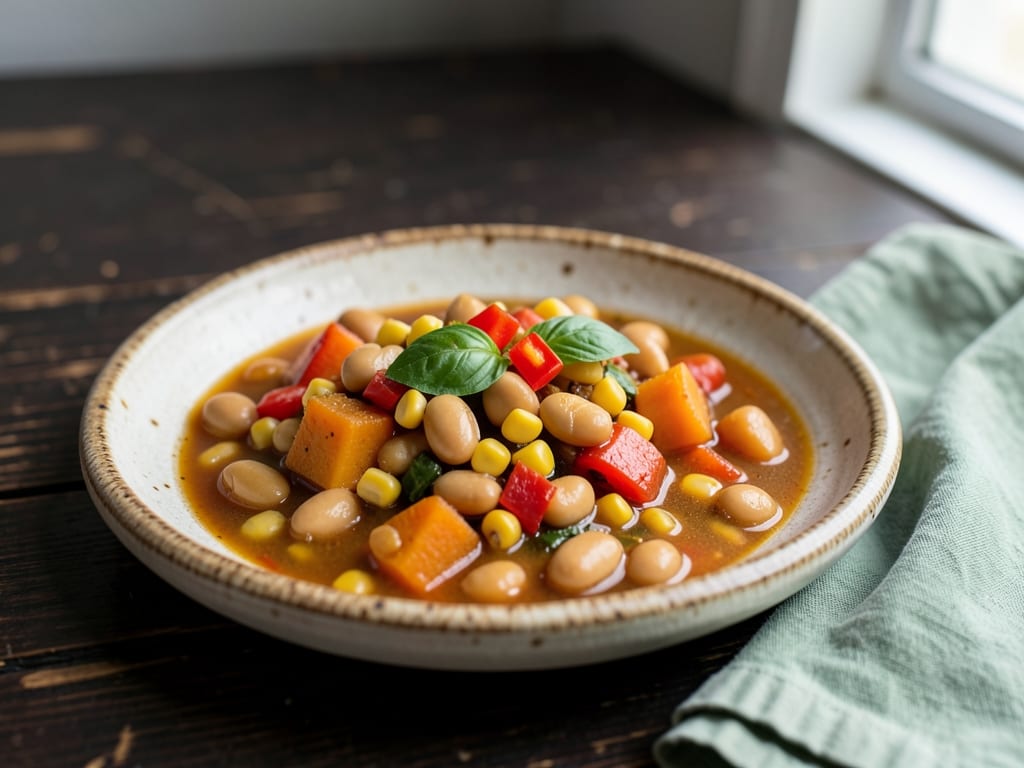
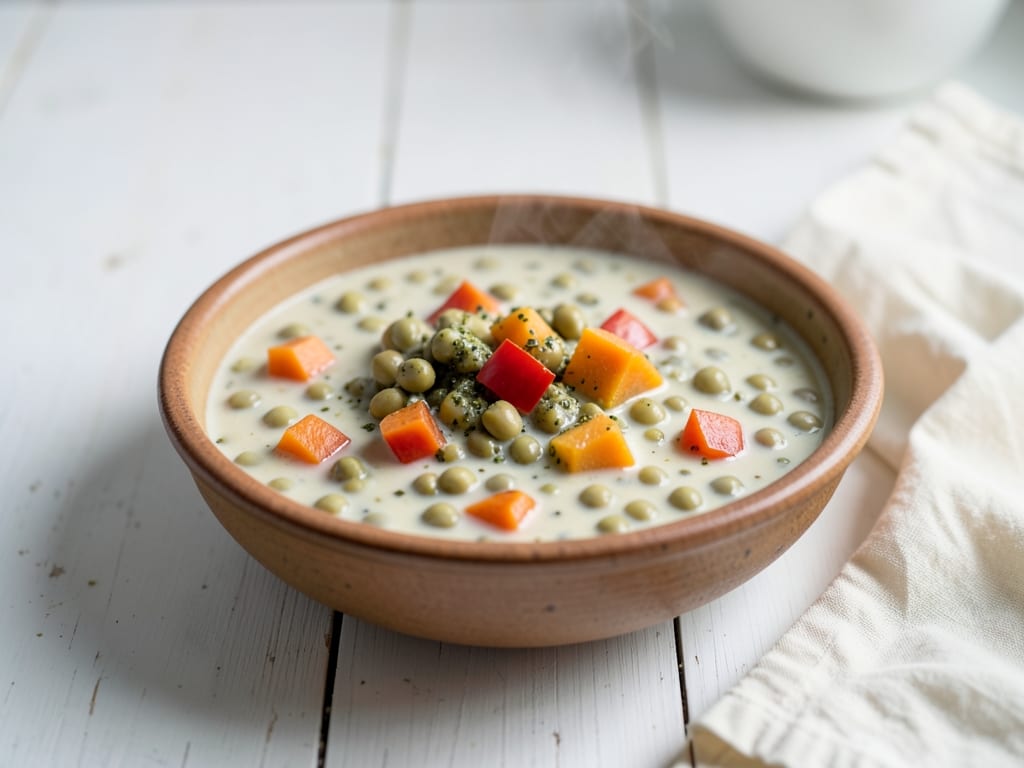
A warming, creamy stew of tender pigeon peas and butternut squash, fragrant with Trinidad's traditional green seasoning and enriched with coconut milk. This is comfort food at its best—naturally vegetarian, deeply flavorful, and a staple of the Caribbean table.
Steps
Before you start
- If using dried pigeon peas, soak overnight and cook until tender before beginning
- Prepare all ingredients and chop them before you start heating the oil (mise en place)
- Read through the recipe so you understand the timing and have all components ready
Prepare green seasoning
- In a food processor or by hand on a cutting board, combine the cilantro, scallions, garlic, thyme, and diced onion.
- Pulse (or chop finely) until broken down into a paste-like consistency with no large pieces remaining.
- Set aside.
+ Show details− Hide details
Ready when: mixture is finely chopped, resembling pesto or a paste
Tip: Use a food processor for speed and uniformity, or mince everything together on a cutting board if you prefer the traditional hand method
Sauté green seasoning and hot pepper
- Heat the vegetable oil in a large pot over medium heat.
- Add the green seasoning paste and the whole hot pepper (if using).
- Cook for 3–4 minutes, stirring frequently, until the mixture is deeply fragrant and the onion has softened slightly.
- The green color will darken as it cooks.
+ Show details− Hide details
Ready when: aromatics are strongly fragrant and onion has visibly softened
Tip: Stir constantly to prevent the green seasoning from sticking to the bottom of the pot and scorching—this base flavor is crucial
Add bell pepper
- Stir in the diced red bell pepper.
- Cook for 2 minutes, stirring, until it begins to soften and the pot becomes fragrant.
+ Show details− Hide details
Ready when: pepper pieces are slightly soft but still hold their shape
Add squash to the pot
- Add the cubed butternut squash and stir well to coat all pieces with the oil and aromatic mixture.
- Cook for 3 minutes, stirring occasionally, to toast the squash slightly and allow it to absorb the flavors.
+ Show details− Hide details
Ready when: squash cubes show light golden color on a few edges
Add broth and pigeon peas
- Pour in the vegetable broth and add the drained pigeon peas.
- Stir everything together until well combined.
- Increase the heat to medium-high and bring the mixture to a simmer, stirring occasionally.
+ Show details− Hide details
Ready when: liquid is simmering with small bubbles breaking the surface consistently
Simmer until squash is tender
- Once simmering, reduce heat to medium-low.
- Simmer uncovered for 20–25 minutes, stirring every 5 minutes or so to prevent sticking on the bottom.
- The butternut squash is ready when pieces are very soft and break apart easily when pressed against the side of the pot with a spoon.
+ Show details− Hide details
Ready when: butternut squash pieces break apart easily when pressed with a spoon; stew simmers gently without vigorous bubbling
Tip: Stir every 5 minutes to keep the bottom from sticking and to ensure the squash cooks evenly
Finish with coconut milk
- Stir in the coconut milk until fully incorporated, breaking up any clumps.
- Simmer for 3–5 minutes more, stirring occasionally, until the stew is creamy and all flavors are well blended.
+ Show details− Hide details
Ready when: stew is creamy and steaming; no raw coconut flavor remains
Season and serve
- Remove the pot from heat.
- If you used a whole hot pepper for heat, carefully remove it with a spoon and discard (or leave it in for those who want extra spice).
- Taste the stew and adjust the seasoning with salt and black pepper as needed.
- Stir well and taste again.
- Serve hot in bowls.
+ Show details− Hide details
Ready when: flavors are balanced; seasoning suits your taste preference
Tip: Start with 1 tsp salt and adjust from there—it's easier to add more salt than to fix oversalted stew. Taste multiple times
Good to know
Tips
- For a firmer texture and shorter cooking time, reduce the squash simmering time to 15–18 minutes and check for tenderness earlier
- Make it spicier by piercing the hot pepper with a knife while cooking (allows heat to infuse gradually), or remove it entirely for a mild, family-friendly stew
- Fresh green seasoning makes a noticeable difference in authenticity; if using dried herbs instead, use about 1/3 the amount since dried herbs are more concentrated
- Leftover stew thickens significantly as it cools—this is normal and delicious. Thin it with vegetable broth or coconut milk when reheating to reach your preferred consistency
Make ahead
Chop all vegetables and prepare the green seasoning up to 1 day ahead; store in separate covered containers in the refrigerator. The finished stew can be made up to 3 days ahead and tastes even better the next day as flavors deepen and meld.
Storage & reheating
Room temperature: up to 2 hours. Refrigerator: up to 4 days in an airtight container. Freezer: up to 3 months in a freezer-safe container. To reheat: Warm gently on the stove over medium heat, stirring occasionally and adding a splash of vegetable broth or water if the stew has thickened too much.
Substitutions
- Butternut squash → Caribbean pumpkin (calabaza) or sweet potato. Use the same weight. Pumpkin gives a more authentic Trinidad flavor and softer, earthier taste; sweet potato is naturally sweeter.
- Unsweetened coconut milk (1 can, 13.5 fl oz / 400ml) → Full-fat dairy milk or unsweetened cashew cream. Dairy milk creates a slightly different creaminess and tanginess; cashew cream maintains the vegan quality. Use the same amount.
- Fresh cilantro → Culantro (also called shadow beni or recao). Culantro is more traditional in Trinidad and has a stronger, more herbaceous flavor. Use the same amount.
- Canned pigeon peas (2 cans, 15 oz / 425g each) → Kidney beans, chickpeas, or black-eyed peas. Each will give a different flavor and texture profile, but all work well in this stew. Use the same quantity by volume.