Tom Yum Shrimp Casserole
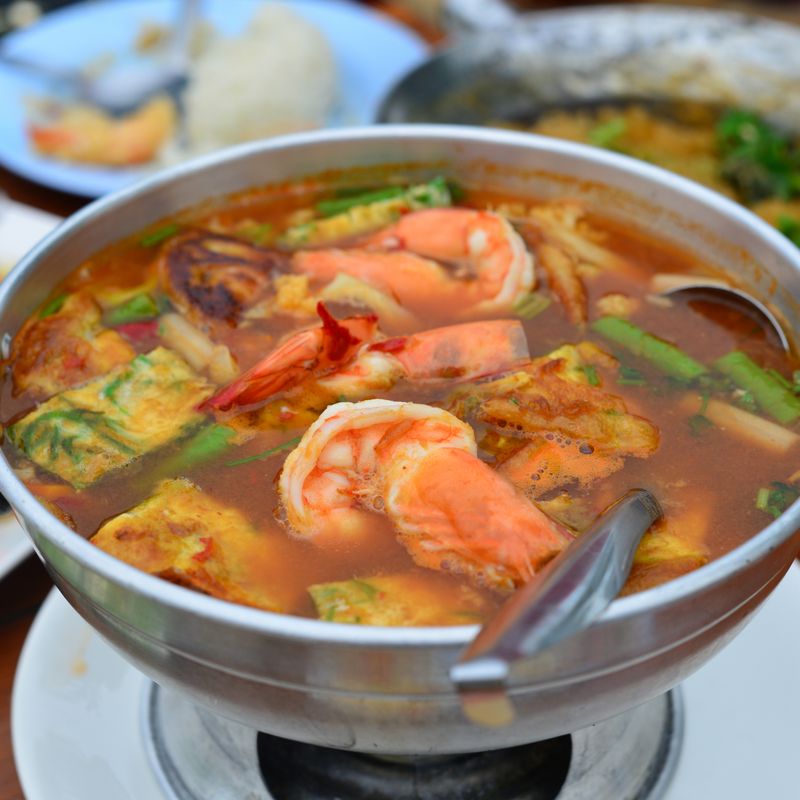
A baked casserole capturing the bright, bold flavors of Thai tom yum soup. Rice noodles nestle in a silky coconut broth infused with lemongrass, galangal, lime, and chilies, then topped with plump shrimp and fresh herbs. Baked until bubbly and fragrant, it's a comforting, aromatic one-dish meal that brings the essence of Thailand to your table.
- Prep
- 25 min
- Cook
- 25 min
- Wait
- 15 min
- Total
- 1 hr 5 min
- Makes
- 4 servings (one 9×13-inch casserole)
Steps
Before you start
- Preheat oven to 375°F (190°C)
- Pat shrimp dry with paper towels so they cook properly
- Measure out all aromatics and paste ingredients before starting
- Have lime juice and fresh herbs ready to finish
Prepare the broth base
- In a large pot, heat 1 tbsp vegetable oil over medium heat.
- Add minced garlic and sliced shallots; sauté for 2 minutes until fragrant.
- Stir in 1.5 tbsp Thai red curry paste and cook for 1 minute, stirring constantly, to bloom the spices.
- Add bruised lemongrass pieces and galangal slices, then pour in 2.5 cups chicken broth and 13.5 fl oz coconut milk.
- Bring to a gentle simmer, then reduce heat to low and let steep for 5 minutes.
- The broth should smell deeply aromatic and slightly spiced.
+ Show details− Hide details
Ready when: Broth is aromatic and lemongrass is softened; no raw spice taste remains
Tip: Bruise lemongrass gently to release its oils without crushing it into the broth; you'll remove the pieces before baking.
Season the broth
- Strain the broth through a fine-mesh sieve into a bowl, pressing gently on the lemongrass and galangal to extract their flavor; discard solids.
- Stir 1.5 tbsp fish sauce and 3 tbsp fresh lime juice into the warm broth.
- Taste and adjust: it should be tangy, salty, and fragrant with a hint of heat.
- If too salty, add a splash of water; if not salty enough, add more fish sauce in small increments (it goes a long way).
+ Show details− Hide details
Ready when: Broth tastes balanced: tangy, salty, aromatic, with mild heat
Tip: Taste as you adjust seasoning; fish sauce can be overpowering, so add in small amounts (½ tsp at a time).
Cook the noodles
- While the broth rests, bring a large pot of water to a boil.
- Add 6 oz dried rice noodles and cook according to package directions (usually 4–5 minutes), stirring occasionally to prevent sticking.
- Drain in a colander and rinse briefly with cool water to stop cooking and remove excess starch.
- Set aside.
+ Show details− Hide details
Ready when: Noodles are tender but still slightly firm to the bite (not mushy)
Tip: Don't overcook the noodles; they'll cook further in the oven. Slightly undercooked is better here.
Assemble the casseroleOven 375°F / 190°C
- Preheat oven to 375°F (190°C).
- Spread the cooked rice noodles evenly in a 9×13-inch baking dish.
- Scatter 6 oz sliced cremini mushrooms and 8 oz halved cherry tomatoes over the noodles.
- Arrange 1.25 lb patted-dry shrimp on top, spacing them out.
- Pour the warm seasoned broth over everything, ensuring the noodles and shrimp are submerged.
- Scatter 2 thinly sliced Thai red chilies (seeds removed if you prefer less heat) over the surface.
+ Show details− Hide details
Ready when: Ingredients are arranged and broth is evenly distributed
Tip: Pat the shrimp very dry so they cook properly instead of steaming; wet shrimp can release water and make the dish soggy.
Bake until shrimp are cookedOven 375°F / 190°C
- Cover the baking dish loosely with foil (don't seal it tightly; the steam needs somewhere to go).
- Place in the preheated 375°F (190°C) oven and bake for 20 minutes.
- Remove the foil and check the shrimp: they should be opaque and firm, no longer translucent.
- If still translucent, bake uncovered for another 2–3 minutes.
- The broth should be gently bubbling around the edges.
+ Show details− Hide details
Ready when: Shrimp are opaque and firm throughout; broth bubbles gently at the edges
Tip: Shrimp cooks quickly; check at 18 minutes to avoid overcooking, which makes them tough and rubbery.
Rest and finish
- Remove the casserole from the oven and let it rest uncovered for 5 minutes.
- This allows the flavors to settle and the noodles to finish absorbing the broth.
- Just before serving, top the casserole with torn Thai basil (if using), chopped cilantro, and sliced scallions.
- Serve directly from the dish with lime wedges on the side so each diner can squeeze fresh lime to taste.
+ Show details− Hide details
Ready when: Casserole is warm throughout and smells aromatic
Tip: Add fresh herbs at the very end so they stay bright and fragrant; cooking them dulls their flavor.
Good to know
Tips
- For the boldest flavor, use full-fat coconut milk (not light), which carries the tom yum spices beautifully. The fat also creates a lush mouthfeel.
- If fresh Thai basil and cilantro are hard to find, parsley and mint are decent stand-ins, though they won't taste the same. Fresh herbs are crucial to finishing the dish.
- Don't skip the 5-minute rest after baking; it allows the noodles to finish hydrating and the flavors to harmonize, making each bite richer.
- Leftovers are wonderful because the noodles continue soaking up the aromatic broth. They taste even better the next day, with deeper flavor.
Make ahead
The broth can be made up to 2 days ahead and stored in an airtight container in the refrigerator. Reheat gently on the stovetop before assembling the casserole. Noodles can be cooked 4 hours ahead and kept in a covered bowl at room temperature (or refrigerated; let them come to room temperature before adding to the casserole).
Storage & reheating
Store leftovers in an airtight container in the refrigerator for up to 2 days. The noodles will continue to absorb broth, making the dish softer and more noodle-forward, which many people enjoy. Reheat gently on the stovetop over medium-low heat with a splash of water or broth to loosen, or cover and microwave in 2-minute intervals until hot. Do not freeze; the noodle texture becomes mushy after thawing.
Substitutions
- Thai red curry paste → Thai green curry paste (1.5 tbsp) or red curry powder (1 tbsp) mixed with 1 tsp water. Green curry paste will shift the color and flavor toward herbal and spicy; curry powder is milder and slightly earthier. Adjust heat level to taste.
- fresh lemongrass stalks → Zest of 2 limes mixed with 1 tsp dried lemongrass (soaked in water first), or ½ tsp lemongrass powder stirred into the broth. Fresh lemongrass is ideal, but dried will work. Avoid bottled lemongrass juice, which lacks depth. The lime zest adds brightness but won't replicate lemongrass's full complexity.
- fish sauce (nam pla) → 1.5 tbsp soy sauce, or a combination of 1 tbsp soy sauce plus ½ tbsp Worcestershire sauce. Fish sauce is essential to tom yum's flavor profile, but these alternatives provide umami and saltiness. The dish will taste less authentically Thai.
- large shrimp (16–20 count), peeled and deveined → 1.25 lb diced firm white fish (cod, halibut) or sliced squid; halve the cooking time for white fish (8–10 minutes total). Fish will be more delicate; squid becomes rubbery if overcooked. Both work well, though the dish becomes tom yum fish or squid casserole.