Thai Red Curry Crispy Chicken Burgers with Egg
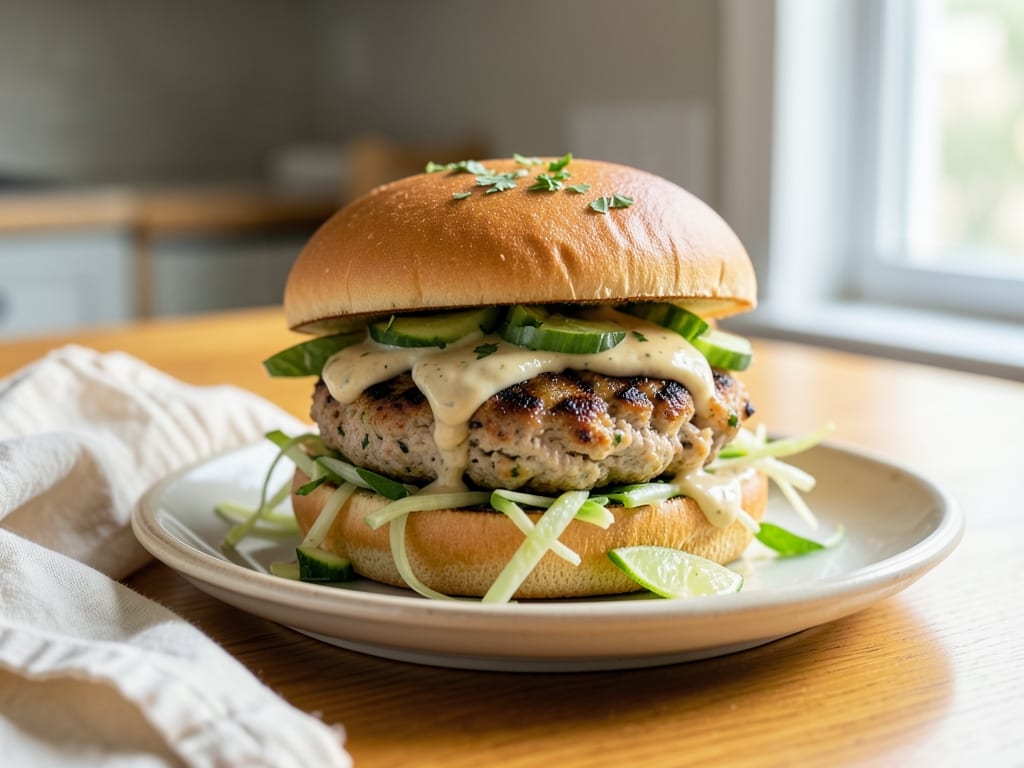
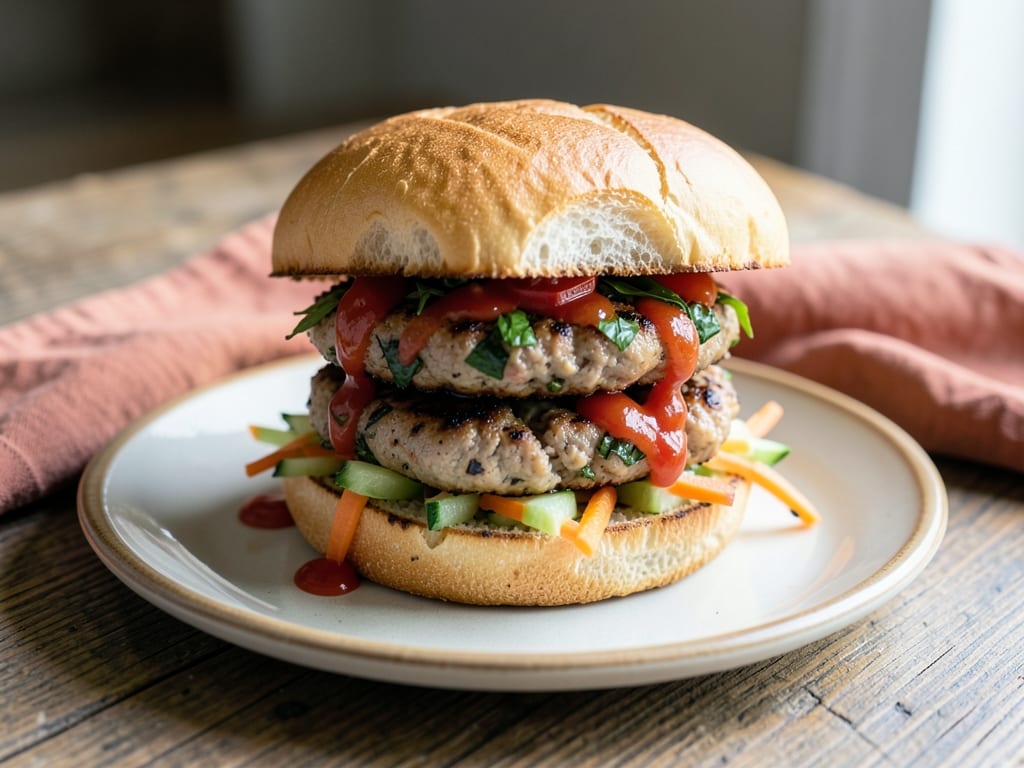
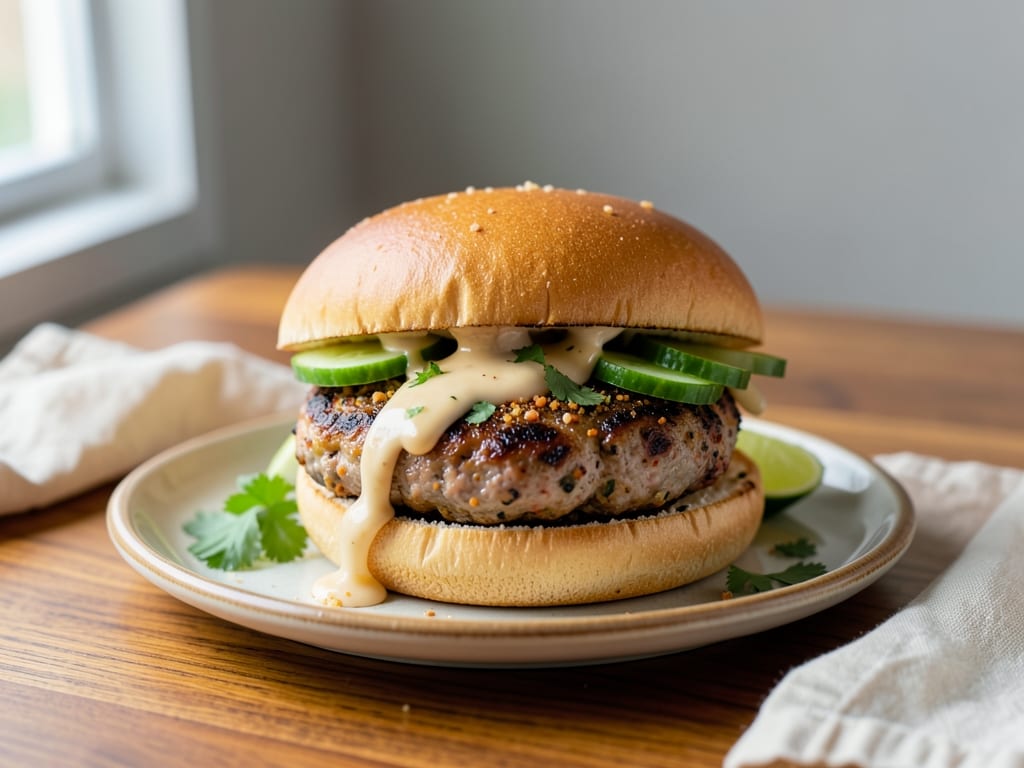
Seasoned ground chicken patties infused with red curry paste, crispy long beans, and fresh basil, pan-fried until golden and topped with a perfectly fried egg. These burgers deliver aromatic Thai flavors with a satisfying crunch and bright herb notes. Serve on toasted buns with quick-pickled cucumber and cilantro mayo for a complete meal.
Steps
Before you start
- Have all ingredients measured and prepped before you begin mixing the patties
- Chill the ground chicken in the freezer for 10 minutes so it's cold and easier to handle
- Toast your burger buns lightly if desired
- Have a small bowl of ice water on hand to keep hands cool while forming patties
Mix the patty filling
- In a large bowl, combine the cold ground chicken, red curry paste, panko breadcrumbs, egg, minced long beans, chopped Thai basil, fish sauce, and lime zest.
- Using your fingertips or a fork, gently fold and mix until just combined—do not overmix, as this makes the burgers tough and dense.
- The mixture should hold together loosely but not be mushy.
- Season lightly with kosher salt and black pepper.
+ Show details− Hide details
Ready when: mixture holds together but is not compressed
Tip: Overmixing develops gluten and makes the burgers compact and rubbery. Mix only until ingredients are evenly distributed.
Form the patties
- Divide the mixture into 4 equal portions (about 3.5 oz / 100 g each).
- Using damp hands or hands rinsed in cold water, gently shape each portion into a patty about ¾ inch (2 cm) thick and 3.5 inches (9 cm) wide.
- Make a slight depression in the center of each patty with your thumb (this prevents them from puffing up during cooking).
- Place the patties on a plate and let them rest at room temperature for 10 minutes to firm up slightly.
+ Show details− Hide details
Ready when: patties are firm enough to slide a spatula under without breaking
Tip: The depression in the center prevents the burger from doming up as it cooks. Wet hands prevent sticking without making the mixture wet.
Heat the skillet and cook burgers
- Heat a 12-inch (30 cm) skillet over medium-high heat for 2 minutes.
- Add 2 tablespoons (30 ml) of neutral oil and swirl to coat evenly.
- When the oil is shimmering and just beginning to smoke, carefully add the 4 patties to the pan, spacing them about 1 inch (2.5 cm) apart.
- Do not move them—let them develop a golden crust for 3 to 4 minutes.
+ Show details− Hide details
Ready when: underside of patties is golden brown and releases easily from the pan
Tip: Resist the urge to flip or press the burgers—they need time to develop a crust. If you flip too early, they'll stick and tear.
Flip and finish cookingOven 165°F / 75°C
- Using a spatula, carefully flip each patty.
- Reduce the heat to medium and cook the second side for 3 to 4 minutes, until the internal temperature reaches 165°F (74°C) on an instant-read thermometer inserted into the thickest part of a patty.
- The exterior should be deeply golden and crispy.
+ Show details− Hide details
Ready when: internal temperature is 165°F (74°C) and the exterior is golden brown
Tip: Use an instant-read thermometer to avoid overcooking, which dries out the burger. The curry paste and long beans may char slightly—this adds flavor.
Transfer and set aside
- Transfer the cooked burgers to a plate and tent loosely with aluminum foil to keep warm.
- Do not stack them or they'll lose their crispness.
- Wipe out the skillet with a paper towel, leaving a light coating of oil.
+ Show details− Hide details
Tip: Tenting with foil keeps the burgers warm without trapping moisture that would make them soggy.
Fry the eggs
- Return the skillet to medium heat and add 1 tablespoon (15 ml) of fresh neutral oil.
- Once the oil is shimmering, crack all 4 eggs into the pan, spacing them out so they have room to spread.
- Cook until the whites are set and opaque but the yolks are still runny or just set at the edges, about 2 to 3 minutes.
- Season with a pinch of salt and pepper.
+ Show details− Hide details
Ready when: egg whites are opaque and set; yolks are still soft or just set at the edges
Tip: For runny yolks that drip onto the burger, cook only 2 minutes. For set yolks, cook closer to 3 minutes. Don't crowd the pan or the eggs will steam instead of fry.
Assemble the burgers
- Place each burger patty on a toasted bun.
- Top each with a fried egg, yolk side up.
- Serve immediately with lime wedges, sliced cucumber, fresh cilantro, and your choice of condiments (sriracha mayo, soy sauce, or sweet chili sauce work beautifully).
+ Show details− Hide details
Tip: Assemble just before serving so the bun stays toasted and the egg is still warm.
Good to know
Tips
- Cold ground chicken is easier to handle and produces fluffier, more tender burgers. Freeze it for 10 minutes before mixing.
- Don't press the burgers down with your spatula while they cook—this squeezes out moisture and makes them dense and dry.
- For extra crispy burgers, increase the panko to ⅔ cup (75 g) and reduce the ground chicken by 2 ounces (55 g).
- Serve immediately with acidic toppings like quick-pickled cucumber, fresh lime juice, or a squeeze of sriracha mayo to balance the richness of the curry and egg.
Make ahead
The raw patties can be formed, covered, and refrigerated for up to 4 hours. Cook straight from the fridge, adding 1 to 2 minutes to the first side to ensure they cook through.
Storage & reheating
Cooked burgers (without the egg) keep refrigerated in an airtight container for up to 3 days. Reheat gently in a 350°F (175°C) oven for 5 to 6 minutes until warmed through. The fried eggs are best served fresh. Uncooked patties can be frozen for up to 3 months; thaw in the refrigerator overnight before cooking.
Substitutions
- fresh Thai basil → fresh cilantro or regular basil. Thai basil has a distinctive anise-like flavor, but cilantro or basil will deliver similar freshness. Use the same amount.
- fresh long beans (yard-long beans or green beans) → green beans or snap peas. Green beans or snap peas add crunch and color. Mince them fine as you would the long beans.
- Thai red curry paste → green curry paste or panang curry paste. Green curry paste is spicier and more herbaceous; panang is richer and less spicy. Use the same amount and adjust seasoning if needed.
- fish sauce → soy sauce or tamari. Fish sauce adds umami depth, but soy or tamari will provide similar savory notes. Use 1.5 teaspoons (8 ml) instead of 1 tablespoon.