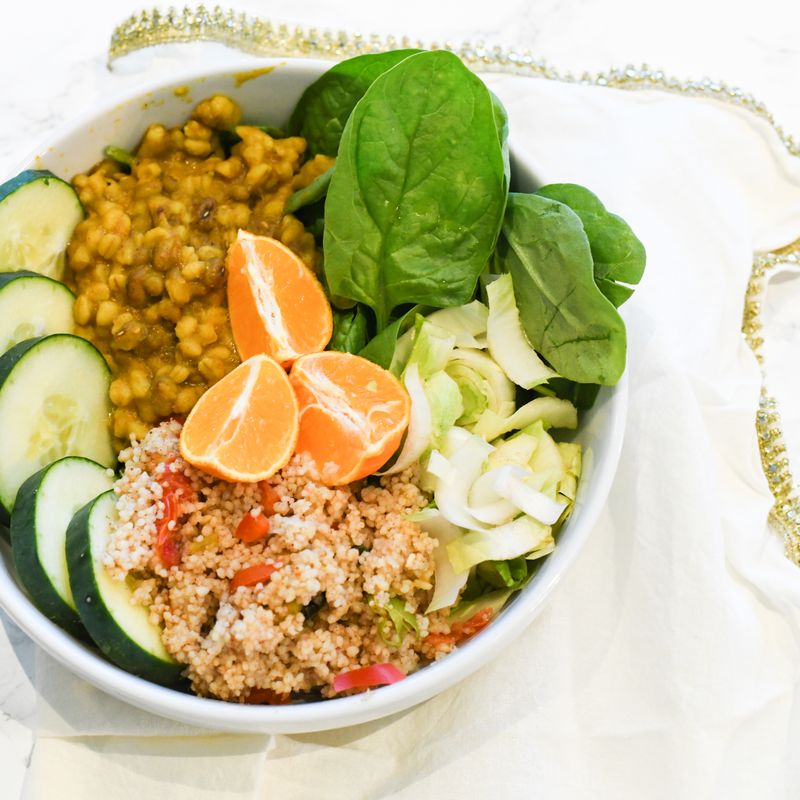
Thai Peanut Sauce Couscous Salad
A vibrant, protein-rich grain salad that combines fluffy couscous with crisp vegetables and a silky Thai-inspired peanut sauce. Bright with lime and cilantro, it's ready in under 30 minutes and works hot, warm, or at room temperature. Perfect for meal prep or a quick weeknight dinner.
- Prep
- 22 min
- Cook
- 3 min
- Wait
- 5 min
- Total
- 30 min
- Makes
- 4 servings (about 1.5 cups each)
Steps
Before you start
- Gather and measure all ingredients before starting—mise en place makes this recipe flow smoothly.
- Use firm English cucumber (hothouse) if possible; regular cucumber will release more water as it sits.
- Peel fresh ginger and garlic and have them ready, or use pre-minced/grated (though fresh tastes better).
Whisk peanut sauce
- In a small bowl, whisk together peanut butter, lime juice, fish sauce, soy sauce, and honey until well combined.
- Add minced garlic and grated ginger, then stir in chili paste if using.
- Gradually add water, whisking as you go, until the sauce reaches a pourable consistency—it should be thinner than straight peanut butter but thicker than vinaigrette, about the consistency of loose hummus.
- Set aside.
+ Show details− Hide details
Ready when: Sauce is smooth, well combined, and pourable but still clings to a spoon
Tip: Don't skip the water—it keeps the sauce from being gluey and allows it to coat every grain of couscous evenly. If sauce seems too thick, add water 1 tablespoon at a time.
Boil broth and cook couscous
- In a medium saucepan, bring the broth and salt to a rolling boil over medium-high heat (about 2–3 minutes).
- Stir in the couscous with a spoon, then immediately remove the pan from heat.
- Cover the pan tightly with a lid or aluminum foil and let sit completely undisturbed for exactly 5 minutes.
- Do not peek or stir.
+ Show details− Hide details
Ready when: All liquid is absorbed and couscous is tender but each grain remains separate
Tip: Timing matters here: set a timer for exactly 5 minutes and don't lift the lid. Peeking lets steam escape and can result in undercooked couscous.
Prep vegetables while couscous rests
- While the couscous is sitting, prep vegetables: seed and dice the red bell pepper into ½-inch pieces, dice the cucumber into ½-inch cubes, peel the carrots and julienne them into thin matchsticks about 2 inches long, and thinly slice the red onion.
- If using edamame, ensure they're fully thawed.
- Coarsely chop the fresh cilantro and roughly chop the roasted peanuts.
- Have everything ready on your cutting board or in small bowls by the time the timer sounds.
+ Show details− Hide details
Ready when: All vegetables are prepped and cilantro and peanuts are chopped into appropriate sizes
Tip: Slice the red onion thin so it softens from the acid in the sauce and contributes bright flavor rather than a harsh onion bite. Use a sharp knife for vegetables so they're clean-cut and stay crisp.
Fluff couscous and combine
- Once the 5 minutes are up, remove the lid carefully—steam will be very hot—and fluff the couscous gently with a fork, breaking up any clumps.
- Transfer it to a large mixing bowl and let it cool for 1–2 minutes so it's still warm but not piping hot.
- Add the bell pepper, cucumber, carrots, red onion, and edamame (if using) to the bowl.
- Pour the peanut sauce over everything and toss vigorously using two large spoons or forks until every grain of couscous is well coated and the vegetables are evenly distributed throughout.
+ Show details− Hide details
Ready when: All couscous is moistened and glistening with sauce; vegetables are evenly mixed
Tip: Toss the salad while the couscous is still warm—this allows it to absorb the sauce more readily and helps flavors meld.
Taste and adjust seasoning
- Take a spoonful and taste carefully.
- Adjust seasoning to your preference: add more lime juice for brightness and tang, more fish or soy sauce for depth and saltiness, a pinch more chili paste for heat, or a splash more water if the salad seems too dry or thick.
- Remember that flavors deepen and mellow as the salad sits.
+ Show details− Hide details
Ready when: Flavors are balanced and pleasant; the salad tastes bright, slightly spicy, and well-dressed
Tip: Taste it twice: once while warm (to catch any major imbalances) and again after it's rested for 10 minutes. The flavors sharpen as it cools, so what seemed perfect warm might need a touch of lime juice cold.
Garnish and serve
- Transfer the salad to a serving platter or divide among individual bowls.
- Top each serving with a generous handful of fresh cilantro, a scatter of chopped roasted peanuts, and a sprinkle of sesame seeds if desired.
- Place a lime wedge alongside or on the plate, and encourage guests to squeeze fresh lime juice over the top just before eating.
+ Show details− Hide details
Ready when: Salad is plated and garnished with cilantro, peanuts, and lime
Tip: If serving later, drizzle a little extra sauce or lime juice over the top just before eating, as the couscous will absorb sauce and dry slightly over time.
Good to know
Tips
- Make it vegetarian or vegan: Use soy sauce instead of fish sauce and swap honey for maple syrup or agave nectar (which is usually vegan).
- Prep like a pro: Chop all vegetables the night before and store in separate containers in the refrigerator. Make the sauce and cook the couscous the day of, then combine just before serving for peak flavor and texture.
- Control the texture: Like it crunchier? Add vegetables just before serving. Prefer softer, more-marinated vegetables? Dress the salad earlier (up to 2 hours ahead) so vegetables soften and absorb flavor.
- Double the recipe easily: This recipe scales up beautifully. Keep the sauce ratio consistent (about 1 cup sauce for every 3 cups cooked couscous), taste and adjust at the end, and you can feed 8 people in the same amount of time.
Make ahead
The salad can be made up to 8 hours ahead and kept covered in the refrigerator. The flavors actually deepen and blend beautifully as it sits. Before serving, taste and drizzle with extra lime juice, sauce, or a splash of water if it has dried out, then bring to room temperature or reheat gently in a microwave (covered, 30-second intervals, stirring between).
Storage & reheating
Room temperature: up to 4 hours (best within 2 hours for maximum crispness of vegetables). Refrigerator: up to 5 days in an airtight container. Reheat gently on the stovetop or microwave with a splash of water, or serve cold. The sauce may thicken; thin it with warm water or a splash of lime juice as needed. Freezer: not recommended—couscous becomes mushy and sauce separates upon thawing.
Substitutions
- creamy natural peanut butter → Almond butter or cashew butter. Use the same amount. The sauce will be slightly less bold and earthy but still delicious and bright. Almond butter is milder; cashew butter is creamier.
- fish sauce → Soy sauce or tamari. Increase soy sauce to 3 tablespoons total (instead of 2), omitting the 1 tbsp fish sauce. The sauce loses some umami funk and becomes more savory-salty, and it's vegetarian-friendly.
- red bell pepper → Yellow or orange bell pepper. Use the same amount. Yellow and orange peppers are slightly sweeter and milder than red; the salad will be a bit less peppery but still vibrant and delicious.
- shelled edamame (fresh or frozen, thawed) → Cooked chickpeas, black beans, or cubed firm tofu. Use 1 cup canned/cooked beans (drained) or 1 cup cubed tofu. Chickpeas and beans add earthiness and protein; tofu is mild and absorbs sauce beautifully.
More grain salads
See all →



Find more like this
- Meal
- Lunch
- Cuisine
- Thai
- Main ingredient
- CarrotsBell Peppers
- Diet
- Dairy-FreeHalal
- Method
- Stovetop