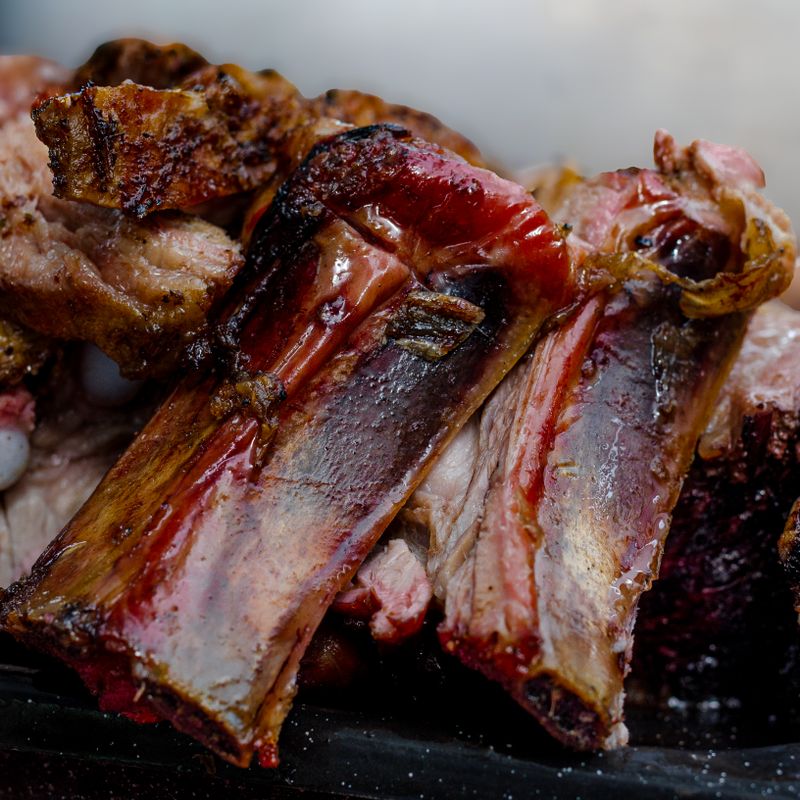
Tamarind Molasses Beef Ribs Marinade
A tangy-sweet fusion marinade that blends tamarind concentrate's complex tartness with molasses' deep, rich sweetness, grounded by warm cumin and paprika, aromatic garlic, and a savory undertone from soy sauce. Designed for smoking beef ribs, this marinade develops bold, layered flavors as the meat marinates overnight, creating tender, mahogany-glazed ribs with caramelized edges and glossy smoke rings.
- Prep
- 12 min
- Cook
- —
- Wait
- 8 hr
- Total
- 8 hr 12 min
- Makes
- 1½ cups marinade (enough for 2–3 racks of beef ribs, 6–8 servings)
Steps
Before you start
- Bring tamarind concentrate and molasses to room temperature if you've stored them in a cool place—they'll mix more easily
- Have all ingredients measured and ready before you start; this marinades is quick to combine but should be thoughtfully balanced
- Plan ahead—beef ribs need a minimum of 4 hours in the marinade, but 8–12 hours (or overnight) is ideal for maximum flavor penetration
- If smoking after marinating, preheat your smoker 30–45 minutes before the ribs come out of the fridge
Mix Marinade Base
- In a medium mixing bowl, whisk together tamarind concentrate, molasses, paprika, minced garlic, ground cumin, black pepper, and salt.
- Whisk in olive oil, soy sauce, and apple cider vinegar until completely smooth and well combined.
- Stir in brown sugar until fully dissolved.
- If using cayenne pepper and fresh ginger, add them now and whisk until fully incorporated.
- The marinade should be dark, smooth, and fragrant.
+ Show details− Hide details
Ready when: Marinade is smooth and well combined with no visible lumps of molasses or sugar
Tip: Whisk thoroughly to ensure molasses and brown sugar dissolve completely—lumps won't coat ribs evenly and will cause uneven marinating and flavor patches.
Taste and Adjust Flavors
- Taste the marinade with a clean spoon.
- The flavor should be balanced: tart from the tamarind, sweet from the molasses, savory from the soy sauce and garlic, with warm spice notes from paprika and cumin.
- The acidity from the vinegar should be bright but not harsh or overwhelming.
- Adjust as needed: add more salt for deeper umami and savory depth, a splash more vinegar for increased tang, or a bit more molasses if the spices feel too assertive.
+ Show details− Hide details
Ready when: Marinade tastes appealing and balanced to your palate
Tip: This is subjective—taste is personal, so the marinade should appeal to you on its own before it touches the ribs. The flavors will concentrate during marinating.
Coat Ribs Thoroughly
- Pat the beef ribs dry with paper towels to remove excess surface moisture; this helps the marinade adhere better to the meat.
- Place the ribs in a large baking sheet, shallow roasting pan, or resealable gallon-size bags.
- Pour the marinade over the ribs and rub it into all sides with your hands, making sure every surface is evenly and generously coated with the mixture.
- If using bags, press out as much excess air as possible and seal securely.
+ Show details− Hide details
Ready when: All surfaces of the ribs are evenly coated and shiny with marinade
Tip: Pat the ribs dry first—damp ribs prevent the marinade from adhering properly. The coating should look glossy and even, not pooling on one side.
Refrigerate and Marinate
- Cover the pan with plastic wrap or aluminum foil, or seal the bags.
- Place in the refrigerator.
- Marinate for a minimum of 4 hours for basic flavor absorption, but 8–12 hours (or overnight) is ideal for deeper, more complex flavor development.
- If marinating longer than 6 hours, turn the ribs halfway through to ensure the thicker portions are equally exposed to the marinade.
- You can marinate for up to 24 hours; longer times will further tenderize the meat and intensify flavors, but 12 hours is typically the sweet spot before the enzymes in the tamarind and vinegar begin to over-soften the meat's exterior.
+ Show details− Hide details
Ready when: Ribs have been in the refrigerator for at least 4 hours (preferably 8–12 hours); marinating liquid may have darkened slightly from meat juices and the ribs look glossy
Tip: Don't skip the marinating time—the flavors need time to penetrate the meat. Less than 4 hours gives only surface flavor; 8+ hours yields tender, deeply flavorful ribs ready for smoking.
Good to know
Tips
- Tamarind concentrate can be thick and sticky; if it's difficult to measure or whisk, warm it very gently in the microwave for 10–15 seconds to make it more pourable—don't overheat or you'll cook off the volatile aromatics.
- For even deeper flavor, make the marinade 1–2 days ahead and refrigerate in a sealed container so the spices can bloom and meld. Use within 1 week, applying to ribs shortly before marinating.
- Beef ribs can handle extended marinating times thanks to their thick, fatty meat. Marinate for at least 4 hours, but 8–12 hours (or overnight) is ideal. Even 24 hours is safe and produces especially tender, flavorful ribs with glazed, caramelized exteriors.
- When smoking, reserve a small portion of the raw marinade (about ¼ cup) to brush onto the ribs during the final 30 minutes of smoking for a glossy, flavorful bark. Do not use any marinade that has touched raw meat unless you boil it first.
Make ahead
Make the marinade up to 1 week in advance and store in a tightly sealed container in the refrigerator. Apply to ribs and marinate up to 24 hours in advance. Remove marinated ribs from the fridge 20–30 minutes before smoking for more even cooking.
Storage & reheating
Uncooked marinade (before applying to ribs): Room temperature up to 4 hours; refrigerator up to 7 days in an airtight container; freezer up to 3 months in an airtight container (thaw overnight in fridge before using). Marinated raw ribs: Refrigerator 1–2 days (or up to 24 hours for maximum flavor). Do not freeze marinated ribs; freezing damages texture and causes spice separation. Cooked smoked ribs: Refrigerator 3–4 days in an airtight container; reheat gently in a low oven (275 °F / 135 °C) for 20–30 minutes until warmed through. Freezer up to 3 months; thaw overnight in fridge and reheat as above.
Substitutions
- tamarind concentrate → Tamarind paste or 2 tablespoons fresh tamarind juice mixed with 1 tablespoon honey. Tamarind paste is thicker and more concentrated than concentrate; juice is more diluted and less intense. If substituting, taste and adjust for tang level.
- unsulphured molasses → ¼ cup dark brown sugar, packed, or ¼ cup honey. Brown sugar will be slightly less complex and rich but works well; use the same volume. Honey is more delicate and floral; the marinade will be less deep.
- apple cider vinegar → Rice vinegar, white vinegar, or fresh lime juice (same amount). Cider vinegar adds subtle apple notes; rice vinegar is milder and cleaner; lime adds brightness and pairs beautifully with tamarind.
- cumin, ground → 1½ teaspoons ground coriander seeds (toasted and ground fresh if possible). Cumin and coriander are complementary warm spices. Coriander is slightly citrusy and floral. Fennel seeds (½ tsp ground) are also a good alternative.
More roasts
See all →
Find more like this
- Meal
- Dinner
- Cuisine
- American
- Method
- Smoker
- Quick & Easy
- EasyBeginnerMake Ahead
- Occasion
- Summer BBQ