
Tamarind and Brown Sugar Palmier
Crispy, caramelized puff pastry swirls infused with the deep tang of tamarind paste and warm brown sugar. These elegant, bite-sized pastries balance sweet, sour, and buttery notes with a paper-thin, shatteringly light texture. Perfect as a petit four or with coffee.
- Prep
- 25 min
- Cook
- 18 min
- Wait
- 15 min
- Total
- 58 min
- Makes
- 24 palmiers (about 12 servings as petit fours)
Steps
Before you start
- Preheat oven to 400°F (200°C)
- Use thawed puff pastry at cool room temperature—not warm or cold
- Line two baking sheets with parchment paper
- Have a sharp knife or pastry cutter ready for clean slices
Mix filling
- In a small bowl, combine the softened butter (3 tbsp / 43 g), tamarind paste (3 tbsp / 45 g), packed brown sugar (½ cup / 100 g), and fine sea salt (¼ tsp / 1.5 g).
- Stir until completely smooth and homogeneous, breaking up any lumps.
- If the tamarind paste is very thick, add water (1 tbsp / 15 ml) a teaspoon at a time until the filling reaches a spreadable consistency—it should be thick enough not to seep, but soft enough to distribute without tearing the pastry.
+ Show details− Hide details
Ready when: Filling is smooth, uniform, and spreadable
Tip: Sift brown sugar if lumpy to avoid bumpy filling. If tamarind paste is very stiff, warm it slightly or thin with water—it must spread evenly.
Unfold and prepare pastry
- Unfold the thawed puff pastry sheet (1 lb / 450 g) onto a clean work surface.
- It should be at cool room temperature—cold enough to handle, but not stiff.
- If it's cracking at the edges, let it sit for 1–2 minutes.
- Lightly dust the surface with flour and gently press out to a 10×14-inch (25×36 cm) rectangle, being careful not to overwork it.
+ Show details− Hide details
Ready when: Pastry is in a neat rectangle, 10×14 inches, without cracks
Tip: If the pastry is too cold and cracks, let it rest on the counter for 2–3 minutes between gentle stretches. Overworking melts the butter and damages the layers.
Spread filling evenly
- Using an offset spatula or the back of a spoon, spread the tamarind-brown sugar filling (from step 1) in an even layer across the entire surface of the pastry rectangle, leaving a narrow ¼-inch (6 mm) border on all sides to prevent seeping during baking.
+ Show details− Hide details
Ready when: Filling is evenly distributed with no bare pastry showing through
Tip: Don't overload with filling—palmiers are delicate. The filling should be thin enough to be mostly hidden once rolled.
Roll and chill
- Starting from one long edge, tightly roll the pastry into a log, sealing the final edge by pressing gently.
- Place seam-side down on a plate and refrigerate for at least 15 minutes until the pastry is very firm and the filling is set.
- This chilling is essential for clean slices and prevents the filling from melting out during baking.
+ Show details− Hide details
Ready when: Log is firm and cold to the touch
Tip: A well-chilled log will slice cleanly without squishing the filling. If it's soft, the slices will fall apart or lose their shape.
Slice palmiers
- Remove the chilled log from the refrigerator.
- Using a sharp serrated knife or pastry wheel, slice the log into ¼-inch (6 mm) thick rounds.
- Wipe the knife between cuts with a damp cloth to prevent the filling from dragging and creating messy edges.
- You should get about 24 palmiers.
+ Show details− Hide details
Ready when: Palmiers are uniform, clean-edged rounds, ¼ inch thick
Tip: A cold, firm log and a very sharp knife are critical for clean slices. A dull knife will crush the pastry; wiping the blade removes sticky tamarind buildup.
Arrange on baking sheets
- Place each palmier flat on the prepared baking sheets (spacing them 1½ inches / 4 cm apart) so that the spiral of filling is visible from the top and sides.
- The pastry will puff and spread during baking, so avoid overcrowding.
- You'll need both baking sheets.
+ Show details− Hide details
Ready when: All palmiers are arranged evenly with adequate spacing
Tip: Placing them seam-side up (spiral facing up) helps them caramelize and bake evenly. Too close together and they'll fuse; too far apart and they may brown too quickly at the edges.
Bake palmiersOven 400°F / 205°C
- Bake in a preheated 400°F (200°C) oven for 16–18 minutes, rotating the baking sheets halfway through (about 8 minutes in) from front to back.
- The palmiers should be deep golden brown on top, with caramelized edges.
- The edges may show light caramelization or even very slight darkening—this is desirable for flavor.
+ Show details− Hide details
Ready when: Pastry is deep golden brown, puffed, and caramelized at edges; filling is set and visible
Tip: Oven temperatures vary—start checking at 16 minutes. The tamarind paste can scorch quickly at high heat, so watch the second half closely. Rotate pans to avoid uneven browning.
Cool and crisp
- Transfer the baking sheets to cooling racks immediately upon removal from the oven.
- Let the palmiers cool for at least 10 minutes on the baking sheets—they will firm up and crisp as they cool.
- The pastry may still feel slightly soft warm, but will harden completely as it cools.
- For maximum crispness, transfer to a wire rack after 10 minutes and cool completely (about 20 minutes total).
+ Show details− Hide details
Ready when: Palmiers are cool to the touch and crisp, not soft or chewy
Tip: Do not stack them while warm or they'll soften and lose their crispness. Cooling on the baking sheet for the first 10 minutes allows the base to set before transfer.
Good to know
Tips
- Tamarind paste varies widely in thickness and concentration—taste a tiny bit of your filling before spreading if you're using a new brand. Adjust with a few drops of water or a touch more sugar to balance the sour-sweet ratio to your preference.
- For even caramelization, ensure your puff pastry is at cool room temperature (65–70°F / 18–21°C) before spreading and rolling. Warm pastry spreads unevenly and loses lamination; cold pastry cracks.
- If the tamarind paste is very stiff or grainy (from a block), press it through a fine sieve or warm it gently with 1–2 teaspoons of water to smooth it before mixing with other filling ingredients.
- These palmiers are excellent served alongside unsweetened tea or coffee to balance their sweetness, or as a petit four with sparkling water or a light dessert wine.
Make ahead
Unbaked palmiers can be frozen on a baking sheet for up to 2 weeks; bake from frozen, adding 2–3 minutes to the baking time. Baked palmiers keep in an airtight container at room temperature for 3 days; reheat in a 300°F (150°C) oven for 3–5 minutes to re-crisp before serving.
Storage & reheating
Room temperature, airtight container: 3 days (keep sealed to maintain crispness). Freezer, in freezer bags: up to 2 weeks (bake from frozen). These pastries are best eaten fresh and crisp; do not refrigerate, as moisture will soften them.
Substitutions
- tamarind paste (from concentrate or block) → lime juice (2 tablespoons / 30 ml) mixed with ½ teaspoon soy sauce for depth. Provides tartness and a subtle savory note, though the flavor will be brighter and less complex than tamarind.
- packed brown sugar → demerara sugar (½ cup / 100 g) or turbinado sugar. Creates a coarser, crunchier caramelized exterior; the flavor is slightly less molassy but still warm.
- all-butter puff pastry, thawed → all-butter puff pastry with laminated butter substituted with vegan butter (1:1 ratio). For a plant-based version; the crispness and lamination will be nearly identical if the vegan butter is cold and blocky.
- unsalted butter, softened → coconut oil (3 tablespoons / 43 g), at room temperature. Lighter flavor and slightly less richness; the texture will be slightly less buttery but pastries will still be crisp.
More no-bake desserts
See all →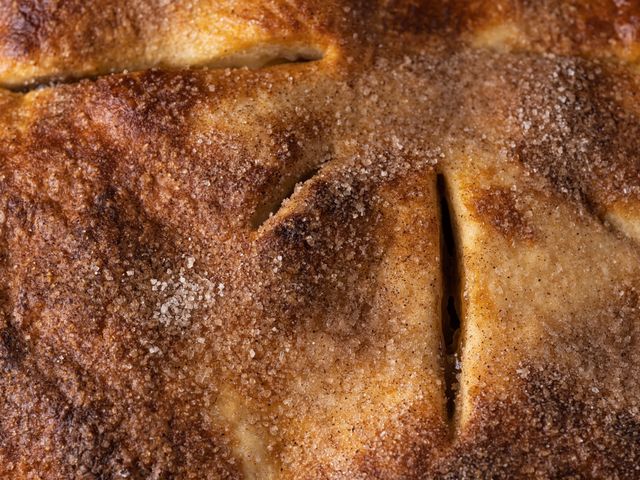


Find more like this
- Meal
- Dessert
- Diet
- VegetarianHalal
- Method
- Oven
- Quick & Easy
- 5 Ingredients or Less