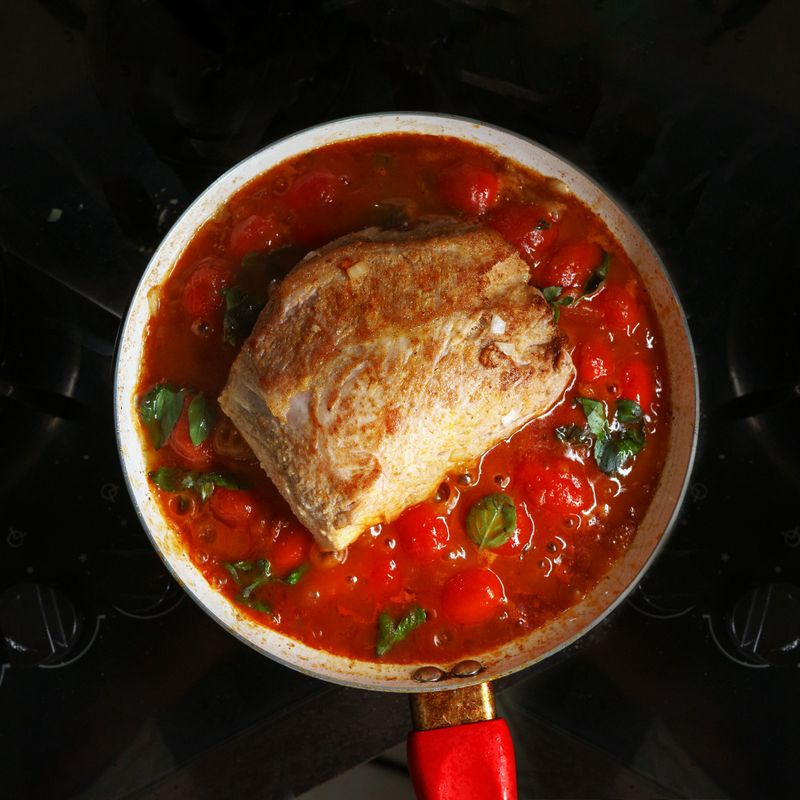
Sunday Pot Roast
A classic oven-braised chuck roast with carrots, potatoes and onions, cooked low and slow until it pulls apart with a fork. A deeply savory pan gravy comes from the braising liquid.
- Prep
- 20 min
- Cook
- 3 hr 40 min
- Wait
- 45 min
- Total
- 4 hr 45 min
- Makes
- 1 pot roast (6 generous servings) with about 2 cups gravy
Steps
Before you start
- Season the roast at least 30 minutes ahead (or up to 24 hours ahead, uncovered in the fridge) for deeper flavor.
- Arrange an oven rack in the lower third so the covered Dutch oven fits, then remove any upper racks.
- Use a heavy 6-quart (5.5 L) Dutch oven with a tight-fitting lid. A thinner pot will scorch and lose liquid.
- Plan on about 4 hours 45 minutes from start to table, most of it hands-off.
Season the roastOven 300°F / 150°C
- Pat the chuck roast very dry with paper towels.
- Rub the kosher salt and black pepper evenly over all sides.
- Let it sit on a plate at room temperature for 30 minutes.
- While it rests, cut the onions into wedges, smash the garlic, and cut the carrots and potatoes, keeping the vegetables in separate bowls.
- Set the oven rack in the lower third and preheat the oven to 300°F (150°C).
+ Show details− Hide details
Ready when: The surface of the meat looks dry and slightly darker where the salt has dissolved
Tip: Do not skip drying the meat. A wet surface steams instead of browning.
Sear the roast
- Heat the oil in the Dutch oven over medium-high heat until it shimmers and a wisp of smoke appears, about 2 minutes.
- Lay the roast in the pot and sear without moving it for 4 to 5 minutes, until a deep brown crust releases easily.
- Turn with tongs and sear the other flat side 4 to 5 minutes, then sear the edges 1 minute each.
- Transfer the roast to a plate.
+ Show details− Hide details
Ready when: All sides are deeply browned, the color of dark chocolate-brown rather than pale tan
Tip: If the oil starts to smoke heavily or the browned bits turn black, lower the heat to medium.
Brown the aromatics
- Reduce the heat to medium.
- Pour off all but about 1 tablespoon of fat if there is more.
- Add the onion wedges and cook, stirring occasionally and scraping the bottom, for 6 minutes until the edges are golden.
- Add the garlic and tomato paste and stir constantly for 2 minutes until the paste darkens to a brick red and smells sweet and roasted.
+ Show details− Hide details
Ready when: Onions are golden at the edges and the tomato paste has darkened to brick red
Tip: Stir the paste constantly so it caramelizes rather than burns.
Deglaze and build braise
- Raise the heat to medium-high.
- Pour in the red wine and scrape up all the browned bits from the bottom of the pot with a wooden spoon.
- Simmer for 3 minutes until the wine has reduced by about half.
- Add the beef broth, Worcestershire sauce, thyme and bay leaves, and bring to a gentle simmer.
+ Show details− Hide details
Ready when: Bottom of the pot is clean of stuck-on browned bits and the sharp smell of alcohol has faded
Braise the roastOven 300°F / 150°C
- Nestle the roast back into the pot along with any juices from the plate.
- The liquid should come about halfway up the sides of the meat.
- Cover with the lid and place in the 300°F (150°C) oven.
- Braise for 2 hours without opening the oven.
+ Show details− Hide details
Ready when: After 2 hours, the liquid is barely bubbling around the edges when you lift the lid
Tip: If the liquid is boiling hard, drop the oven to 275°F (135°C). Aggressive heat makes the meat stringy and dry.
Add the vegetablesOven 300°F / 150°C
- Carefully remove the pot from the oven and lift the lid away from you to avoid steam.
- Turn the roast over with tongs.
- Tuck the carrots and potatoes around and partly under the liquid, nestling them into the sauce.
- Cover, return to the oven, and cook 60 more minutes.
+ Show details− Hide details
Ready when: A paring knife slides into a potato and a carrot with no resistance
Tip: Cutting vegetables into big 2-inch pieces keeps them from turning to mush over the long cook.
Test the roast
- Insert a fork into the thickest part of the roast and twist gently.
- It should give way and shred easily, and an instant-read thermometer should read about 200°F (93°C).
- If it still feels tight, cover and return to the oven for 20 to 30 more minutes, then test again.
+ Show details− Hide details
Ready when: Fork twists in with almost no resistance and the meat starts to pull apart; thermometer reads about 200°F (93°C)
Tip: Tough meat is usually undercooked, not overcooked. Give it more time.
Rest and separate
- Using tongs and a large spoon, move the roast to a rimmed platter and the carrots and potatoes to the platter beside it.
- Tent loosely with foil.
- Let rest for 15 minutes.
- Meanwhile, tilt the pot and skim the fat from the surface of the liquid with a large spoon.
- Fish out and discard the bay leaves and thyme stems.
+ Show details− Hide details
Ready when: The braising liquid has a thin, clear layer of fat removed and the meat feels warm but not steaming hot
Tip: Handle the roast gently; it will be very tender and may fall apart.
Make the gravy
- Set the Dutch oven over medium-high heat and bring the liquid to a boil.
- Boil for 8 to 10 minutes, stirring now and then, until reduced to about 2 cups (480 ml) and tasting rich.
- For a thicker gravy, stir the cornstarch into the cold water until smooth, whisk it into the boiling liquid, and cook 1 minute until glossy and lightly thickened.
- Taste and add a pinch more salt if needed.
+ Show details− Hide details
Ready when: Gravy coats the back of a spoon and a finger drawn across leaves a clear line
Tip: Always mix cornstarch with cold water first; adding it dry to hot liquid makes lumps.
Slice and serve
- Pull the roast into large chunks or slice it against the grain into thick pieces; it will break apart along the muscle seams.
- Return the meat and vegetables to the platter, spoon over some gravy, sprinkle with parsley, and pass the remaining gravy at the table.
+ Show details− Hide details
Tip: Serve right away while hot; the gravy firms up as it cools.
Good to know
Tips
- Choose a roast with plenty of marbling and a uniform shape; it braises evenly and stays juicy.
- Keep the lid on tightly during the oven time. Opening it lets steam escape and extends cooking.
- Don't add the vegetables at the start; after 3 hours they would fall apart.
- Reduce the liquid well before thickening; concentrated braising liquid gives the best gravy flavor.
Make ahead
"Pot roast tastes even better the next day. Complete the recipe through step 8 (rest and separate). Do not leave the food in the pot to cool. Within 2 hours of the roast leaving the oven, pull or cut the meat into large chunks and divide the meat, vegetables and braising liquid among shallow containers no more than 2 inches (5 cm) deep. Leave them uncovered or loosely covered in the fridge until cold (about 1 to 2 hours), then seal and refrigerate for up to 2 days. To serve, lift off any solidified fat, then reheat the meat and vegetables in a covered baking dish with a few spoonfuls of the liquid in a 300°F (150°C) oven for about 30 to 40 minutes, until the center reads 165°F (74°C). Boil the remaining liquid in a pot to make the gravy as in step 9."
Storage & reheating
"Room temperature: no more than 2 hours total after cooking. Refrigerator: divide meat, vegetables and gravy into shallow airtight containers (2 inches / 5 cm deep or less), refrigerate within 2 hours, and keep for up to 4 days. Never store leftovers in the pot. Freezer: freeze meat and gravy in shallow containers (potatoes get grainy when frozen, so leave them out) for up to 3 months; thaw overnight in the fridge. Reheat covered in a 300°F (150°C) oven or in a pot over low heat with a splash of broth until steaming hot and 165°F (74°C) in the center."
Substitutions
- dry red wine → Extra low-sodium beef broth plus 1 tablespoon red wine vinegar. Use ½ cup (120 ml) broth and the vinegar to keep the acidity that balances the rich meat.
- boneless beef chuck roast → Bone-in beef short ribs or boneless beef brisket flat. Short ribs may need about 30 minutes less; brisket takes about the same time.
- cornstarch → 1 tablespoon all-purpose flour mashed with 1 tablespoon soft butter. Whisk bits into the simmering liquid and cook 3 minutes to remove the raw flour taste.
- fresh thyme sprigs → ½ teaspoon dried thyme. Add it with the broth.
More roasts
See all →
Find more like this
- Meal
- Dinner
- Cuisine
- American
- Main ingredient
- Beef RoastCarrotsPotatoes
- Season
- Winter Comfort Food