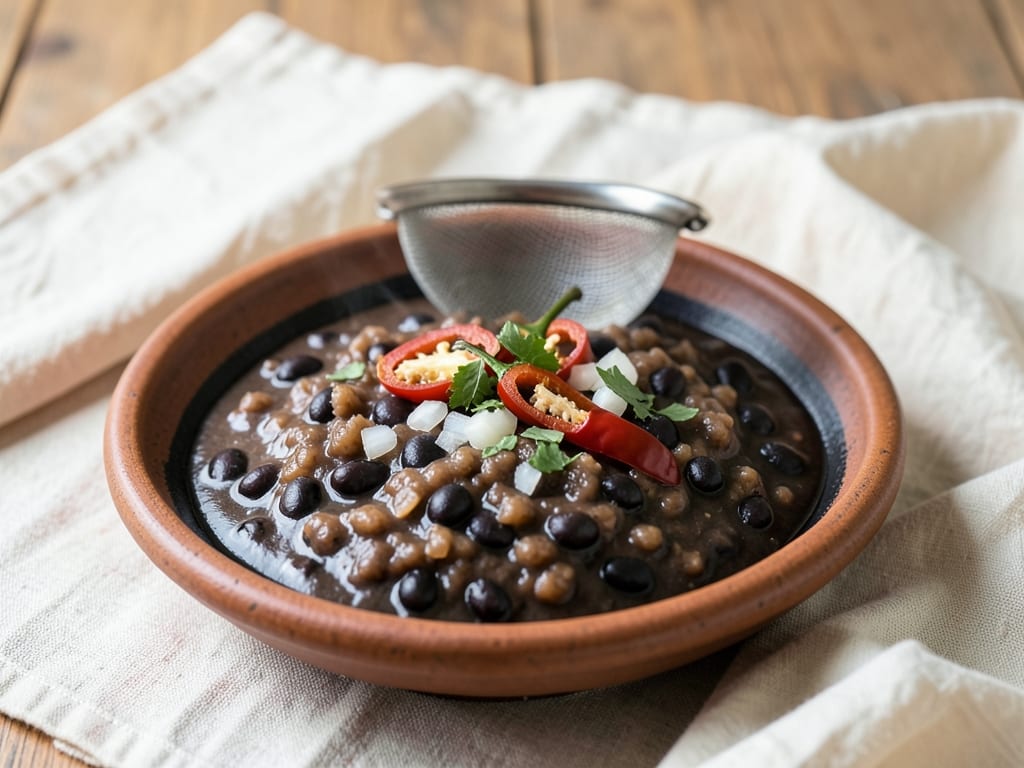
Stovetop Pinto Beans with Soffritto and Bay Leaf
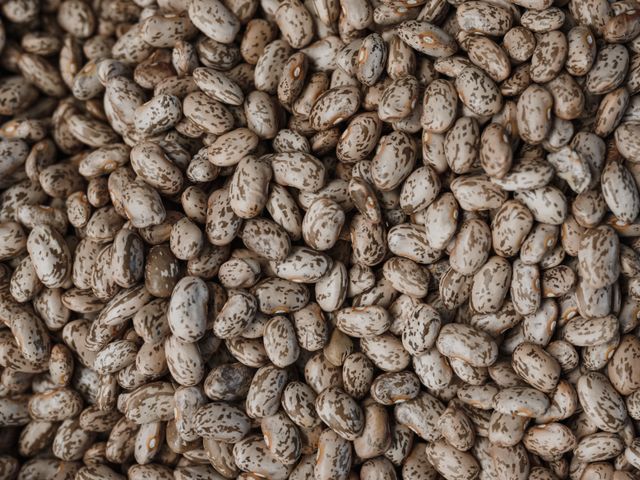
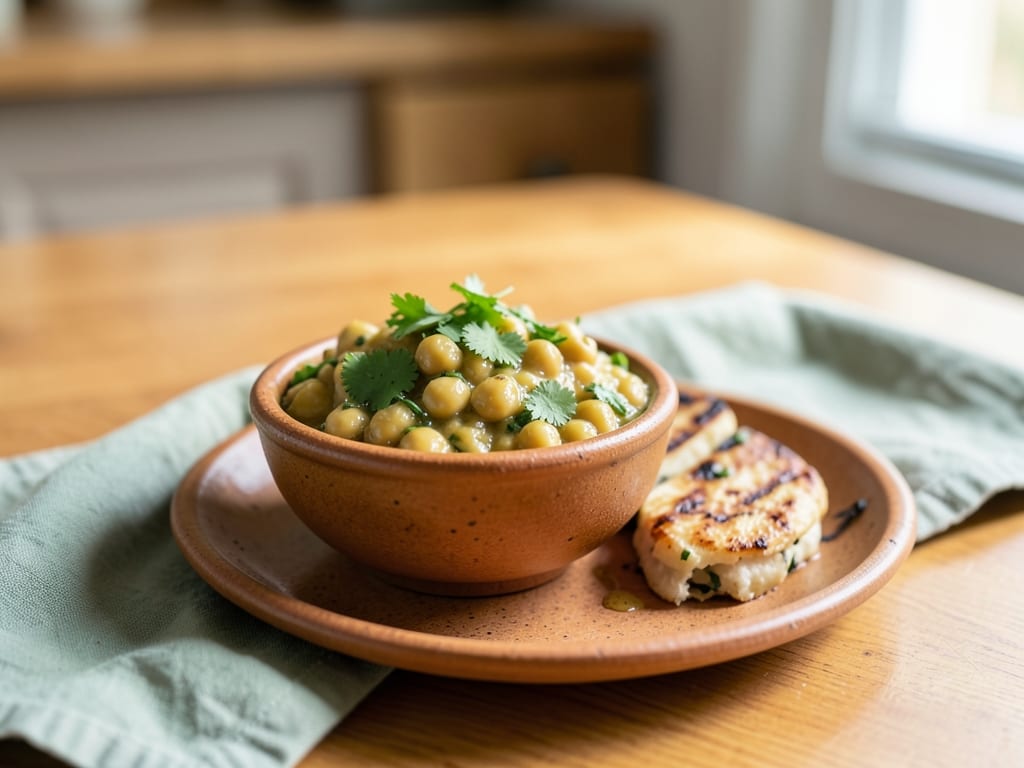
Creamy, savory pinto beans cooked from dried with a fragrant soffritto base of caramelized onions and garlic. Bay leaves infuse the beans with subtle herbal notes, and a touch of vegetable broth creates a rich, flavorful cooking liquid. These beans are tender, deeply seasoned, and versatile enough for tacos, rice bowls, soups, or as a side to any Latin American meal.
- Prep
- 15 min
- Cook
- 1 hr 30 min
- Wait
- 8 hr
- Total
- 9 hr 45 min
- Makes
- About 5 cups cooked beans with broth
Steps
Before you start
- Soak dried pinto beans overnight in cold water (at least 8 hours or up to 12 hours) or use a quick-soak method: boil beans for 2 minutes, remove from heat, cover, and let sit for 1 hour
- Drain and rinse soaked beans thoroughly before cooking
- Have vegetable broth at room temperature for easier stirring into the pot
Build the soffritto
- Heat 3 tablespoons (45 ml) olive oil in a large heavy-bottomed pot (5–6 quart) over medium heat.
- Once shimmering, add the diced onion and cook, stirring occasionally, for 8–10 minutes until the onion is soft, translucent, and beginning to turn golden at the edges.
- The soffritto should smell sweet and caramelized.
- Add the minced garlic and stir constantly for 1 minute until fragrant but not browned.
+ Show details− Hide details
Ready when: Onion is soft, translucent, and golden; garlic is fragrant
Tip: Stir the onion regularly to ensure even cooking and prevent sticking. Watch the garlic carefully—it burns easily and will taste bitter.
Add beans and broth
- Pour in the 8 cups (1920 ml) vegetable broth and stir well to combine with the soffritto.
- Add the drained and rinsed soaked beans and the 3 bay leaves.
- Stir once to distribute the beans evenly.
- Increase heat to medium-high and bring the mixture to a boil, about 5–8 minutes.
+ Show details− Hide details
Ready when: Mixture reaches a rolling boil with steam rising
Tip: Do not add salt yet—it can slow bean tenderizing during the long cooking time. Add it near the end.
Simmer until tender
- Once boiling, reduce heat to medium-low and partially cover the pot (leave the lid slightly ajar to allow steam to escape).
- Simmer the beans for 75–90 minutes, stirring occasionally (every 15–20 minutes) to ensure even cooking and prevent sticking on the bottom.
- The beans should eventually become completely tender, with the skins just beginning to split if you bite one.
- The cooking liquid should reduce slightly and thicken as the bean starches are released, creating a creamy sauce.
+ Show details− Hide details
Ready when: Beans are fork-tender; skins may split; liquid is slightly thickened and creamy
Tip: If the beans are still very firm after 75 minutes, you may have had old dried beans; continue simmering and add more broth if the liquid evaporates too much. Do not let the pot dry out.
Taste and season
- Remove the pot from heat and fish out the bay leaves with a spoon and discard.
- Taste the beans and their broth.
- Season generously with kosher salt and freshly ground black pepper to your preference.
- Stir well to distribute the seasoning.
+ Show details− Hide details
Ready when: Beans taste well-seasoned and flavorful
Tip: Season more heavily than you might for soup—the beans will absorb salt slowly. Taste again after stirring and adjust as needed.
Rest and serve
- Let the beans rest in the pot for 10 minutes off heat.
- This allows the flavors to meld and the beans to absorb the seasonings.
- Serve the pinto beans warm with as much cooking liquid as you like, spooned into bowls or alongside rice, in tacos, or as a side dish.
+ Show details− Hide details
Tip: If the cooking liquid has reduced too much and the beans seem dry, stir in ½ to 1 cup additional warm broth or water.
Good to know
Tips
- Soak the beans properly—this step is essential for even cooking and digestibility. Old dried beans (stored more than a year) may take significantly longer to cook, so buy fresh beans from a store with good turnover.
- Stir the beans occasionally during cooking to prevent them from settling on the bottom and scorching. A partially covered lid prevents too much evaporation while still allowing steam to escape.
- Do not add salt until near the end of cooking. Salt in the cooking liquid can interfere with bean tenderizing and result in uneven texture.
- For extra creaminess, mash some of the beans gently against the side of the pot with the back of a wooden spoon once they're fully tender, then stir. This releases starch and thickens the liquid.
Make ahead
Soak the beans overnight (up to 12 hours) or quick-soak them 1 hour ahead. The finished cooked beans can be made up to 2 days in advance; store them covered in the refrigerator in their cooking liquid.
Storage & reheating
Room temperature (up to 2 hours in an airtight container). Refrigerator: up to 5 days in an airtight container with the cooking liquid. Freezer: up to 3 months in a freezer-safe container or bag. To reheat: thaw in the refrigerator overnight, then warm gently on the stovetop over medium-low heat, stirring occasionally and adding a splash of water if they seem too thick.
Substitutions
- dried pinto beans → black beans, kidney beans, or cranberry beans. Black beans and kidney beans will take about the same time (75–90 minutes); use any dried variety you prefer. Cooking times may vary slightly depending on bean age and size.
- vegetable broth → chicken broth or water. Chicken broth adds richness; plain water works but will result in a lighter-flavored dish. If using water, consider adding a pinch of dried oregano or cumin for deeper flavor.
- yellow onion, medium → white onion or red onion. White onion is milder; red onion is slightly sweeter and adds color. Use the same quantity.
- olive oil → vegetable oil or lard. Vegetable oil is neutral; lard adds traditional Mexican flavor and richness. Use the same amount.