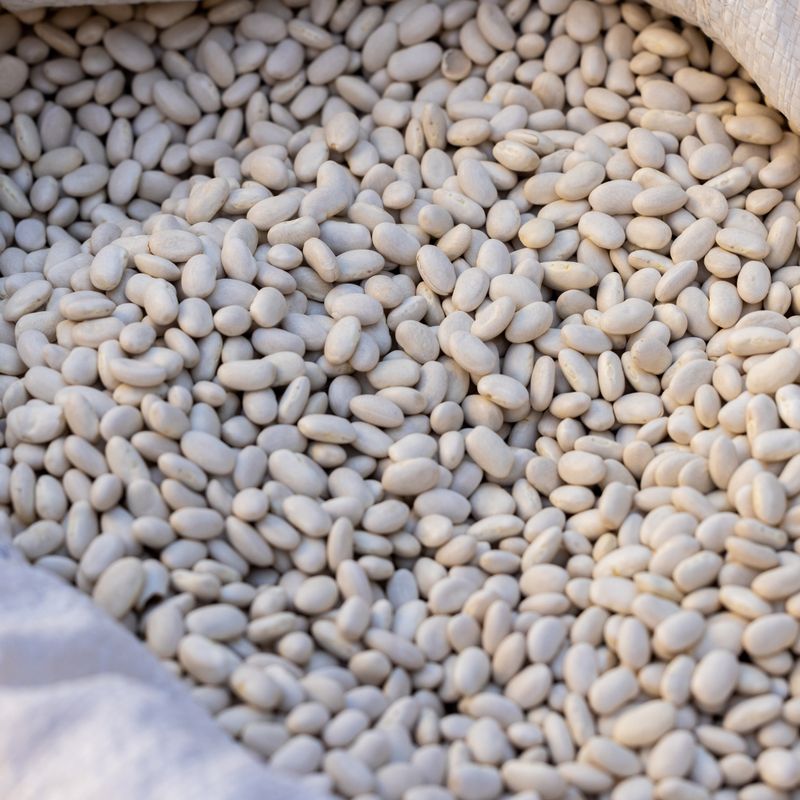
Stovetop Navy Beans with Thyme and Carrot
Tender navy beans simmered gently with aromatic carrot, onion, garlic, and fresh thyme. This simple stovetop bean side is naturally creamy from the beans' own starch, with a savory broth that's perfect alongside roasted meats or as part of a vegetable medley. No soaking required if using canned beans, or use dried beans with an overnight soak for deeper flavor.
- Prep
- 15 min
- Cook
- 45 min
- Total
- 1 hr
- Makes
- 4 servings (about 3 cups total)
Steps
Before you start
- Drain and rinse canned beans thoroughly, or soak dried beans overnight in water and drain before use
- Gather all ingredients and prep vegetables before starting (mise en place)
- Use a 3-quart (2.8 L) or larger saucepan to allow room for simmering
Sauté aromatics
- Heat the olive oil in a 3-quart (2.8 L) saucepan over medium heat.
- Once shimmering (about 1 minute), add the diced onion and carrot.
- Cook, stirring occasionally, until the vegetables begin to soften and the onion becomes translucent, about 4–5 minutes.
+ Show details− Hide details
Ready when: Onion is translucent and carrot begins to soften
Tip: Don't rush this step; allowing the vegetables to soften releases their natural sweetness and flavor into the broth.
Add garlic and thyme
- Stir in the minced garlic and cook for about 30 seconds, stirring constantly, until fragrant.
- Add the fresh thyme sprigs and bay leaf, stirring to combine.
+ Show details− Hide details
Ready when: Garlic is fragrant and just beginning to soften
Tip: Keep the heat at medium and watch carefully so garlic doesn't burn; burnt garlic will taste bitter.
Add beans and broth
- Pour in the vegetable broth and add the drained and rinsed navy beans.
- Stir well to combine all ingredients evenly throughout the pot.
+ Show details− Hide details
Ready when: Broth and beans are mixed together evenly
Tip: Rinsing canned beans removes excess sodium and starch, resulting in a cleaner-tasting broth.
Bring to a boil
- Increase the heat to medium-high and bring the mixture to a gentle boil, stirring occasionally.
- Once boiling, reduce the heat to medium-low and partially cover the saucepan with a lid (leave it slightly ajar to allow some steam to escape).
+ Show details− Hide details
Ready when: Liquid is gently boiling with small bubbles breaking the surface
Tip: A partial cover lets steam escape while still retaining enough heat to cook the beans gently without them bursting.
Simmer gently
- Reduce heat to medium-low and simmer the beans gently for 35–40 minutes, stirring occasionally (every 10 minutes or so).
- The beans should be tender and the broth should reduce slightly and thicken from the beans' own starch.
- Taste at 35 minutes; if the beans are still firm, continue simmering another 5 minutes.
+ Show details− Hide details
Ready when: Beans are creamy and tender inside (test one with a fork); broth is noticeably thickened and coats the back of a spoon lightly
Tip: Gentle simmering prevents the beans from bursting and breaking apart, keeping them whole and creamy rather than mushy.
Remove thyme and bay leaf
- Remove from heat.
- Use a spoon or tongs to fish out the thyme sprigs and bay leaf.
- Discard them.
+ Show details− Hide details
Ready when: Thyme sprigs and bay leaf are removed
Tip: If you used dried thyme mixed directly into the pot, it will remain suspended in the broth; this is fine.
Season to taste
- Taste the beans and broth.
- Season with kosher salt and freshly ground black pepper to your preference.
- Start with ½ teaspoon salt and a few grinds of pepper, then adjust as needed.
+ Show details− Hide details
Ready when: Beans are well-seasoned and flavorful
Tip: Taste as you season; you can always add more salt, but you cannot remove it. The carrot and onion will have released their own natural sweetness, balancing the salt.
Serve
- Ladle the beans and broth into bowls or serving dishes.
- Serve warm as a side dish alongside roasted meats, grilled chicken, or fresh bread.
- The beans can also be served at room temperature as part of a salad or grain bowl.
+ Show details− Hide details
Ready when: Beans are portioned and plated
Tip: Navy beans pair beautifully with a drizzle of finishing oil or a squeeze of fresh lemon juice just before serving.
Good to know
Tips
- For creamier beans, mash a few beans against the side of the pot with the back of a wooden spoon in the last 5 minutes of cooking. This releases starch and thickens the broth without making the entire pot mushy.
- Add a pinch of red pepper flakes (¼ teaspoon) to the aromatic vegetables if you like a subtle heat that complements the thyme.
- Finish with a drizzle of high-quality extra-virgin olive oil and a squeeze of fresh lemon juice or a small splash of apple cider vinegar to brighten the earthy flavors of the beans.
- Leftover beans are perfect for adding to soups, salads, or grain bowls. They also make a simple vegetarian main course spooned over toast or served with cornbread.
Make ahead
You can prepare this dish up to 2 days ahead. Store in the refrigerator and gently reheat on the stovetop over medium heat, adding a splash of broth or water if the beans have absorbed too much liquid. Reheating also deepens the flavors.
Storage & reheating
Room temperature: up to 2 hours. Refrigerator: in an airtight container up to 4 days. Freezer: in a freezer-safe container up to 3 months. To reheat from frozen, thaw overnight in the fridge or reheat gently on the stovetop over medium-low heat with a splash of water or broth, stirring occasionally, for about 10–15 minutes.
Substitutions
- canned navy beans, drained and rinsed → Dried navy beans, soaked overnight and drained (use 1.5 cups/300 g dried beans, which yield about 4.5 cups/900 g cooked). Increase simmering time to 1 hour or until completely tender.. Dried beans have deeper flavor but require advance planning. Canned beans are more convenient and still delicious.
- fresh thyme sprigs → 1 teaspoon dried thyme, or 1 teaspoon fresh rosemary sprigs, or 2 teaspoons chopped fresh parsley added at the end of cooking. Dried thyme is shelf-stable and convenient; rosemary gives a more robust flavor; parsley adds brightness.
- vegetable or chicken broth → Chicken broth or unsalted vegetable broth to control sodium. Low-sodium or unsalted broth is best if you plan to season generously at the end.
- medium carrot → Parsnip or celery (diced the same way). You can also use 1 cup (100 g) diced celery instead of or in addition to carrot.. Celery and parsnip add different aromatic notes; a combination of carrot and celery is traditional.
More bean sides
See all →


Find more like this
- Meal
- Dinner
- Main ingredient
- White BeansCarrots
- Method
- Stovetop