Spicy Arrabbiata Sauce
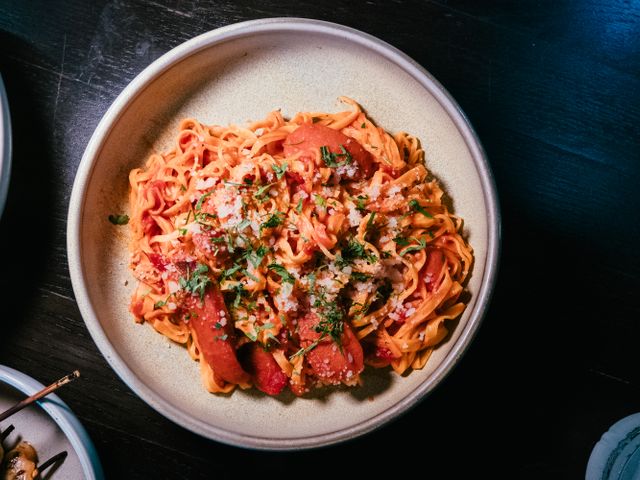
A fiery Roman-style tomato sauce built on garlic and chili bloomed in olive oil, then simmered with crushed tomatoes until thick and glossy. Ready in about 40 minutes and finished with fresh parsley. As written, it is medium-hot.
- Prep
- 10 min
- Cook
- 28 min
- Total
- 38 min
- Makes
- About 2½ cups (600 ml) sauce, enough to lightly coat 1 lb (450 g) pasta
Steps
Before you start
- Slice the garlic and chop the parsley before you turn on the heat. Garlic burns quickly once the oil is hot.
- Decide on your heat level now, because extra chili must go in during the bloom (step 2), not at the end. 1 teaspoon is solid, medium heat. The 1½ teaspoons in this recipe is medium-hot. 2 teaspoons is properly fiery.
- The sauce takes about 28 minutes on the stove. If serving with pasta, bring the pasta water to a boil when the sauce reaches its simmer in step 4, so both finish together.
- The sauce coats the pasta lightly, in the Roman style. For a saucier plate, use 12 oz (340 g) pasta.
Prep aromatics
- Thinly slice the 5 garlic cloves into slices about ⅛ inch (3 mm) thick.
- Finely chop the parsley.
- Open the can of crushed tomatoes and measure the tomato paste and chili flakes so everything is within reach.
+ Show details− Hide details
Ready when: Garlic slices are even and everything is within arm's reach.
Tip: Even slices cook at the same rate, so none burn while others stay raw.
Bloom garlic and chili
- Pour the olive oil into a cold 12-inch (30 cm) skillet and add the garlic and chili flakes.
- Set over medium-low heat and cook, stirring often, for 2 to 3 minutes, until the garlic is pale golden at the edges and the oil smells fragrant and looks red-tinted.
+ Show details− Hide details
Ready when: Garlic is pale golden and sizzling gently; oil is tinted red and fragrant.
Tip: Starting in cold oil gives gentle infusion. If the garlic turns dark brown it will taste bitter, so start over. For more heat, add extra chili flakes now so they cook; flakes stirred in at the end taste raw and harsh.
Toast tomato paste
- Add the tomato paste and stir constantly for 1 minute, pressing it into the oil, until it darkens from bright red to a brick-red color and smells sweet and rich.
+ Show details− Hide details
Ready when: Paste turns a deeper brick red and coats the garlic.
Add tomatoes
- Pour in the crushed tomatoes and add the salt.
- Stir well, scraping up any paste stuck to the bottom of the pan.
- Raise the heat to medium-high and bring to a bubbling simmer, about 3 minutes.
- If serving with pasta, put the pasta water on to boil now.
+ Show details− Hide details
Ready when: Small bubbles break across the whole surface.
Tip: Wait to add the sugar until you taste the sauce at the end.
Simmer to thicken
- Reduce the heat to medium-low so the sauce simmers gently with lazy bubbles.
- Cook uncovered, stirring every 3 to 4 minutes, for 20 minutes, until the sauce has reduced by about a quarter, is thick enough that a spoon dragged across the pan leaves a trail, and the oil begins to pool at the edges.
- Cook the pasta during this time and reserve 1 cup (240 ml) of its cooking water before draining.
+ Show details− Hide details
Ready when: Sauce is thick, deep red, and a spoon leaves a trail on the pan bottom.
Tip: If it spatters, partially cover with a lid. If it thickens too much, stir in 2 to 3 tablespoons of water or pasta water.
Season and finish
- Turn off the heat.
- Taste and add more salt a pinch at a time.
- If the tomatoes taste sharp, stir in the sugar.
- Stir in the chopped parsley.
- Add the drained pasta to the skillet and toss for 1 minute, adding pasta water a splash at a time until the sauce clings to the pasta.
- Serve with grated Pecorino Romano if desired.
+ Show details− Hide details
Ready when: Sauce tastes bright, savory, and noticeably spicy, with no raw tomato edge, and coats the pasta in a glossy layer.
Tip: Heat builds as the sauce sits, so judge the spice at the table rather than adding raw chili at the end.
Good to know
Tips
- Keep the heat at medium-low when blooming the garlic; browned garlic turns the whole sauce bitter.
- Toasting the tomato paste adds depth that a short simmer would otherwise lack.
- Finish the sauce in the pan with the cooked pasta and a splash of starchy pasta water so it clings to every piece.
- Adjust the heat only during the bloom. Chili stirred in at the end tastes raw, and the heat deepens as the sauce rests.
Make ahead
Make the sauce through step 5 up to 4 days ahead and refrigerate. Reheat gently, then stir in the parsley just before serving so it stays fresh and green.
Storage & reheating
Room temperature: up to 2 hours. Refrigerator: up to 4 days in an airtight container. Freezer: up to 3 months in freezer-safe containers, leaving ½ inch (1 cm) headspace. Thaw overnight in the fridge and reheat in a saucepan over medium-low heat, stirring, until steaming hot, adding a splash of water if too thick.
Substitutions
- crushed tomatoes → whole peeled tomatoes, crushed by hand. Use one 28-oz (794 g) can with juices; simmer 5 minutes longer for a rustic texture.
- dried red chili flakes → 2 to 3 whole dried chiles de árbol, crumbled. Add them in the bloom step. Remove seeds for less heat. In a pinch, use ¼ teaspoon cayenne, also added in the bloom.
- fresh flat-leaf parsley → fresh basil. Tear the leaves and stir in off the heat for a sweeter finish.
- Pecorino Romano → Parmigiano-Reggiano. Milder and nuttier; use the same amount.