Homemade Alfredo Sauce
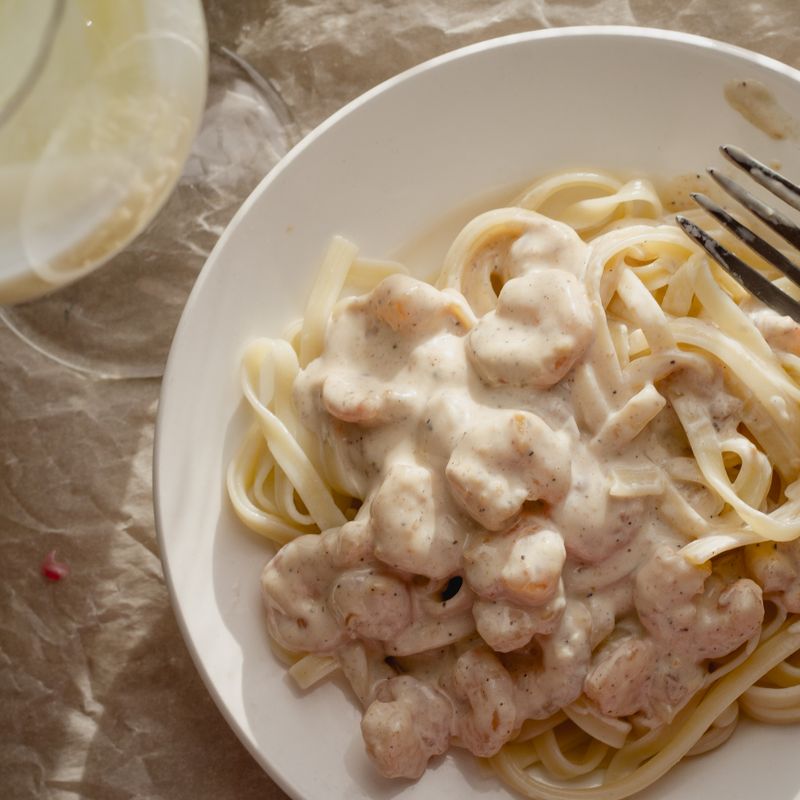
A silky, garlicky Italian-American Alfredo made with just butter, cream, and freshly grated Parmesan. It comes together in about 20 minutes and clings beautifully to fettuccine.
- Prep
- 10 min
- Cook
- 12 min
- Total
- 22 min
- Makes
- About 2 cups (480 ml) sauce, enough for 12 oz (340 g) dried pasta
Steps
Before you start
- Grate the Parmesan yourself from a block on the finest holes of a box grater or a rasp-style grater. Pre-grated cheese contains anti-caking starch and often turns grainy.
- Let the cheese sit at room temperature while you prep, because cold cheese is more likely to clump when it hits the hot cream.
- If serving with pasta, start the pasta water now. Time the pasta so it finishes just as the sauce does, because the sauce thickens quickly as it sits.
- Use full-fat heavy cream (36% fat or more). Half-and-half or milk can curdle or turn thin.
Prep the ingredients
- Finely grate the Parmesan into a bowl until you have about 1½ cups (113 g) loosely packed, and leave it at room temperature.
- Mince the garlic.
- Cut the butter into 4 pieces.
- Measure the cream, pepper, and salt so everything is within reach, because the sauce moves fast once it starts.
+ Show details− Hide details
Ready when: Cheese looks light and fluffy, like fine snow, with no large shreds.
Tip: Fine, fluffy cheese melts smoothly. Thick shreds melt unevenly and can clump.
Melt the butter
- Set the skillet over medium-low heat and add the butter.
- Swirl occasionally until it has melted completely and is just foaming, about 2 minutes.
- Do not let it brown.
+ Show details− Hide details
Ready when: Butter is fully melted and gently foaming, still pale yellow.
Soften the garlic
- Add the minced garlic to the melted butter and stir constantly for 30 to 45 seconds.
- It should smell sweet and fragrant and look pale, not golden.
+ Show details− Hide details
Ready when: Garlic smells fragrant and looks soft and pale, with no browning.
Tip: Browned garlic turns bitter and will flavor the whole sauce. If it colors, start over.
Simmer the cream
- Pour in the cream and whisk to combine with the butter and garlic.
- Raise the heat to medium and bring to a gentle simmer, with small bubbles around the edge.
- Reduce the heat to medium-low and simmer for 5 to 6 minutes, whisking now and then, until the cream has thickened slightly and coats the back of a spoon.
+ Show details− Hide details
Ready when: Cream coats the back of a spoon, and a finger drawn through it leaves a clear line.
Tip: Keep it at a gentle simmer. A hard boil can make the cream separate and turn greasy.
Melt in the cheese
- Turn the heat to its lowest setting, or remove the pan from the heat for 30 seconds.
- Add the Parmesan about ¼ cup at a time, whisking constantly and letting each addition melt before adding the next.
- This takes 2 to 3 minutes in total.
+ Show details− Hide details
Ready when: Sauce is smooth and glossy with no visible bits of cheese, and it coats the spoon.
Tip: Do not let the sauce simmer after the cheese goes in. Overheated Parmesan turns grainy and stringy.
Season to taste
- Whisk in the black pepper, the salt, and the nutmeg if using.
- Taste and add more salt a pinch at a time.
- Parmesan is already salty, so season cautiously.
+ Show details− Hide details
Ready when: Sauce tastes rich and savory, with pepper warmth and no raw cheese taste.
Tip: Nutmeg is strong. A small pinch adds depth without tasting like nutmeg.
Adjust and serve
- The sauce should pour like thick pancake batter and will thicken as it cools.
- If it is too thick, whisk in hot water 1 tablespoon at a time until it loosens.
- Toss immediately with 12 oz (340 g) freshly drained hot pasta, or spoon over cooked chicken or vegetables.
- Serve right away with extra pepper.
+ Show details− Hide details
Ready when: Sauce flows off a spoon in a ribbon and clings evenly to the pasta.
Tip: Starchy pasta water thins the sauce and helps it cling to the noodles better than plain water.
Good to know
Tips
- Always add the cheese off the boil, on very low heat. This is the single biggest factor in a smooth sauce.
- Grate the cheese from a block. Bagged pre-grated cheese is coated with starch and gives a gritty texture.
- If the sauce breaks and looks oily, remove it from the heat and whisk in 1 to 2 tablespoons of cream or hot water to bring it back together.
- Warm your serving bowls first, because Alfredo thickens fast on cold plates.
Make ahead
"You can make the sauce up to 2 days ahead and refrigerate it. Reheat it gently as described under storage. It is best served fresh, because the texture is silkiest right after it is made."
Storage & reheating
"Room temperature: no more than 2 hours. Fridge: store in an airtight container for up to 3 days; the sauce will set firm. Reheat in a saucepan over low heat with 1 to 2 tablespoons of milk or cream per cup, whisking constantly until smooth and steaming. Do not boil. Freezer: not recommended, because the sauce usually separates when thawed."
Substitutions
- Parmigiano-Reggiano cheese → Pecorino Romano. Sharper and saltier. Use the same amount and skip the added salt until you have tasted the sauce.
- heavy cream → Half-and-half plus 1 tbsp cornstarch slurry. Lighter, but less forgiving. Keep the heat very low and do not boil, or it may curdle.
- garlic cloves → 1/2 tsp garlic powder. Whisk it into the cream rather than cooking it in the butter.
- unsalted butter → Salted butter. Use it, but omit the added kosher salt until you have tasted the finished sauce.