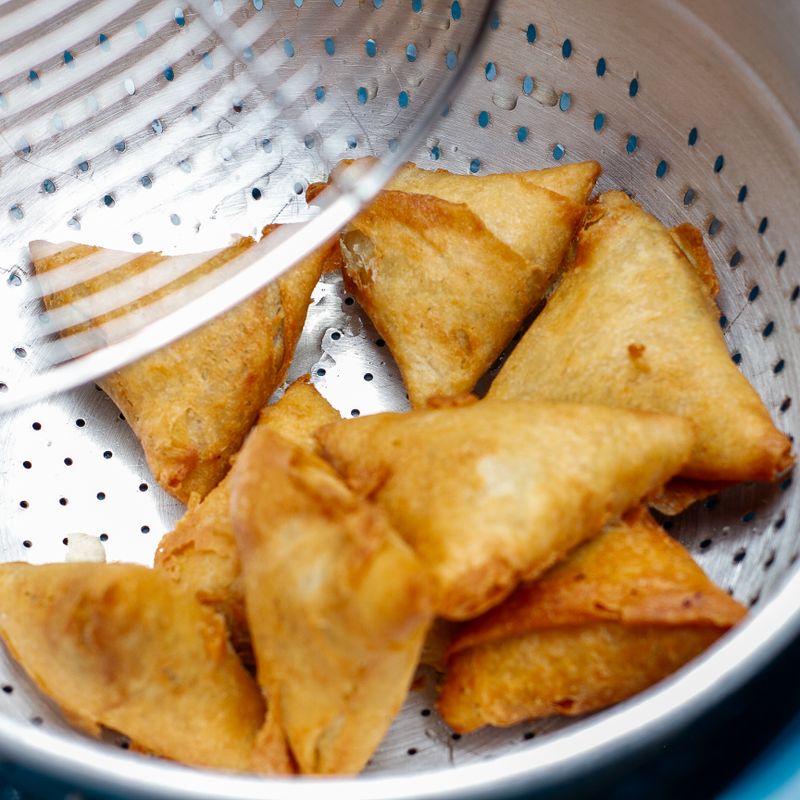
Spiced Beef Samosas
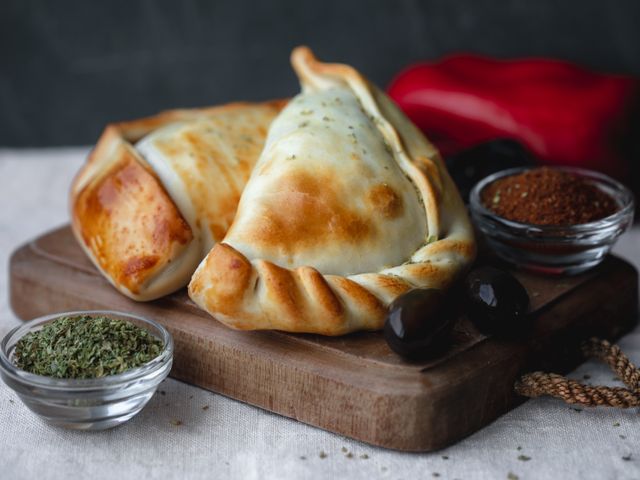
Golden, crispy triangular pastries filled with spiced ground beef, tender potato, and aromatic onion. These baked samosas deliver authentic Indian flavor with the convenience of an oven—no deep-frying required. The phyllo dough, brushed with ghee, crisps beautifully and creates that signature shatteringly delicate exterior. Perfect for parties, entertaining, or make-ahead appetizers.
- Prep
- 15 min
- Cook
- 48 min
- Wait
- 37 min
- Total
- 1 hr 40 min
- Makes
- 16 samosas (8 servings)
Steps
Before you start
- Thaw phyllo dough at room temperature for 1-2 hours if starting from frozen
- Prep all vegetables: peel and dice potatoes, dice onion, mince ginger and garlic
- Position oven racks in the middle and preheat oven just before baking
- Line two 18×13-inch baking sheets with parchment paper
Cook the potatoes
- Cut the peeled potatoes into 1/4-inch (6 mm) cubes.
- Place in a pot with cold salted water and bring to a boil over high heat.
- Reduce heat to medium and simmer for 10–12 minutes until the cubes are tender but still holding their shape—a fork should pierce them easily without them crumbling or becoming mushy.
- Drain well and set aside to cool slightly.
+ Show details− Hide details
Ready when: Fork pierces easily; potatoes are soft but still hold their shape
Tip: Don't overcook—mushy potatoes will become a paste when stirred into the filling
Brown the ground beef
- Heat 1 tablespoon of ghee or oil in a large 12-inch skillet over medium-high heat.
- When shimmering, add the ground beef, breaking it apart with a wooden spoon as it cooks.
- Stir frequently for 6–8 minutes, crushing any clumps, until no pink remains and the beef reaches 160°F (71°C) on an instant-read thermometer.
- If excess fat pools in the pan (more than 1–2 tablespoons), drain and discard it.
+ Show details− Hide details
Ready when: No pink remains; beef reaches 160°F (71°C) on an instant-read thermometer
Tip: Break the beef into small, uniform pieces so it cooks evenly and distributes well in the filling
Sauté aromatics and spices
- To the same skillet with the cooked beef (no need to clean it), add the finely diced onion, minced ginger, and minced garlic.
- Sauté over medium heat, stirring often, for 3–4 minutes until the onion is translucent and the mixture is very fragrant.
- You should smell the warm, sweet ginger-garlic aroma clearly.
- Add the cumin, coriander, garam masala, and chili powder.
- Stir constantly for 30 seconds to bloom the spices and release their essential oils.
+ Show details− Hide details
Ready when: Onion is translucent; spices are deeply fragrant and no raw-spice smell remains
Tip: Blooming the spices for just 30 seconds brings out their warm, complex flavor without burning them
Combine and cool filling
- Return the browned beef to the skillet with the onions and spices.
- Fold in the cooked potato cubes and the frozen peas (if using), stirring gently to combine without breaking up the potatoes.
- Season generously with salt and black pepper to taste.
- Remove from heat and stir in the fresh cilantro if desired.
- Spread the filling on a large plate or baking sheet and let it cool to room temperature, about 12–15 minutes.
- The filling must be completely cool before assembly, or it will wilt and tear the delicate phyllo.
+ Show details− Hide details
Ready when: Filling is evenly mixed and has cooled to room temperature when touched
Tip: Cool the filling completely—warm filling will make phyllo become limp and prone to tearing during folding
Prepare phyllo sheets
- Unroll the phyllo dough sheets on a clean, dry work surface.
- Stack all sheets neatly.
- Have a slightly damp (not wet) kitchen towel ready to drape over the unused phyllo as you work—this prevents the sheets from drying out and becoming brittle and impossible to fold.
+ Show details− Hide details
Ready when: Phyllo sheets are unrolled, stacked, and ready to use
Tip: Phyllo dries out quickly once exposed to air, so have all your tools and baking sheets prepared before starting
Cut phyllo into strips
- Using a sharp knife or pizza cutter, carefully cut the entire stack of phyllo dough sheets in half lengthwise.
- This creates strips approximately 3–4 inches (7–10 cm) wide and about 17 inches (43 cm) long.
- Cover the cut strips immediately with the damp towel to prevent them from drying out.
+ Show details− Hide details
Ready when: Phyllo is cut evenly into 3–4 inch wide strips
Tip: A pizza cutter works beautifully for phyllo and prevents the tearing that can happen with a knife
Fold samosa triangles
- Working with one phyllo strip at a time (keep the rest covered), place about 1 tablespoon of cooled filling in a small mound near the bottom-left corner of the strip.
- Fold the bottom-left corner of the phyllo up and over the filling at a 45-degree angle, creating a triangle.
- Continue folding the strip up and over itself along its length, maintaining the triangular shape with each fold, until you reach the end.
- If there's excess phyllo at the end, fold it over and seal with a small dab of water or ghee.
- Place the finished samosa on a parchment-lined baking sheet, seam-side down.
- Repeat until you have about 16 samosas, placing them in a single layer without touching.
- Work steadily but don't rush—the filling should stay cool and the phyllo shouldn't dry out.
+ Show details− Hide details
Ready when: All samosas are folded into neat triangles and arranged on baking sheets
Tip: Don't overfill—1 tablespoon is perfect. Too much filling causes the samosa to burst during baking. If phyllo tears, simply patch it with a small piece of phyllo brushed with ghee; it will crisp up beautifully
Brush with ghee
- Using a pastry brush with soft bristles, lightly brush the top and all sides of each samosa with ghee or oil.
- Aim for about 1–2 teaspoons per samosa—enough to coat thoroughly but not so much that it pools.
- The ghee is what creates the golden, crispy, flaky crust.
+ Show details− Hide details
Ready when: All samosas are evenly coated with a thin, shiny layer of ghee
Tip: Don't skip this step—the ghee is essential for achieving the signature golden-brown, crispy exterior
Bake samosasOven 375°F / 190°C
- Preheat the oven to 375°F (190°C).
- Place the baking sheet(s) in the middle rack of the oven.
- Bake for 20–25 minutes, rotating the pan halfway through (around the 12–13 minute mark) for even browning.
- The phyllo should turn a deep, rich golden brown and sound crispy when gently tapped with a knife.
- If baking two sheets simultaneously, place one on the middle rack and one on the lower rack, swapping their positions halfway through.
+ Show details− Hide details
Ready when: Phyllo is deep golden brown; samosas sound crispy and hollow when tapped
Tip: Rotate the pan halfway through to ensure all samosas brown evenly. If the edges brown too fast, cover with foil for the last 5 minutes
Good to know
Tips
- Keep phyllo covered with a damp kitchen towel as you work. Exposed phyllo dries out and becomes brittle and impossible to fold within minutes.
- Don't overfill each samosa—1 tablespoon of filling is ideal. Too much causes them to burst and leak during baking, and underfilled ones won't hold their shape.
- A soft-bristled pastry brush applies ghee more evenly than a stiff one, which can snag and tear the delicate phyllo sheets.
- Samosas are best eaten warm and fresh from the oven, when they're at their crispiest. However, they're delicious at room temperature and excellent for make-ahead parties—just reheat briefly before serving.
Make ahead
Samosas can be assembled up to 1 day ahead, covered with plastic wrap, and refrigerated. Bake directly from the fridge, adding 5–7 minutes to the baking time. Unbaked samosas freeze beautifully for up to 1 month—bake directly from frozen, adding 8–10 minutes to baking time, without thawing.
Storage & reheating
Room temperature: Store baked samosas in an airtight container for up to 2 days. They're crispy fresh from the oven but soften slightly over time. Refrigerator: Keep in an airtight container for up to 5 days. To reheat, place on a baking sheet and bake at 350°F (175°C) for 8–10 minutes until warmed through and crispy again. Freezer: Baked samosas freeze well for up to 2 weeks. Unbaked samosas keep frozen for up to 1 month. Reheat frozen baked samosas in a 375°F (190°C) oven for 12–15 minutes; unbaked frozen samosas bake at 375°F (190°C) for 28–32 minutes.
Substitutions
- ground beef (medium-lean) → Ground lamb. Use 450g (1 lb) ground lamb. Lamb is more traditional for samosas in many regions and has a richer, warmer flavor that pairs beautifully with these spices. Cook to 160°F (71°C) the same way.
- phyllo dough sheets → Spring roll wrappers or wonton wrappers. Use 30–40 wrappers depending on size. These create a thinner, crispier result. Fold them the same way, though they may require less filling due to their smaller size. Bake at 375°F (190°C) for 18–20 minutes.
- ghee or vegetable oil → Unsalted butter, refined coconut oil, or canola oil. Use 120ml (1/2 cup) of any of these. Ghee creates the most authentic, rich flavor and highest smoke point, but neutral oils and butter work well for baking.
- fresh ginger → Ground ginger. Use 1 teaspoon (3g) ground ginger instead of fresh. Ground ginger is less pungent and warming; add it with the other spices rather than with the onion.
More stuffed bites
See all →

Find more like this
- Meal
- Snack
- Cuisine
- Indian
- Main ingredient
- Ground BeefPotatoes
- Diet
- HalalSugar-Free
- Quick & Easy
- Make Ahead
- Occasion
- Parties