
Spanish Romesco Rice
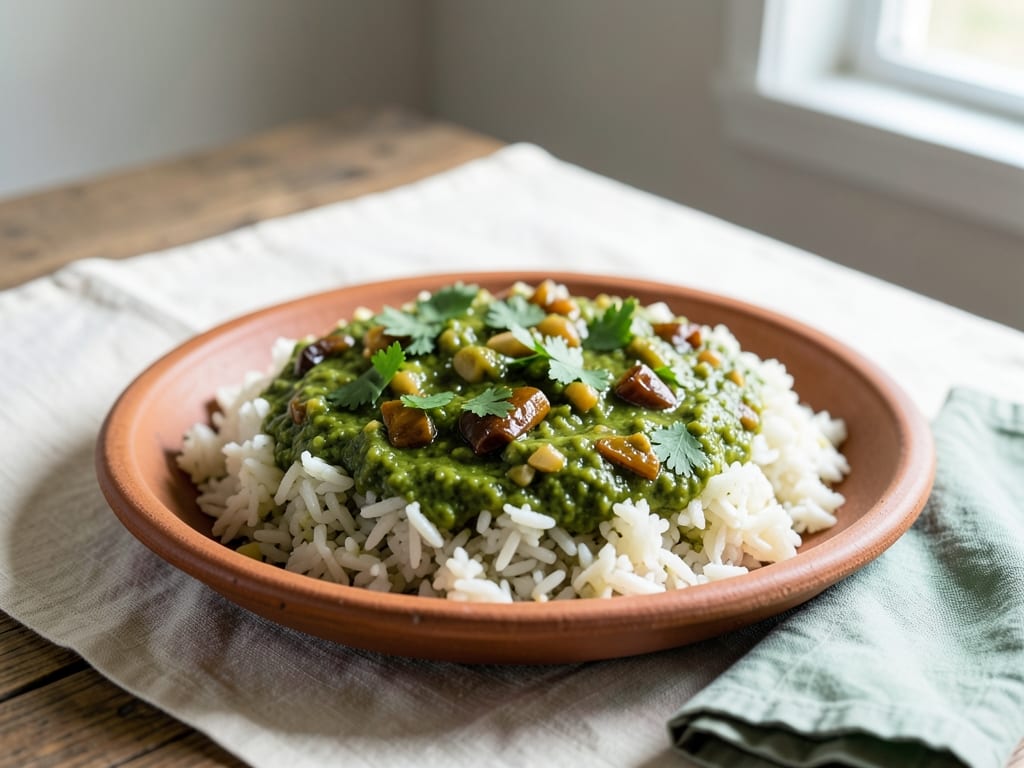
A Spanish-inspired rice dish where toasted hazelnuts, roasted red peppers, and smoky paprika are blended into a rich sauce and stirred into short-grain rice. The result is a deeply flavored side with a creamy texture and a whisper of garlic and heat. Perfect alongside grilled vegetables, fish, or chicken.
- Prep
- 15 min
- Cook
- 25 min
- Wait
- 5 min
- Total
- 45 min
- Makes
- About 3½ cups (serves 4 as a side dish)
Steps
Before you start
- Measure out your stock and keep it warm on the stovetop or in the microwave
- Toast the hazelnuts in a dry skillet over medium heat for 3–4 minutes, shaking frequently, until fragrant and slightly darkened; let cool
- Have all ingredients prepped and within arm's reach before you start cooking the rice
Build the romesco sauce
- In a food processor or blender, combine the toasted hazelnuts, roasted red peppers, garlic, smoked paprika, sherry vinegar, and a pinch of sea salt.
- Pulse until the mixture is a thick, slightly chunky paste—aim for the texture of coarse pesto.
- You want some texture to remain; don't blend it completely smooth.
- Taste and adjust salt and paprika as needed.
+ Show details− Hide details
Ready when: Sauce is thick and slightly textured, resembling coarse pesto
Tip: Don't overblend; the sauce should have body and texture, not be a smooth purée
Toast the rice
- Heat 2 tablespoons (30 ml) of the olive oil in a large heavy-bottomed skillet or paella pan over medium heat.
- Add the rice and stir constantly for 2–3 minutes, coating each grain with oil.
- The rice should smell toasted and slightly nutty, and begin to turn pale golden at the edges.
- This step blooms the starches and adds depth.
+ Show details− Hide details
Ready when: Rice is pale golden and fragrant
Tip: Stir constantly to avoid burning; if the heat feels too intense, lower it slightly
Add the romesco sauce
- Add the romesco sauce to the toasted rice and stir for 1 minute, allowing the sauce to coat the grains.
- The mixture will be thick and aromatic.
- Pour in the warm stock, stirring to combine well and break up any clumps of sauce.
+ Show details− Hide details
Ready when: Sauce and stock are fully integrated
Tip: Warm stock heats the pan less abruptly and cooks the rice more evenly
Bring to a boil
- Increase the heat to medium-high and bring the mixture to a rolling boil, stirring occasionally.
- This should take 2–3 minutes.
- You'll see the liquid bubbling up around the grains and the surface will be active and steaming.
+ Show details− Hide details
Ready when: Liquid is at a rolling boil
Reduce heat and simmer
- Lower the heat to medium-low and stir once more to ensure the rice is evenly distributed.
- Let the rice simmer gently, uncovered and undisturbed, for 18–20 minutes.
- The liquid will gradually absorb into the rice.
- Do not stir during cooking; this helps develop the creamy, slightly toasted bottom layer (socarrat) if desired.
+ Show details− Hide details
Ready when: Liquid is absorbed and rice is just tender; you hear only the occasional quiet crackle or pop, not active bubbling
Tip: Resist the urge to stir; letting it sit creates better texture and allows the nutty bottom crust to develop
Rest and finish
- Remove the pan from the heat and drizzle the remaining 1 tablespoon (15 ml) of olive oil over the rice.
- Cover the pan loosely with foil or a lid and let it rest for 5 minutes.
- This allows the rice to finish hydrating and the flavors to settle.
+ Show details− Hide details
Ready when: Rice is fluffy and each grain is separate
Tip: A loose cover (not sealed) prevents steam from making the rice soggy
Season and serve
- Fluff the rice gently with a fork, breaking up any large clumps.
- Taste and adjust salt and black pepper as needed.
- Add a pinch of red pepper flakes if you want extra heat.
- Spoon onto warm plates or into a serving bowl, scraping up any of the golden, crispy rice from the bottom if present.
- Serve hot.
+ Show details− Hide details
Ready when: Rice is fluffy, tender, and well-seasoned
Tip: The crispy bits at the bottom are a feature, not a mistake—they add texture and flavor
Good to know
Tips
- Toasting the rice before cooking is not just a Spanish technique—it prevents gumminess and adds a subtle toasted flavor that complements the romesco sauce.
- The 'socarrat' (golden crust at the bottom of the pan) is prized in Spanish rice dishes. If you don't hear gentle crackling in the last 2 minutes of cooking, turn the heat up slightly for the final 30 seconds to encourage it.
- If your romesco sauce seems too thick after blending, thin it with a tablespoon of the warm stock before stirring it into the rice.
- This dish is excellent served at room temperature the next day as a cold salad base—just drizzle with extra olive oil and add fresh greens, chickpeas, or roasted vegetables.
Make ahead
The romesco sauce can be made up to 2 days ahead and stored in the refrigerator in an airtight container. Let it come to room temperature before stirring into the rice.
Storage & reheating
Store leftovers in an airtight container in the refrigerator for up to 3 days. Reheat gently on the stovetop over medium-low heat with a splash of stock or water, stirring occasionally, until warm through (about 5 minutes). The rice may be slightly drier when reheated; this is normal. Do not freeze.
Substitutions
- hazelnuts, raw → Almonds or walnuts. Toast whole almonds or walnuts the same way. The sauce will be slightly less rich but still delicious and authentic to some regional versions of romesco.
- smoked paprika (pimentón) → Sweet or hot Spanish paprika (not smoked). You'll lose the smoky depth, but the dish will still be flavorful. Use the same amount or adjust to taste.
- short-grain rice (bomba or paella rice) → Arborio or carnaroli risotto rice. These will create a slightly creamier dish with softer grains. Stir more frequently (every 3–4 minutes) and check for doneness at 16–18 minutes.
- roasted red peppers (jarred or fresh) → Fresh red peppers, roasted and peeled at home. Roast 2 fresh red peppers over a gas flame or under the broiler until charred, then steam in a plastic bag for 10 minutes, peel, and use as directed. This enhances the fresh flavor.
More pilaf
See all →



Find more like this
- Meal
- Dinner
- Cuisine
- Spanish
- Main ingredient
- Bell PeppersRice
- Method
- Stovetop