Spanish Fideuà-Style Baked Short Pasta with Seafood and Saffron
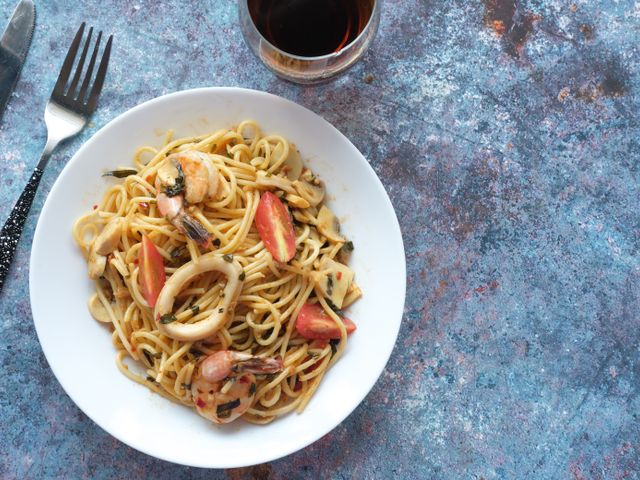
A rustic baked seafood pasta inspired by the Spanish coastal dish fideuà. Short noodles are toasted, then simmered with aromatic sofrito, saffron-infused fish stock, and a bounty of shrimp, mussels, and clams. Finished in the oven until golden and crusty at the edges, it's served bubbling hot with fresh herbs and lemon. Serves 4 as a main course.
Steps
Before you start
- Have all seafood prepped and at room temperature to ensure even cooking
- Preheat the oven to 400°F (200°C) about 15 minutes before baking
- Prepare the saffron infusion by steeping saffron threads in warm stock 10 minutes ahead
- Use a 12-inch (30 cm) wide, 2-inch (5 cm) deep ovenproof skillet or shallow braising dish
Toast the noodles
- Heat 2 tbsp (30 ml) olive oil in the 12-inch ovenproof skillet over medium heat.
- Add the fideuà noodles and stir constantly for 4–5 minutes until they turn light golden and smell fragrant and nutty.
- Be attentive; they can brown quickly and become bitter.
- Transfer to a plate and set aside.
+ Show details− Hide details
Ready when: Noodles are light golden brown and smell toasted
Tip: Don't leave the noodles unattended; stir constantly to prevent burning
Build the sofrito
- Add the remaining 3 tbsp (45 ml) olive oil to the same skillet over medium heat.
- Add the diced onion and red pepper, cooking for 5 minutes until softened and fragrant.
- Stir in the minced garlic and cook for 1 minute more until fragrant.
- Add the tomato paste and sweet smoked paprika, stirring for 30 seconds to toast the spices.
+ Show details− Hide details
Ready when: Vegetables are soft and paprika is fragrant
Tip: Don't let the garlic brown; keep the heat at medium and stir frequently
Deglaze and add stock
- Pour the dry white wine into the skillet, using a wooden spoon to scrape up any browned bits from the bottom.
- Let it bubble for 1 minute.
- Pour in the warm saffron-infused fish stock.
- Stir well and bring to a gentle boil.
+ Show details− Hide details
Ready when: Liquid is gently boiling
Tip: The saffron-infused stock gives the dish its golden color and subtle floral flavor
Return noodles and simmer
- Stir the toasted noodles back into the skillet, making sure they are submerged or mostly covered by the liquid.
- Reduce heat to medium-low and simmer gently, uncovered, for 8–10 minutes, stirring occasionally, until the noodles are about halfway cooked and have absorbed some liquid.
- They should still have a slight bite.
+ Show details− Hide details
Ready when: Noodles are tender but still firm, with liquid partially absorbed
Tip: Stir to prevent sticking; the noodles will finish cooking in the oven
Add seafood
- Pat the shrimp dry.
- Nestle the shrimp, mussels, and clams into the partially cooked noodles.
- Gently stir to distribute them evenly throughout.
- Season the entire dish with salt and freshly ground black pepper.
- The liquid should still partially cover the noodles.
+ Show details− Hide details
Ready when: Seafood is evenly distributed
Tip: Keep the heat low; if the liquid boils vigorously, the shrimp will cook too fast before the clams open
Bake until golden and cooked throughOven 400°F / 205°C
- Transfer the skillet to a preheated 400°F (200°C) oven.
- Bake, uncovered, for 12–15 minutes until the liquid is mostly absorbed, the edges of the noodles are lightly crisped and golden brown (the socarrat), and the shrimp are pink and firm, the mussels have opened, and the clams have cracked slightly.
- Discard any mussels or clams that remain stubbornly closed.
+ Show details− Hide details
Ready when: Shrimp are opaque and pink, mussels and clams are open, noodles are tender with crispy edges
Tip: The golden, slightly crusty bottom layer is the signature fideuà socarrat—don't skip this step
Rest and garnish
- Remove from the oven and let the dish rest for 2 minutes without disturbing it.
- Scatter the fresh chopped parsley over the top.
- Serve hot directly from the skillet or divide among shallow bowls.
- Serve with lemon wedges and garlic aioli on the side for drizzling.
+ Show details− Hide details
Ready when: Parsley is scattered and dish is ready to serve
Tip: Serve immediately while the noodles are still warm and slightly crispy at the edges
Good to know
Tips
- The socarrat (crispy, golden bottom layer) is the hallmark of fideuà. Don't skip the oven step or cover the pan; the heat must reach the bottom directly
- All seafood must be very fresh. Buy shrimp, mussels, and clams the same day you plan to cook, and store them on ice in the coldest part of your refrigerator
- Saffron is expensive and powerful; steep it in warm (not boiling) stock to coax out its full color and flavor. Never use boiling water, as it can make saffron bitter
- Serve immediately in shallow bowls to share the golden, crusty noodles and broth. The dish loses texture and appeal if left to sit for more than a few minutes
Storage & reheating
Refrigerate leftovers in an airtight container for up to 2 days. Reheat gently in a 300°F (150°C) oven for 10–12 minutes, covered with foil, until warmed through; do not use the microwave, as it will make the noodles tough. Do not freeze once seafood is cooked.
Substitutions
- fish or seafood stock, warm → chicken stock mixed with 2 tbsp clam juice (8 oz / 230 ml clam juice plus 3¾ cups / 900 ml chicken stock). Fish stock is ideal for flavor, but a combination of chicken stock and clam juice is a workable substitute
- mussels, cleaned and debearded → additional large shrimp or Manila clams. You need about 12 oz (340 g) total shellfish; use all the same protein if mussels are unavailable
- littleneck or Manila clams → littleneck clams or Manila clams may be swapped depending on what is fresh and available at your market. Both have similar cooking times; choose the freshest option
- short fideuà noodles or broken vermicelli pasta → short pasta shapes like ditalini, orzo, or broken spaghetti. Traditional fideuà uses thin, short noodles; any small pasta will work, though the traditional flavor is slightly different