Southern Butter Biscuits
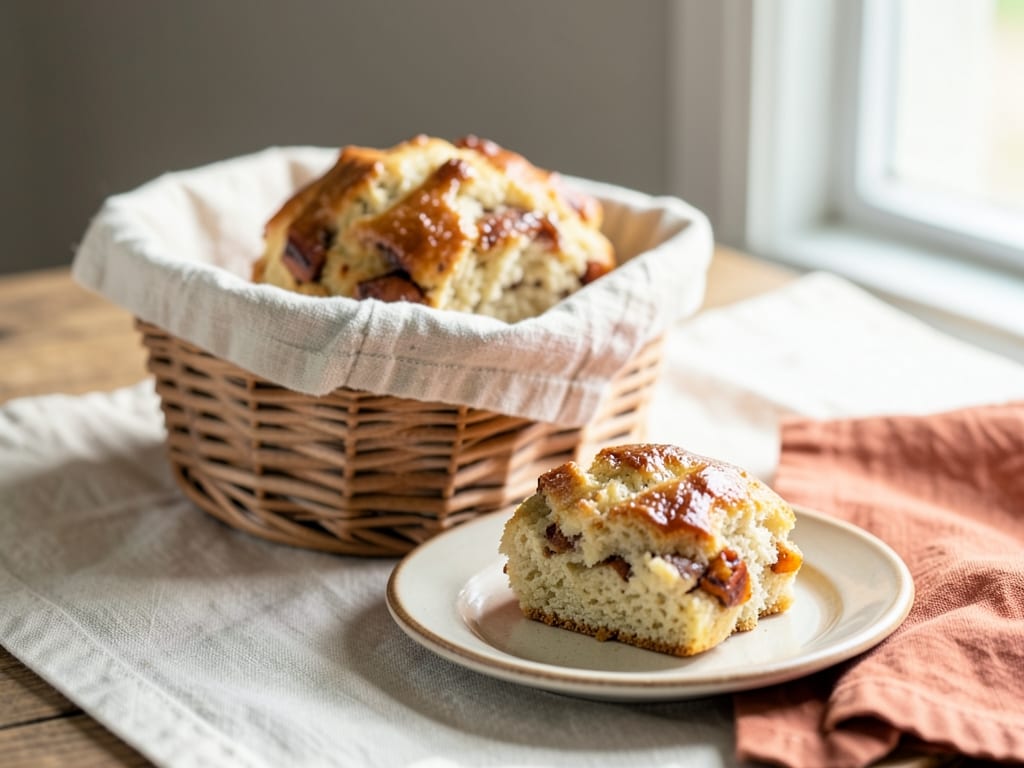
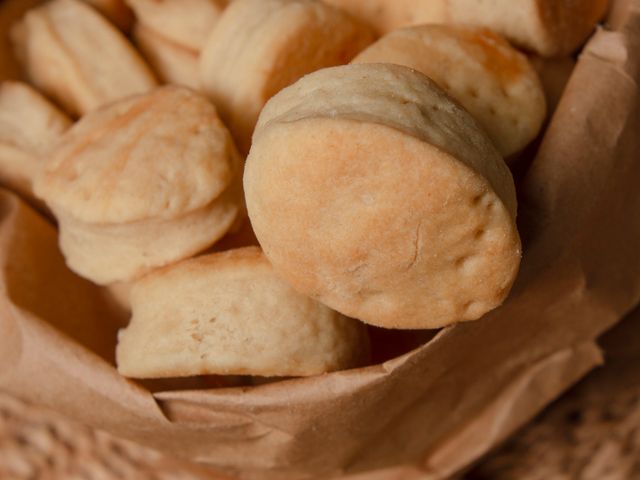
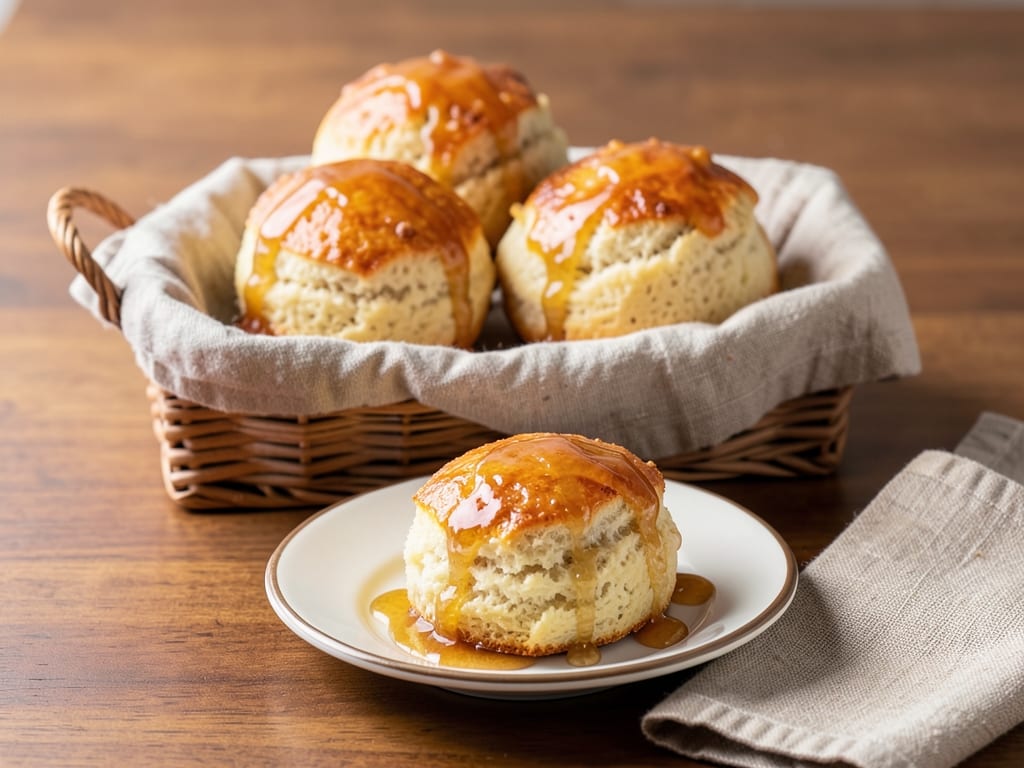
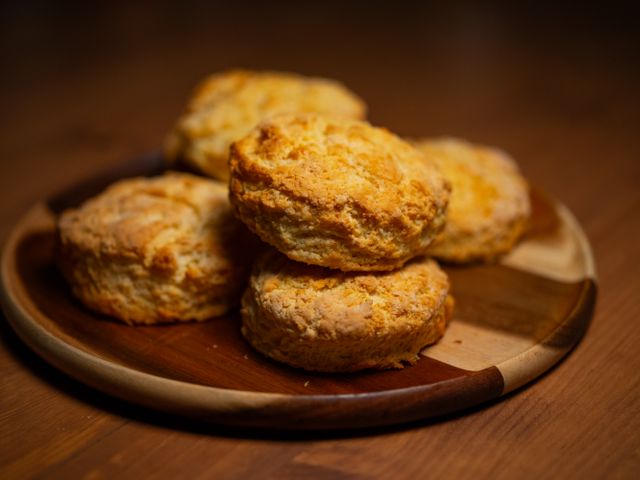
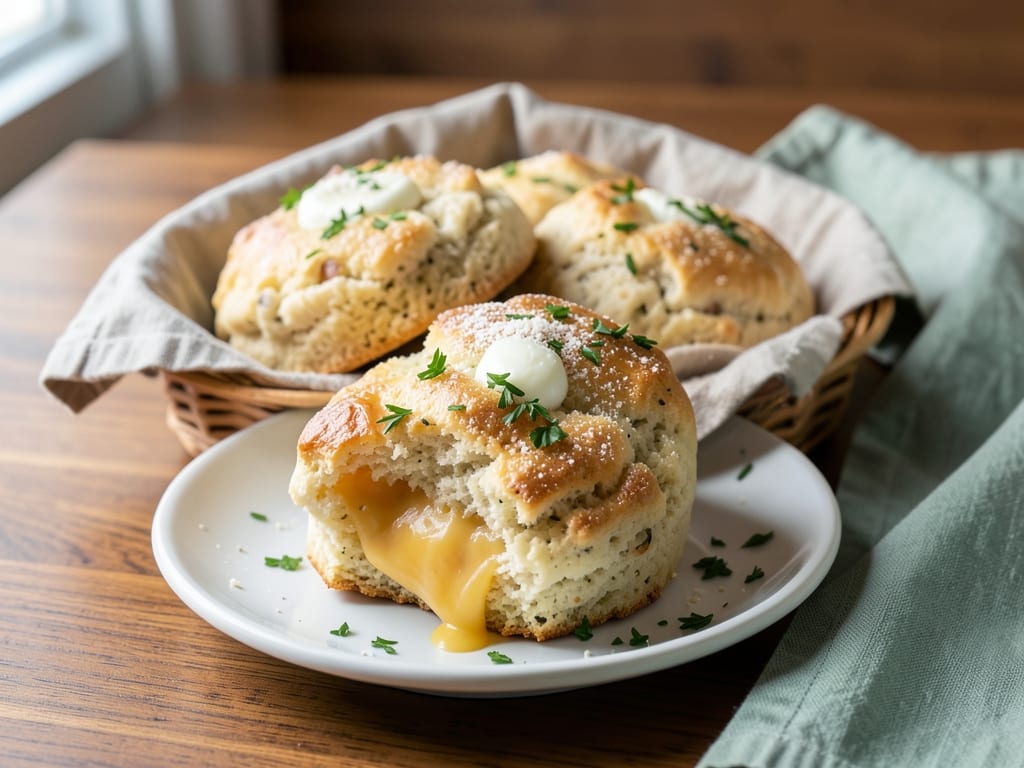
Tall, flaky Southern biscuits with a tender crumb and buttery golden exterior. These are made by folding butter into the dough multiple times to create distinct layers that separate into individual flakes when baked. They're perfect warm from the oven with jam, honey, or gravy.
Steps
Before you start
- Use very cold butter straight from the freezer—this is essential for flaky layers
- Preheat your oven to 475°F (245°C) at least 15 minutes before baking
- Have all dry ingredients mixed and measured before you start
- Work quickly and keep the dough cold throughout the process
Mix dry ingredients
- In a large mixing bowl, whisk together 2½ cups (312 g) all-purpose flour, 1 tablespoon (15 g) baking powder, and ¾ teaspoon (4 g) fine sea salt until evenly combined.
- Make sure there are no lumps of baking powder.
- Set aside.
+ Show details− Hide details
Ready when: Flour mixture is uniform with no streaks
Tip: Sift the flour and baking powder if you prefer an extra-light, tender crumb
Cut in cold butter
- Add 4 tablespoons (57 g) of very cold butter cubes to the flour mixture.
- Using your fingertips, a pastry cutter, or a bench scraper, quickly break the butter into pea-sized pieces throughout the flour.
- Work fast to keep the butter cold.
- The mixture should look like coarse cornmeal with visible small butter flakes.
+ Show details− Hide details
Ready when: Mixture resembles coarse breadcrumbs with pea-sized cold butter pieces visible
Tip: Keep your hands cool by rinsing them in cold water and drying thoroughly before you start; warm hands will melt the butter
Add buttermilk
- Pour ¾ cup (180 ml) cold buttermilk into the flour mixture.
- Stir gently with a wooden spoon or your hands just until a shaggy dough forms.
- Do not overmix—stop as soon as no dry flour remains.
- The dough will look somewhat lumpy and rough.
+ Show details− Hide details
Ready when: Dough is just combined with no visible dry flour
Tip: Overmixing develops gluten and makes biscuits tough; stop mixing as soon as the dough comes together
Chill dough briefly
- Transfer the dough to a lightly floured work surface.
- Gently shape it into a rough disk about ¾ inch (2 cm) thick without kneading—you want to see streaks of butter throughout.
- Wrap in plastic wrap and refrigerate for 15 minutes.
+ Show details− Hide details
Tip: A cold dough is much easier to fold without the butter melting into the flour
First fold and roll
- Remove the dough from the refrigerator.
- On a lightly floured surface, roll or gently press the dough into a rectangle about ¼ inch (6 mm) thick and roughly 8×12 inches (20×30 cm).
- Distribute about 3 tablespoons (42 g) of the remaining very cold butter over the top two-thirds of the rectangle in small scattered pieces.
- Fold the bottom third of the dough up over the middle, then fold the top third down over it, like folding a letter.
- Press the edges gently to seal.
+ Show details− Hide details
Ready when: Dough is folded in thirds with butter pats visible between layers
Tip: Keep the work surface lightly floured so the dough doesn't stick, but avoid using too much flour which will toughen the biscuits
Second fold and chill
- Turn the folded dough 90 degrees.
- Roll it out again to ¼ inch (6 mm) thick in a similar rectangular shape.
- Dot the top two-thirds with the remaining 5 tablespoons (71 g) of cold butter pieces.
- Fold into thirds again (bottom up, then top down).
- Wrap in plastic wrap and refrigerate for 15 minutes.
+ Show details− Hide details
Ready when: Dough is folded with visible butter layers
Tip: Each fold and chill creates more distinct layers; don't skip the chilling step or the layers will merge together
Final roll and cut
- Remove dough from the refrigerator.
- Roll out gently to ½ inch (1.3 cm) thick in a rough rectangle.
- Using a 2-inch (5 cm) round pastry cutter or biscuit cutter, cut out 10 biscuits, pressing straight down without twisting (twisting seals the edges and prevents rising).
- Place biscuits on a baking pan lined with parchment paper, spacing them 1 inch (2.5 cm) apart.
- Gather any scraps, gently reshape once, and cut additional biscuits if desired.
+ Show details− Hide details
Ready when: 10 clean-cut biscuits are on the baking pan
Tip: Use a sharp cutter and press straight down to get maximum rise; a dull cutter crushes the edges and prevents them from puffing
Preheat and rest biscuitsOven 475°F / 245°C
- Preheat your oven to 475°F (245°C) if you haven't already.
- Let the cut biscuits rest at room temperature on the baking pan for 10 minutes while the oven heats.
+ Show details− Hide details
Tip: A hot oven is crucial for biscuit rise; the high heat creates steam that puffs the layers apart
Brush and bakeOven 475°F / 245°C
- Brush the tops of the biscuits lightly with 2 tablespoons (28 g) melted butter if desired (optional but creates a beautiful golden finish).
- Place the pan in the preheated 475°F (245°C) oven and bake for 12–14 minutes, until the biscuits are tall and golden brown on top.
+ Show details− Hide details
Ready when: Biscuits are 1½ to 2 inches tall with golden-brown tops
Tip: Rotate the pan halfway through if your oven has hot spots, but try to minimize oven door opening to avoid heat loss
Cool and serve
- Remove the biscuits from the oven and let them rest on the pan for 2 minutes, then transfer to a wire rack.
- Serve warm or at room temperature.
+ Show details− Hide details
Tip: Biscuits are best enjoyed within a few hours of baking, while the layers are still distinct and the texture is at its fluffiest
Good to know
Tips
- The secret to flaky biscuits is keeping the butter cold and distinct throughout the folding process—this creates visible layers that separate during baking rather than blending into the dough
- Don't skip the chilling steps between folds; they ensure the butter stays in pockets rather than spreading throughout the dough
- Press the cutter straight down without twisting; twisting seals the cut edges and prevents the biscuits from rising properly
- If your kitchen is warm, chill the flour and baking powder mixture in the freezer for 10 minutes before mixing in the butter
Make ahead
Dough can be prepared through Step 6 (after the second fold and chill), wrapped tightly in plastic wrap, and frozen for up to 2 weeks. Thaw in the refrigerator overnight, then proceed with the final roll and cut. Alternatively, you can cut and freeze unbaked biscuits on a baking sheet, then transfer to a freezer bag; bake directly from frozen, adding 2–3 minutes to the baking time.
Storage & reheating
Room temperature: Store in an airtight container for up to 2 days. Refrigerator: Up to 4 days in an airtight container. Freezer: Up to 3 months in a freezer bag or airtight container. To reheat, wrap in foil and warm in a 350°F (175°C) oven for 8–10 minutes, or wrap in a damp paper towel and microwave for 20–30 seconds.
Substitutions
- buttermilk → Whole milk mixed with 1 tablespoon fresh lemon juice or white vinegar per ¾ cup milk; let stand 5 minutes. Creates a similar tangy flavor and tender crumb, though the biscuits may be slightly less tender
- all-purpose flour → Cake flour (use 2¾ cups/275 g instead) or a mix of 2 cups all-purpose flour + ½ cup soft wheat pastry flour. Lower-protein flours produce even more tender biscuits, but may reduce rise slightly
- baking powder → ½ teaspoon baking soda + 1 teaspoon cream of tartar. Creates a similar rise, though the reaction happens faster so handle the dough quickly after mixing
- unsalted butter → Lard or shortening (such as Crisco), kept very cold. Traditional option that produces exceptionally flaky layers, though with less buttery flavor