Flaky Southern Layered Biscuits
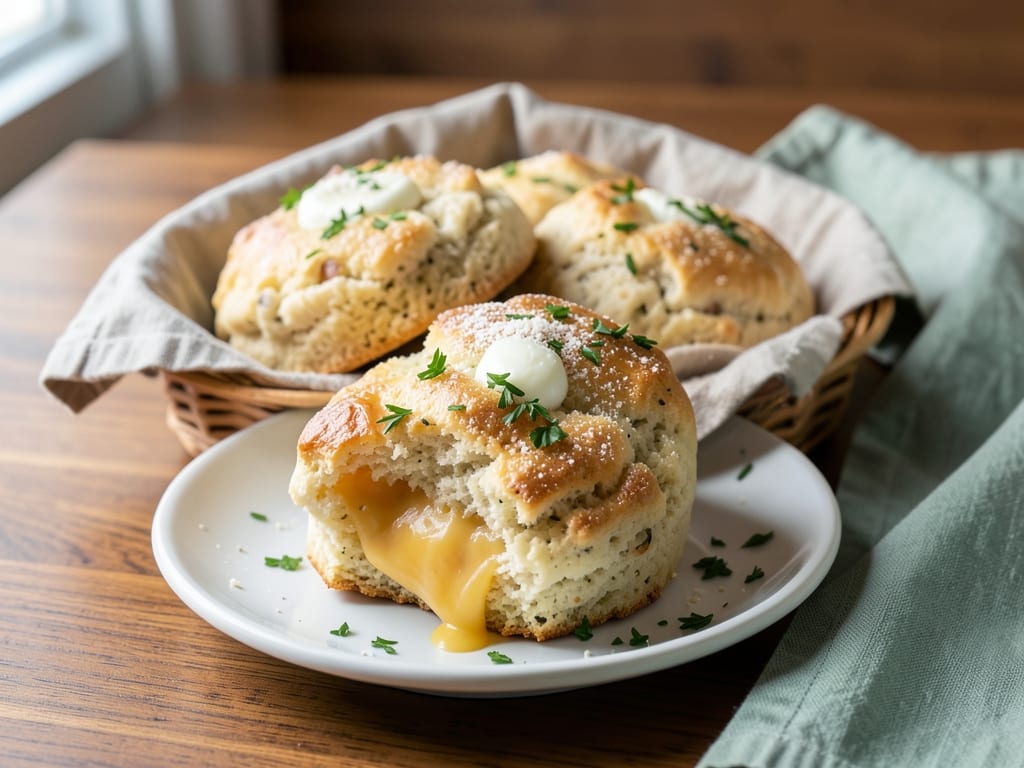
Tall, tender biscuits with pull-apart buttery layers, made with soft wheat flour, cold butter, and tangy buttermilk. A few simple folds build the flakiness, and a brush of melted butter finishes them.
- Prep
- 28 min
- Cook
- 17 min
- Wait
- 35 min
- Total
- 1 hr 20 min
- Makes
- 8 biscuits (2½-inch / 6 cm)
Steps
Before you start
- Keep the buttermilk in the fridge until the moment you use it. Everything should be as cold as possible.
- Measure the flour by weight if you can. Spooned and leveled cups work, but scooping straight from the bag packs in too much flour and makes dry biscuits.
- Use a soft Southern-style flour such as White Lily, or a low-protein all-purpose flour. See substitutions if you only have standard all-purpose.
- You need a sharp-edged 2½-inch (6 cm) round cutter. A dull or twisting cutter seals the edges and stops the biscuits rising.
- The oven preheats while the cut biscuits chill, so don't turn it on yet.
Freeze the butter
- Cut the 8 tablespoons (113 g) cold butter into ½-inch (1.25 cm) cubes.
- Spread them on a small plate and freeze for 15 minutes.
- Meanwhile, line the rimmed baking sheet with parchment paper and measure out the other ingredients.
+ Show details− Hide details
Ready when: Butter cubes feel hard and cold, not at all tacky
Tip: Do not leave the butter in longer than 20 minutes. Rock-hard butter is harder to flatten into flakes.
Whisk the dry ingredients
- In the large bowl, whisk together the 300 g flour, baking powder, baking soda, salt, and sugar for 30 seconds, until evenly combined and no clumps of baking soda remain.
+ Show details− Hide details
Ready when: The mixture looks uniform and slightly fluffy
Flatten in the butter
- Add the frozen butter cubes to the flour.
- Toss to coat, then press each cube flat between your thumb and fingertips into a thin flake, about the size of a large coin.
- Work quickly.
- Stop when most pieces are flat and the size of hazelnut shells to a quarter, with a few larger flakes.
+ Show details− Hide details
Ready when: Butter is in visible flat flakes, with no pieces smaller than a pea and none smeared into the flour
Tip: If the butter feels soft or greasy, put the whole bowl in the freezer for 5 minutes before continuing.
Add the buttermilk
- Make a well in the center.
- Pour in the cold buttermilk all at once.
- Use a fork or spatula to stir just until the flour is mostly moistened and a shaggy, sticky dough forms, about 15 strokes.
- Some dry patches are fine.
+ Show details− Hide details
Ready when: Dough is shaggy and holds together when pressed, with a few floury spots
Tip: Overmixing develops gluten and gives tough, short biscuits.
Fold to build layers
- Dust the counter with some of the dusting flour.
- Turn the dough out and gently pat it into a rough 6×9-inch (15×23 cm) rectangle about ¾ inch (2 cm) thick.
- Use the bench scraper to fold it in thirds like a letter, then rotate it a quarter turn.
- Pat it out again to about 6×9 inches and fold in thirds once more.
- Repeat for a total of 3 folds, dusting lightly only as needed.
- The dough should become smoother and show streaks of butter.
+ Show details− Hide details
Ready when: Dough looks cohesive and smooth, with visible butter streaks and no dry patches
Tip: Pat rather than knead, and use a light touch. Brush off excess flour from the surface before each fold so layers separate cleanly.
Pat out and cut
- Pat the dough into a rectangle about 1 inch (2.5 cm) thick, roughly 6×9 inches (15×23 cm).
- Dip the cutter in flour.
- Press straight down without twisting, then lift.
- Cut 8 rounds, placing them on the lined baking sheet with their sides touching, about ½ inch (1 cm) apart from the edge.
- Gently press the scraps together once (no kneading) and cut any remaining biscuit to fill out the sheet if needed.
+ Show details− Hide details
Ready when: Cut edges look clean and straight, showing visible layers
Tip: Twisting the cutter seals the layers shut. Press straight down and lift straight up for the tallest rise.
Chill and preheatOven 450°F / 230°C
- Place the baking sheet in the fridge for 15 minutes.
- While the biscuits chill, position an oven rack in the center and preheat to 450°F (230°C).
+ Show details− Hide details
Ready when: Biscuits feel firm and cold to the touch and the oven has reached 450°F (230°C)
Tip: Use an oven thermometer if you can. A true 450°F (230°C) is key to a quick, high rise.
Bake until goldenOven 450°F / 230°C
- Bake the biscuits on the center rack at 450°F (230°C) for 15 to 17 minutes.
- Do not open the oven door for the first 12 minutes.
- Rotate the pan once at 12 minutes if the biscuits are browning unevenly.
+ Show details− Hide details
Ready when: Tops are deep golden brown, biscuits have risen about double in height, and the sides feel firm when gently squeezed
Tip: If the bottoms are browning faster than the tops, slide a second baking sheet underneath the first.
Brush and rest
- As soon as the biscuits come out of the oven, brush the tops generously with the melted butter.
- Let them rest on the pan for 5 minutes, then serve warm, pulling the layers apart with your hands or a fork.
+ Show details− Hide details
Ready when: Tops are glossy and the biscuits split into distinct buttery layers
Tip: Don't cut with a knife. Splitting along the natural layer lines keeps the interior fluffy.
Good to know
Tips
- Keep everything cold. If the dough softens or butter starts to smear at any point, chill it for 10 minutes before continuing.
- Placing the biscuits with their sides touching makes them support each other so they rise taller instead of spreading. For crisper sides, space them 1 inch (2.5 cm) apart.
- Use a light hand: gentle patting and as few folds as listed keeps the layers distinct without toughening the dough.
- Fresh baking powder matters. Test it by stirring ½ teaspoon into hot water. It should fizz vigorously.
Make ahead
"Cut the biscuits (through step 6), place them on the lined baking sheet, and freeze until solid, about 1 hour. Transfer to a freezer bag and freeze for up to 2 months. Bake straight from frozen at 450°F (230°C) for 18 to 20 minutes, skipping the chill step but still preheating the oven fully."
Storage & reheating
"Room temperature: cool completely, then keep in an airtight container for up to 1 day. Refrigerator: up to 4 days in an airtight container. Freezer: baked biscuits keep up to 2 months in a freezer bag. To reheat, wrap in foil and warm at 350°F (175°C) for 8 to 10 minutes (15 to 18 minutes from frozen) until hot in the center."
Substitutions
- soft wheat flour (such as White Lily) or low-protein all-purpose flour → Standard all-purpose flour with cornstarch: 255 g (about 2 cups) all-purpose flour plus 45 g (⅓ cup) cornstarch, whisked together. Mimics the lower protein of soft Southern flour. The biscuits will be a touch less tender than with true soft wheat flour.
- full-fat buttermilk → Whole milk soured with lemon juice or white vinegar: 1 tablespoon acid plus enough milk to make 210 ml (⅞ cup), rested 5 minutes and chilled. Works for both leavening and tang, but the texture is slightly less rich than real buttermilk.
- unsalted butter → Half cold unsalted butter and half cold vegetable shortening (56 g each). Shortening gives a slightly taller, more tender biscuit but less buttery flavor.
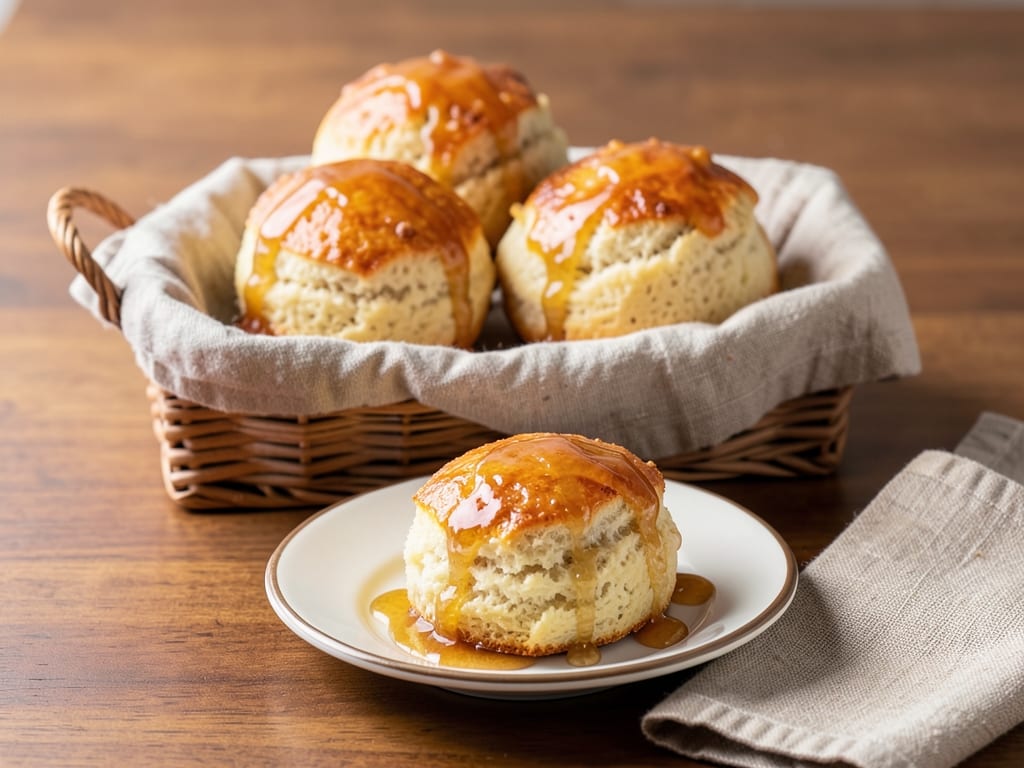
- granulated sugar → Honey brushed on after baking, omitting the sugar in the dough. Gives a lightly sweet finish without changing the dough.
More scones & biscuits
See all →

Find more like this
- Meal
- Breakfast
- Cuisine
- Southern
- Diet
- VegetarianHalal
- Method
- Oven