Sourdough Spanish Roncal and Roasted Chestnut Breadsticks
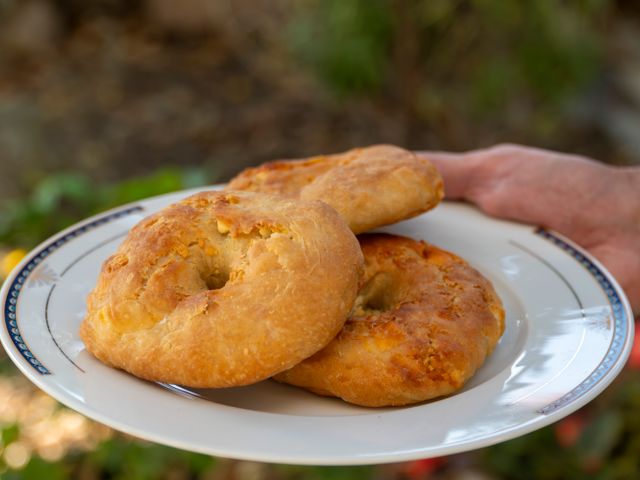
Crispy, rustic breadsticks made with sourdough discard, studded with chunks of roasted chestnuts and sharp Spanish Roncal cheese. The sourdough adds subtle tang and complexity, while the chestnuts provide sweetness and the Roncal brings a creamy, savory edge. Perfect for snacking, serving with cheese boards, or alongside soup.
- Prep
- 20 min
- Cook
- 18 min
- Wait
- 1 hr 30 min
- Total
- 2 hr 8 min
- Makes
- 24 breadsticks (about 4 inches / 10 cm each)
Steps
Before you start
- Have your sourdough discard at room temperature (80–85°F / 27–29°C)
- Preheat oven to 400°F (200°C) about 15 minutes before baking
- Line two large baking sheets with parchment paper
- Make sure your Roncal cheese is firm and easy to cut into small dice
Mix the dough
- In a large bowl, combine the sourdough discard, all-purpose flour, whole wheat flour, kosher salt, warm water, and olive oil.
- Use a wooden spoon or dough whisk to stir until a shaggy dough forms—all flour should be incorporated and no dry streaks remain.
- The dough will be soft and slightly tacky but not sticky.
+ Show details− Hide details
Ready when: All flour incorporated; dough looks shaggy but holds together
Tip: Don't overmix; you want a loose, rustic texture that will give the breadsticks their characteristic craggy surface.
Add cheese, chestnuts, and herbs
- Fold in the diced Roncal cheese, chopped roasted chestnuts, fresh rosemary, and cracked black pepper using a bench scraper or wooden spoon.
- Turn the dough out onto an unfloured work surface and use your hands to gently fold and incorporate the mix-ins until evenly distributed.
- Work lightly—you want visible pieces of cheese and chestnuts, not a homogeneous mass.
+ Show details− Hide details
Ready when: Cheese and chestnuts are scattered throughout; no streaks of plain dough remain
Tip: Fold gently so the cheese doesn't break apart and the chestnuts stay chunky for texture and visual appeal.
First rise at room temperature
- Transfer the dough to a lightly oiled bowl, cover with a damp kitchen towel, and let rest at room temperature (68–72°F / 20–22°C) for 60 minutes.
- The dough should become slightly puffy and airy, though it won't quite double in volume since sourdough discard has less wild yeast than a mature starter.
+ Show details− Hide details
Ready when: Dough is noticeably puffier; a poke with your finger leaves a shallow indent that springs back slowly
Tip: If your kitchen is cool, place the bowl in a warm spot (top of the fridge, inside a turned-off oven with the light on).
Preheat and shape breadsticksOven 400°F / 205°C
- About 15 minutes before you plan to bake, preheat the oven to 400°F (200°C).
- Line two large baking sheets with parchment paper.
- Turn the risen dough out onto a lightly floured work surface.
- Using a bench scraper, divide the dough into 24 roughly equal pieces (each about the size of a walnut).
- Roll each piece under your palms into a stick about 4 inches (10 cm) long and ½ inch (1.25 cm) thick.
- Place sticks on the prepared baking sheets, spacing them about ½ inch (1.25 cm) apart.
+ Show details− Hide details
Ready when: All 24 sticks are shaped and arranged on the two sheets
Tip: Roll gently and evenly; lumpy shapes bake unevenly. If the dough is sticky, dust your hands lightly with flour.
Second rise
- Cover the shaped breadsticks loosely with a damp kitchen towel and let them rise at room temperature for 30 minutes.
- They should puff slightly and feel a bit airy when you touch them, though they won't rise dramatically.
+ Show details− Hide details
Ready when: Breadsticks look noticeably puffier; they jiggle slightly when the sheet is moved
Tip: Don't let them over-proof; if they rise too much, they'll spread rather than crisp up in the oven.
Optional topping and final bakeOven 400°F / 205°C
- If using fleur de sel, lightly brush the surface of each breadstick with a damp fingertip or pastry brush and sprinkle a tiny pinch of fleur de sel on each one.
- Bake both sheets in the preheated 400°F (200°C) oven for 16–18 minutes, swapping their positions halfway through baking (top sheet to bottom, bottom to top).
- The breadsticks should be golden brown, crispy on the outside, and sound hollow when tapped on the bottom.
+ Show details− Hide details
Ready when: Golden-brown color; hollow sound when tapped on the bottom; tops feel hard and crispy
Tip: Rotate the baking sheets midway to ensure even browning. If the edges brown too quickly, reduce heat to 375°F (190°C) for the final 2–3 minutes.
Cool before serving
- Transfer the baking sheets to a wire cooling rack and let the breadsticks cool for at least 10 minutes before eating.
- They will continue to crisp as they cool.
- Store in an airtight container.
+ Show details− Hide details
Ready when: Breadsticks are cool enough to handle; they snap cleanly when broken
Tip: Don't skip this cooling step—they'll taste greasy if eaten hot, as the oils haven't fully set.
Good to know
Tips
- Sourdough discard works best when it's actively bubbling (fed 4–8 hours earlier). Inactive discard can produce dull, dense sticks.
- Roncal cheese is protected by Spanish D.O.C. status; aged Manchego or Idiazabal are excellent substitutes if Roncal is hard to find.
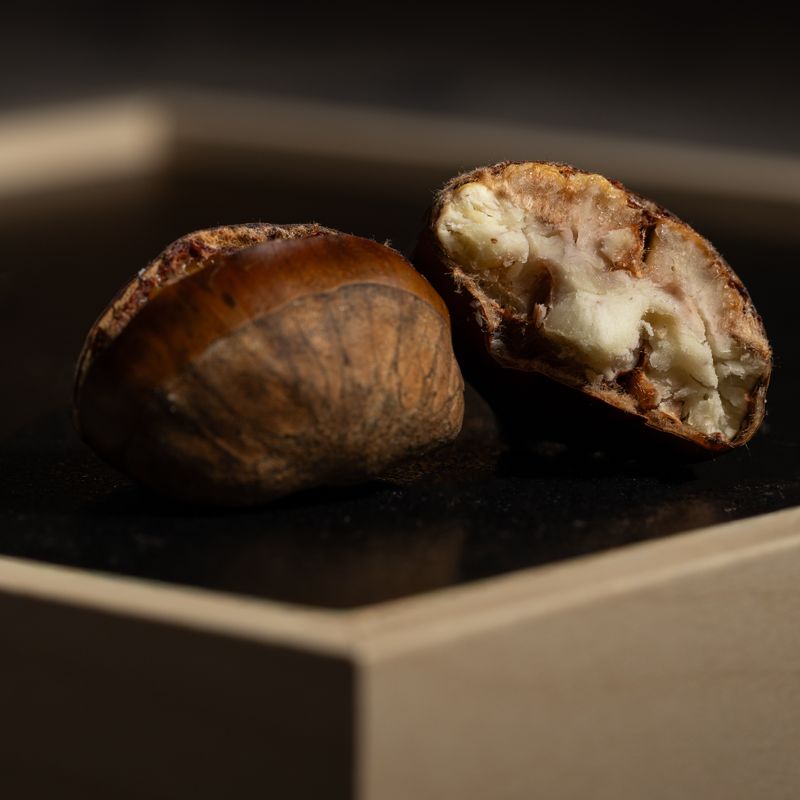
- Roasted chestnuts from a jar or vacuum-sealed pack are ideal for speed, but you can roast fresh chestnuts yourself: score an X on each, roast at 425°F (220°C) for 15–20 minutes, then peel while warm.
- For a less savory stick, reduce salt by ¼ teaspoon and add 1 teaspoon of honey to the dough. The rosemary and chestnuts still shine.
Make ahead
You can make the dough through the first rise up to 4 hours ahead. Cover tightly with plastic wrap and refrigerate. Bring to room temperature (about 30 minutes) before shaping. Alternatively, shape the breadsticks, cover tightly, and refrigerate up to 8 hours. Add 3–5 extra minutes to the bake time if baking straight from the fridge.
Storage & reheating
Room temperature: Keep in an airtight container or resealable bag up to 3 days. Refresh in a 350°F (175°C) oven for 5 minutes to re-crisp. Refrigerator: Not recommended; they'll soften. Freezer: Wrap cooled breadsticks tightly in plastic wrap and freeze up to 1 month. Thaw at room temperature and re-crisp in a 350°F (175°C) oven for 4–6 minutes.
Substitutions
- Roncal cheese (or aged Manchego), cold → Aged Manchego or Idiazabal cheese. Both are Spanish cheeses with similar nutty, firm characteristics. Use the same weight.
- roasted chestnuts, unsalted → Roasted hazelnuts or walnuts, roughly chopped. They'll add crunch instead of sweetness but work well flavor-wise. Use the same weight.
- fresh rosemary → Fresh thyme or a mix of thyme and oregano. Use the same amount by weight. Both pair beautifully with Spanish cheese.
- sourdough discard, at room temperature → Active sourdough starter (fed and bubbly) or 1 teaspoon instant yeast mixed with ¾ cup water. If using yeast, omit the water from the main recipe. The flavor will be less complex but the texture will be similar.