Sourdough Spanish Empanada Dough
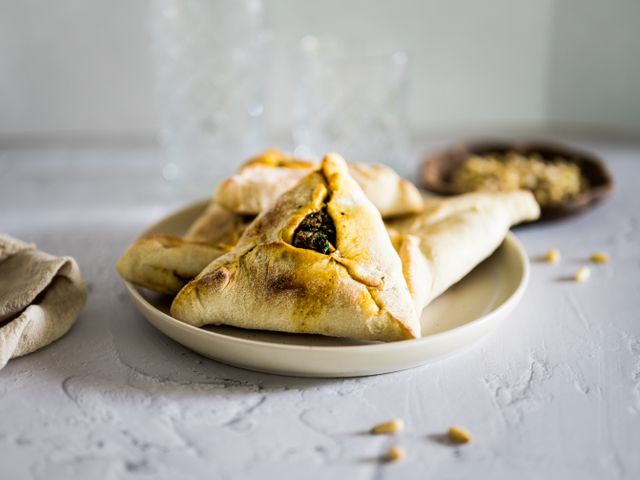
A tender, slightly tangy pastry dough enriched with sourdough starter and olive oil, designed for authentic Spanish empanadas. The dough creates a delicate, flaky crust when rolled thin and folded. Use this to wrap savory fillings like tuna, chorizo, or peppers for classic empanadas galletas (half-moon pastries) or larger family-style pies.
- Prep
- 15 min
- Cook
- 20 min
- Wait
- 2 hr 30 min
- Total
- 3 hr 5 min
- Makes
- Enough dough for 8–10 small empanadas or 1 large rectangular empanada
Steps
Before you start
- Use active, bubbly sourdough starter at room temperature (fed 4–8 hours prior)
- Measure flour by weight for accuracy, or spoon and level into a dry measure
- Plan ahead: this dough benefits from a long, cool rest for flavor development
- Prepare your filling (tuna salad, chorizo, roasted peppers, etc.) before you begin shaping
Mix dough ingredients
- In a large mixing bowl, combine the sourdough starter, flour, salt, water, and egg yolk.
- Mix with your hand or a bench scraper, folding the dough over itself repeatedly, until no dry flour remains and you have a shaggy, slightly sticky mass.
- The dough should feel soft and cohesive but not wet.
- This should take 2–3 minutes of folding.
+ Show details− Hide details
Ready when: No dry flour visible; dough is shaggy and soft
Tip: Don't knead or work the dough too much at this stage; a rough, lumpy dough will develop better layers.
Incorporate olive oil
- Add the olive oil to the dough and continue folding it in using a bench scraper or your hand, working from the sides toward the center.
- Fold and turn the dough for 4–5 minutes until the oil is evenly distributed and the dough is smoother and more elastic.
- The dough should feel silky and slightly slick but not greasy.
+ Show details− Hide details
Ready when: Oil is fully incorporated; dough is elastic and smooth
Tip: Patience here creates a tender, flaky crust. Folding rather than kneading preserves layers in the final pastry.
First rest (bulk fermentation)
- Cover the bowl with plastic wrap and let the dough rest at room temperature (68–72°F / 20–22°C) for 45 minutes.
- During this time, the sourdough starter will activate the dough and gluten will develop gently.
- The dough should look slightly puffed and feel more cohesive when you touch it.
+ Show details− Hide details
Ready when: Dough is visibly puffed and holds fingerprints when pressed lightly
Tip: A cooler room (around 68°F) is ideal; warmer temperatures will speed fermentation, which may reduce flavor depth.
Refrigerate for 2 hours (or overnight)
- Transfer the dough to the refrigerator, still covered, and chill for at least 2 hours (or up to 12 hours overnight).
- Cold dough is easier to handle and develops more complex flavor.
- The long, cool rest is key to authentic empanada dough—it allows the sourdough starter to slowly ferment and creates a tender crumb.
+ Show details− Hide details
Ready when: Dough is cold and firm throughout
Tip: Overnight chilling (8–12 hours) is best if you have the time; it deepens the sourdough flavor and improves texture.
Divide and shape (if making individual empanadas)
- Remove the dough from the refrigerator and let it sit at room temperature for 5 minutes to soften slightly.
- On a lightly floured surface, turn out the dough and divide it into 8–10 equal portions (roughly 50–60 g each for standard empanada galletas).
- Roll each piece gently into a ball, cover with a damp towel, and let rest for 10 minutes before rolling thin.
+ Show details− Hide details
Ready when: All pieces are evenly sized and smooth
Tip: Keep dough portions you're not working with under a damp towel to prevent drying out.
Roll and fill (final shaping)
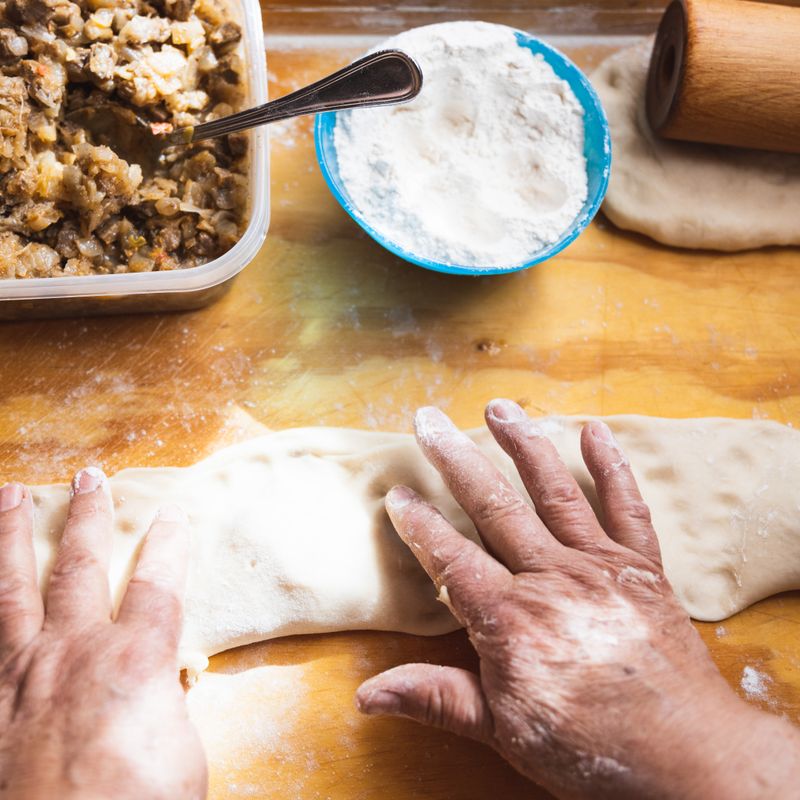
- On a floured surface, roll one portion of dough into a very thin round (about 1⁄8 inch / 3 mm thick, roughly 4–5 inches / 10–13 cm diameter).
- Place 2–3 tablespoons of your desired filling (tuna, chorizo, roasted peppers, etc.) on one half, leaving a ½-inch border.
- Fold the dough in half over the filling to form a half-moon, press the edges to seal, and crimp with a fork for a traditional look.
- Repeat with remaining dough portions.
+ Show details− Hide details
Ready when: All empanadas are sealed and edges are crimped
Tip: Keep the dough thin—this is authentic Spanish empanada style. Roll between parchment sheets if the dough sticks.
Proof before baking (optional but recommended)
- Arrange filled empanadas on a parchment-lined baking sheet.
- Cover loosely with plastic wrap and let rest at room temperature for 15–20 minutes.
- This final proof gives them a slight puff and tender crumb.
- If you skip this step, bake them straight away.
+ Show details− Hide details
Ready when: Empanadas are slightly puffy to the touch
Tip: This step is optional but makes a noticeable difference in the final texture.
Brush with egg wash and bakeOven 375°F / 190°C
- Preheat the oven to 375°F (190°C).
- Lightly brush the top of each empanada with beaten egg wash (if using) for a golden, shiny finish.
- Bake on the middle rack for 18–22 minutes, until the pastry is deep golden brown and the crust is crisp.
- The empanadas should sound hollow if you tap the bottom.
- For a large rectangular empanada in a 9×13-inch pan, bake for 25–30 minutes.
+ Show details− Hide details
Ready when: Pastry is deep golden brown and sounds hollow when tapped on the bottom
Tip: Don't open the oven door in the first 15 minutes; let the pastry set and puff undisturbed. Rotate the baking sheet halfway through if your oven has hot spots.
Good to know
Tips
- Sourdough starter temperature matters: use one that's active and bubbly (fed 4–8 hours prior). A sluggish starter will slow fermentation and reduce flavor.
- For the thinnest, flakiest empanadas, roll the dough gently and let it rest between folds. Rushing the shaping will tear the dough.
- This dough works beautifully for large family-style empanada pies too: press all the dough into a 9×13-inch baking pan, fill, cover with another layer of dough, seal the edges, and bake at 375°F (190°C) for 25–30 minutes.
- Sourdough fermentation is temperature-sensitive. If your kitchen is cool (below 65°F / 18°C), increase the first rest to 60 minutes. If it's very warm (above 75°F / 24°C), reduce it to 30 minutes to avoid over-fermentation.
Make ahead
Make the dough up to 12 hours ahead and refrigerate. Divide, fill, and shape empanadas up to 4 hours ahead; cover and chill until ready to bake. The filled empanadas can also be frozen for up to 3 months; bake from frozen, adding 3–5 minutes to the baking time.
Storage & reheating
Store unbaked, covered empanadas in the refrigerator for up to 2 days. Once baked, keep them in an airtight container at room temperature for 1 day, refrigerated for up to 3 days, or frozen for up to 2 months. Reheat in a 300°F (150°C) oven for 10 minutes to restore crispness.
Substitutions
- active sourdough starter, at room temperature → Active dry yeast (½ teaspoon / 2.5 g), mixed with the water. You'll lose some sourdough tang and complexity, but the dough will still be tender. Reduce the water to 75 ml if using yeast.
- extra-virgin olive oil → Vegetable oil or refined sunflower oil. Use the same amount. The dough will be less flavorful but will still produce a flaky crust.
- large egg yolk → 2 tablespoons (30 ml) whole milk or water. The dough will be slightly less tender and enriched, but still workable. The egg adds richness and color.
- all-purpose flour → Bread flour (use the same weight). The dough will be slightly chewier and stronger. It may also absorb a bit more water, so add water gradually.