Sourdough Pan con Tomate Toasts
Pan con tomate is a Spanish tradition—simple, elegant, and absolutely delicious. This sourdough version pairs the classic tomato, garlic, and olive oil with the pleasant fermented tang of sourdough bread. The process is wonderfully quick: toast, rub with garlic and tomato juice, drizzle with oil, season, and eat. Perfect as an appetizer, light lunch, or part of a Spanish breakfast spread. The acidic undertone of the sourdough complements the fresh tomato in ways that ordinary bread cannot.
Steps
Before you start
- Use the ripest, most flavorful tomatoes available—vine-ripened, beefsteak, or heirloom varieties are ideal
- Choose extra-virgin olive oil you actually enjoy drinking; this simple dish spotlights it
- Preheat your oven to 400°F (200°C) if using that method, or have your toaster ready
Slice the sourdough
- Using a serrated bread knife with a gentle sawing motion (never a pressing downward cut), slice the sourdough loaf into ½-inch-thick slices.
- You should get about 8–10 slices depending on the loaf's shape.
- Lay the slices on a cutting board or baking sheet while you prep the other ingredients.
+ Show details− Hide details
Tip: Uniform thickness is crucial for even toasting. A gentle sawing motion prevents squashing the bread's crumb structure.
Prepare tomatoes and garlic
- While the bread rests, halve your tomatoes and peel the garlic cloves.
- Set them near your toasting area—you'll want everything ready so you can work quickly once the bread is hot.
+ Show details− Hide details
Tip: Prepping ingredients now keeps the assembly brisk while the bread is warm and ready to absorb flavors.
Toast until goldenOven 400°F / 205°C
- Preheat your oven to 400°F (200°C).
- Arrange the bread slices on a baking sheet in a single layer.
- Toast for 5–7 minutes until the edges are light golden and the surface feels firm but still gives slightly when pressed gently.
- If using a standard toaster, set it to medium-dark and toast until the bread is lightly crisp but not hard.
+ Show details− Hide details
Ready when: Edges are light golden, surface is crisp, interior still has some chew
Tip: Avoid over-toasting. The bread should be crispy outside but still have softness inside. Overly dark toast becomes brittle and hard to rub with the tomato.
Rub with garlic while warm
- Remove the toasts from the oven and work quickly while they're still warm.
- Take one garlic clove and rub the cut side firmly across both sides of each slice, using a fresh section of the clove or switching to a new clove halfway through.
- The warmth will coax the garlic's oils and flavor deep into the bread.
+ Show details− Hide details
Ready when: All slices are rubbed with garlic on both sides; bread has absorbed some garlic aroma and oil
Tip: Work while the bread is hot—it absorbs flavor far more readily than cold bread. Don't press so hard you break the toast; let the warmth do the work.
Rub with tomato
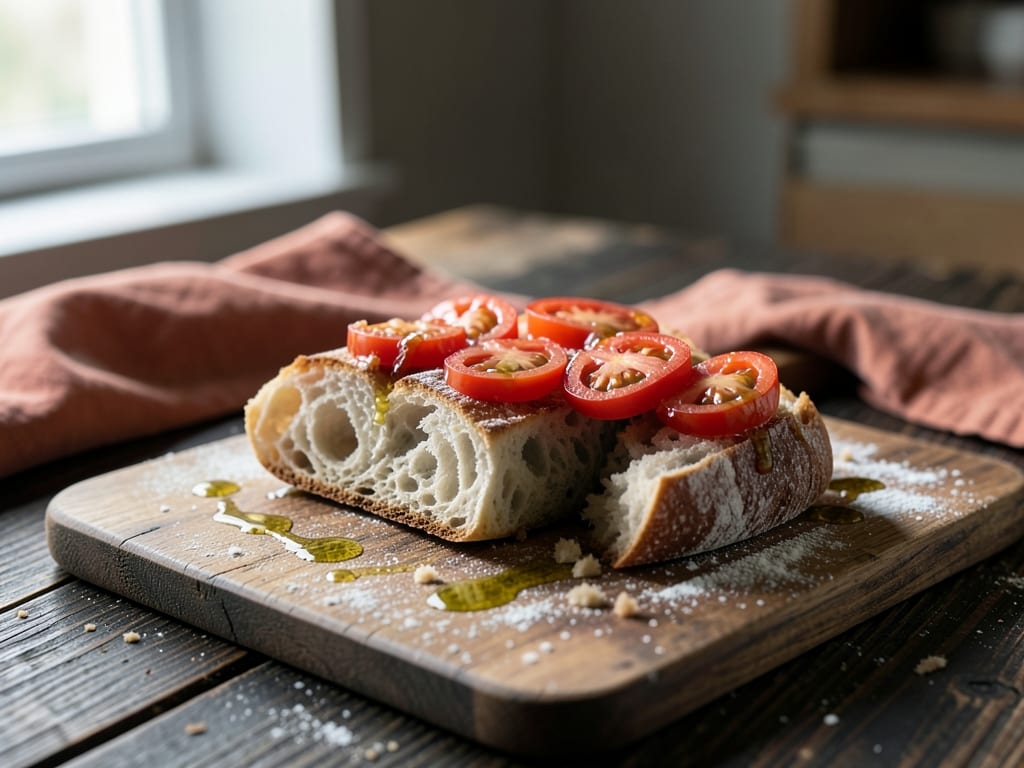
- Take a halved tomato (or cut it in half again for easier handling) and press the cut side firmly onto each warm slice, rubbing it back and forth so the juice, seeds, and soft flesh seep into the bread.
- You should see the bread darken as it absorbs the liquid.
- Switch to a fresh tomato half when the current piece is mostly empty.
- You'll use about 1.5 to 2 of the 3 tomatoes.
+ Show details− Hide details
Ready when: Bread is visibly damp and darkened; seeds and soft tomato pulp are scattered across each slice
Tip: Use the juiciest, ripest tomatoes you can find. Mealy or underripe tomatoes will be disappointing. If your tomatoes are very watery, extra juice may drip—this is normal and desirable.
Drizzle with olive oil
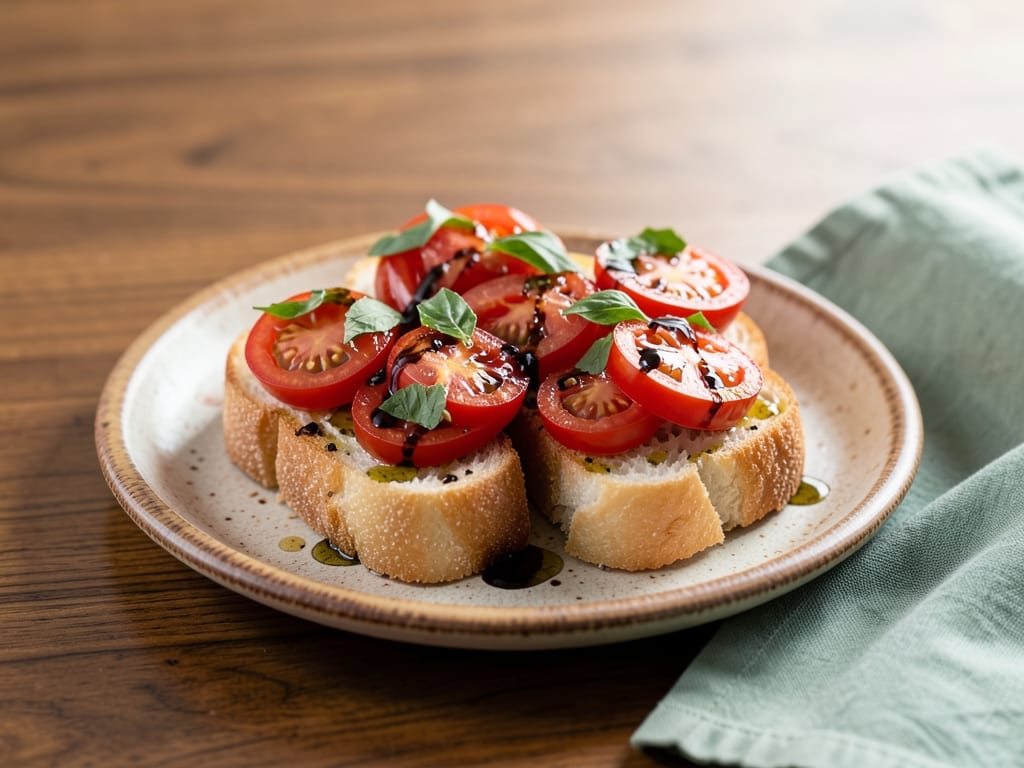
- Arrange the finished toasts on a serving plate or board.
- Drizzle each one with a light, even coating of extra-virgin olive oil, using about ½ teaspoon per slice (roughly 3 tablespoons total).
- You want a glossy sheen, not a pool.
+ Show details− Hide details
Ready when: Each slice glistens with a light, even coating of oil
Tip: Use the best extra-virgin olive oil you have. This simple dish puts the spotlight on it. Fruity, robust oils pair beautifully with the sourdough's acidic tang.
Season and serve
- Sprinkle sea salt over each slice to taste, starting conservatively and adjusting as needed.
- If desired, top with a few torn basil leaves and a crack of freshly ground black pepper.
- Serve immediately while the bread is still warm and the flavors are at their brightest.
+ Show details− Hide details
Tip: Pan con tomate is best eaten fresh, right after assembly. The bread will continue to soften as tomato juices seep in, so don't delay serving.
Good to know
Tips
- Ripe, juicy tomatoes are absolutely essential to this dish. Pale, mealy, or underripe tomatoes will result in disappointing bread. If you can't find good fresh tomatoes, use drained canned whole tomatoes instead.
- Toast the bread to a medium color—crisp on the outside but still soft enough inside to soak up the tomato juice and absorb the garlic flavor. Over-toasting makes it hard to rub with tomato and the bread becomes brittle.
- Work quickly while the bread is still warm. Warm bread is porous and absorbent; cold bread is dense and won't take on the flavors as readily. This is why the traditional method has you assemble right after toasting.
- This dish is nothing but its ingredients. There are no technique tricks or sauces to hide behind. Use the best tomatoes, garlic, olive oil, and salt you can find.
Make ahead
Slice the sourdough and store in an airtight container (up to 2 days). Halve and refrigerate the tomatoes. When ready to eat, toast and assemble immediately for the best texture and flavor absorption.
Storage & reheating
Pan con tomate is best enjoyed fresh on the day it's made. Leftovers may be stored in an airtight container at room temperature for up to 4 hours, though the bread will soften as tomato juice continues to seep in. Refrigeration is not recommended, as cold bread becomes unpleasantly gummy. Store leftover bread slices separately in the freezer (up to 1 month) for future toasting.
Substitutions
- Sourdough loaf (about 12 oz) → Crusty baguette, ciabatta, or day-old white bread. The sourdough's fermented tang is iconic, but other crusty breads work well. Avoid soft sandwich breads, which don't toast properly.
- Ripe medium tomatoes → Canned whole tomatoes (drained well). Use in winter when fresh tomatoes are mealy and flavorless. Drain canned tomatoes thoroughly and use only the pulp and flesh, not the liquid.
- Garlic cloves, peeled → Garlic powder or garlic salt. In a pinch, use ¼ teaspoon garlic powder or ½ teaspoon garlic salt per toast. Less aromatic and fresh, but serviceable.
- Extra-virgin olive oil → Good-quality regular olive oil or avocado oil. Extra-virgin is preferred for its flavor, but a robust regular olive oil works if that's what you have. Avoid refined oils.