Sourdough French Époisses and Roasted Shallot Tartine
A rustic yet elegant open-faced tartine built on thick slices of toasted sourdough brushed with cultured butter, topped with creamy, pungent Époisses cheese and sweet roasted shallots. Finished with fresh parsley and fleur de sel, this French-inspired dish balances the cheese's bold character with caramelized shallot sweetness—a perfect light lunch or appetizer that celebrates quality ingredients.
Steps
Before you start
- Roast the shallots ahead or use leftover roasted shallots from another recipe
- Remove Époisses from the refrigerator 20 minutes before serving so it reaches ideal creamy texture
- Have a sharp serrated knife ready to slice the sourdough cleanly without crushing
Roast the shallotsOven 400°F / 205°C
- Preheat the oven to 400°F (200°C).
- On a baking sheet, toss the shallot halves with 1½ tablespoons (22 ml) olive oil, the thyme sprigs, and a generous pinch of salt and pepper.
- Arrange cut-side down.
- Roast for 20–25 minutes, stirring once halfway through, until the flat sides are golden and caramelized and the shallots are very tender when pierced.
- Remove and set aside to cool slightly.
+ Show details− Hide details
Ready when: Shallots are golden and very tender when pierced with a fork
Tip: Cut-side down on the pan promotes even caramelization; don't stir too often or they won't brown properly.
Mix the tartine dough
- In a small bowl, whisk together the sourdough discard, ¾ cup (95 g) flour, ¼ cup (60 ml) warm water, and ¼ teaspoon (1.5 g) salt until a thick, shaggy dough forms.
- Let it rest at room temperature for 5 minutes.
+ Show details− Hide details
Ready when: Dough comes together with no dry flour visible
Tip: The dough should be soft and slightly sticky; resist adding more flour or it will be dense.
Shape the tartines
- Turn the dough out onto a lightly floured surface.
- Divide it in half.
- Working gently without overworking, shape each piece into a thick, rustic oval about ½ inch (1.3 cm) thick and 4 by 5 inches (10 by 13 cm).
- You want them thick enough to stay sturdy when topped.
+ Show details− Hide details
Ready when: Two rough ovals of even thickness
Tip: Keep your hands lightly floured and work gently; overworked dough becomes tough.
Toast the tartines
- Heat a 10 to 12 inch (25 to 30 cm) cast-iron skillet or heavy griddle over medium heat.
- Once hot, lay the shaped dough ovals on the dry pan.
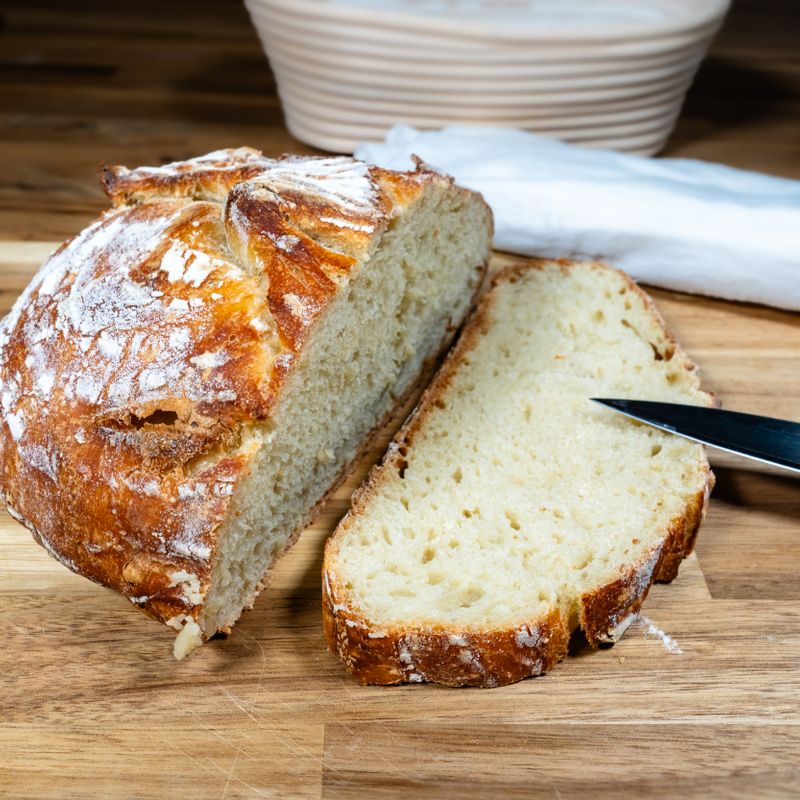
- Toast for 3–4 minutes per side, until each side is golden brown, crispy on the exterior, but still slightly tender within.
- The interior should be just set, not hard.
+ Show details− Hide details
Ready when: Both sides are deep golden brown and sound hollow when tapped; centers are just firm
Tip: Don't flip too early; let the bottom set and brown before turning. If they brown too fast, lower the heat slightly.
Butter the tartines
- Transfer the toasted tartines to a plate.
- While still warm, spread the top of each with about ½ tablespoon (7 g) softened cultured butter, letting it melt into the warm bread.
+ Show details− Hide details
Ready when: Butter melts into the warm bread
Tip: Use high-quality cultured or European butter for best flavor; it adds a subtle tanginess that complements the Époisses.
Add the Époisses
- Divide the room-temperature Époisses between the two tartines, spreading or spooning it gently onto the buttered surface.
- The cheese should be creamy and slightly runny; if it's too cold, it won't spread smoothly.
+ Show details− Hide details
Ready when: Cheese is evenly distributed and creamy
Tip: Époisses has a strong, funky aroma—this is normal and desirable. The flavor is milder and creamier than the smell suggests.
Top with shallots and finish
- Arrange the roasted shallot halves on top of the Époisses.
- Scatter the finely chopped fresh parsley over both tartines.
- Finish with a light sprinkle of fleur de sel and a few grinds of black pepper.
+ Show details− Hide details
Ready when: Tartines are fully assembled and garnished
Tip: Add the parsley just before serving so it stays bright and fresh; don't prepare ahead.
Serve immediately
- Eat the tartines while the bread is still warm and the Époisses is creamy.
- The contrast of warm, crispy toast, soft cheese, and sweet caramelized shallots creates the best experience.
+ Show details− Hide details
Tip: This dish doesn't hold well once assembled; serve immediately for the best texture and flavor.
Good to know
Tips
- Remove Époisses from the fridge 20 minutes before you start cooking; a creamy cheese spreads far better than a cold one and tastes richer.
- The sourdough discard dough intentionally uses less flour than standard bread, creating a tender crumb perfect for tartines; don't be tempted to add more flour or the toast will be tough.
- Fleur de sel adds a pleasant mineral crunch and should be applied at the last moment so it stays crispy.
- This recipe celebrates single, high-quality ingredients rather than quantity; if Époisses is hard to find, order online from a French specialty food supplier or check your local cheese shop.
Make ahead
Roast the shallots and prepare the dough mixture up to 4 hours ahead; keep shallots in the refrigerator and bring to room temperature before assembling. Shape and toast the tartines only at serving time for best results.
Storage & reheating
Best eaten immediately. Leftover assembled tartines do not keep well due to sogginess. Store roasted shallots separately in an airtight container in the refrigerator for up to 3 days. Reheat gently in a 300°F (150°C) oven for 5 minutes before serving with fresh toast if desired.
Substitutions
- Époisses de Bourgogne cheese → Taleggio or Reblochon cheese. Both are washed-rind cheeses with creamy texture and milder aroma than Époisses, making them accessible alternatives while maintaining the dish's spirit.
- active sourdough starter discard (fed 4–8 hours ahead, bubbly and at room temperature) → Active sourdough starter or a simple no-knead dough (½ cup flour + ⅓ cup water + pinch of salt mixed the night before). If you don't have starter handy, a no-knead dough works well for this rustic application.
- cultured butter (or European-style butter), softened → Unsalted European-style butter or even brown butter for deeper nuttiness. Brown butter adds complexity, but take care not to let it burn before spreading.
- large shallots, peeled and halved lengthwise → Red or white onions, sliced into thick rounds and roasted the same way. Onions are slightly more pungent and less delicate than shallots but work in a pinch.