Sourdough Discard Japanese Potato and Furikake Seasoning Crackers
Crispy, thin crackers made from sourdough discard and potato starch, topped with furikake seasoning and nori. These umami-rich crackers use Japanese flavoring to elevate a simple sourdough byproduct into an addictive snack. The potato starch creates a tender, shattered crumb while the furikake—a blend of dried seaweed, sesame seeds, and bonito flakes—gives each bite savory depth. Perfect for using up discard while building a reserve of pantry snacks.
Steps
Before you start
- Preheat oven to 375°F (190°C) and line two baking sheets with parchment paper.
- Measure sourdough discard at room temperature—it should be fed but not necessarily active.
- Have furikake seasoning and nori ready; use scissors or hands to break nori into small flakes if whole sheets.
Combine dough base
- In a medium mixing bowl, whisk together 1 cup (240 ml) sourdough discard, ½ cup (65 g) potato starch, 2 tablespoons (30 ml) olive oil, and ½ teaspoon (3 g) sea salt until smooth and no lumps remain.
- The mixture should be thick and paste-like.
- If it seems too stiff to spread, add 1 tablespoon (15 ml) water and whisk again.
+ Show details− Hide details
Ready when: Mixture is smooth and homogeneous with no visible lumps
Tip: Potato starch blends more smoothly when whisked directly into the liquid discard rather than being added dry to a thick mixture.
Divide and spread dough
- Divide the dough equally between the two prepared baking sheets (roughly 3½ ounces or 100 grams per sheet).
- Using a bench scraper or offset spatula, spread the dough as thinly and evenly as possible—aim for about ⅛-inch (3 mm) thickness.
- It should cover most of each sheet but not reach the edges; leave a ½-inch (1 cm) border.
+ Show details− Hide details
Ready when: Dough is spread evenly in a thin, uniform layer across the sheet
Tip: Wet your spatula slightly with water if the dough sticks; it will help you spread without tearing. Work quickly so the dough doesn't dry out before seasoning.
Season with furikake and nori
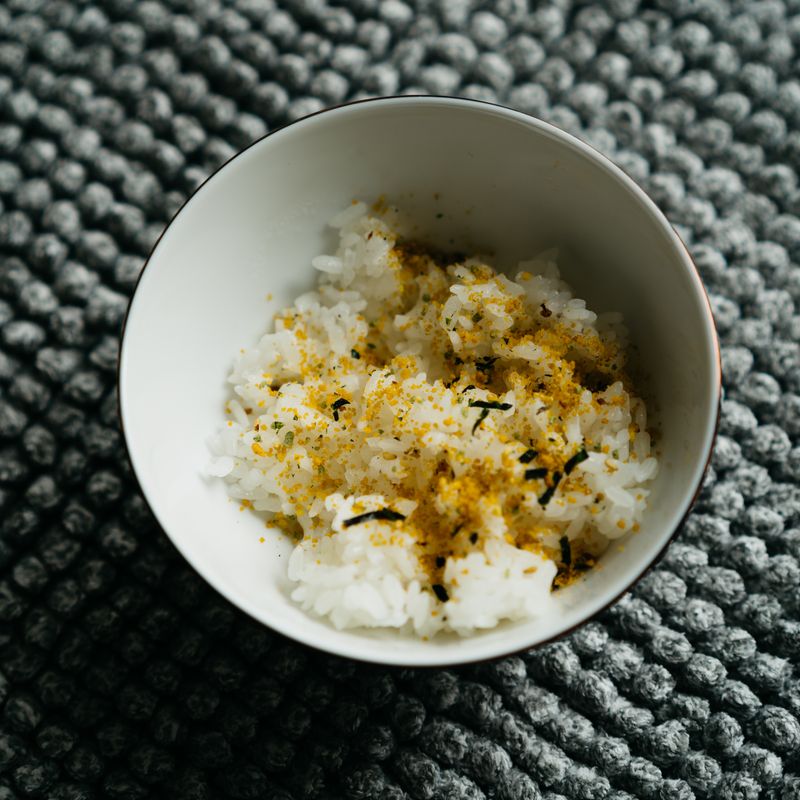
- Sprinkle 1½ tablespoons (9 g) furikake seasoning evenly over each sheet of dough.
- Scatter about half of the torn nori pieces over each sheet, pressing gently with your fingertips so the toppings adhere slightly to the moist surface.
- Don't oversaturate; the toppings should be visible but not overlapping thickly.
+ Show details− Hide details
Ready when: Furikake and nori are evenly distributed and lightly pressed into dough
Tip: If your nori sheets are whole, cut them with clean scissors rather than your hands for more uniform pieces and less mess.
Bake until crispOven 375°F / 190°C
- Place both sheets in a 375°F (190°C) oven on the upper and lower racks, rotating them halfway through baking.
- Bake for 18–20 minutes total, until the edges are deep golden brown and the center shows no wet spots.
- The crackers should feel crisp when you touch a piece in the middle (it will break easily).
+ Show details− Hide details
Ready when: Edges are deep golden brown, center is crisp and breaks easily, no visible moisture remains
Tip: Rotate sheets at the 9-minute mark if your oven heats unevenly. The potato starch base browns quickly, so watch the last few minutes; edges should not char. If using a convection oven, reduce temperature to 350°F (175°C).
Cool on baking sheets
- Remove both sheets from the oven and let the crackers cool in place for 15–20 minutes.
- They will continue to crisp as they cool.
- Do not remove them from the sheets until fully cooled; warm crackers are fragile and may shatter unevenly.
+ Show details− Hide details
Ready when: Crackers are hard and break with a snap; they no longer feel warm to the touch
Tip: If you remove them while warm, they'll shatter into uneven pieces. Waiting ensures large, sturdy crackers for serving or storage.
Break into pieces and serve
- Once cooled completely, break the cracker sheets by hand into 2–3 inch (5–8 cm) pieces.
- Transfer to an airtight container for storage.
- Serve at room temperature with tea, soup, or as a standalone snack.
+ Show details− Hide details
Tip: Use a bench scraper to help break the sheets along natural lines; avoid squeezing, which crushes the delicate crumb.
Good to know
Tips
- Sourdough discard doesn't need to be active or bubbly for this recipe—use it at whatever stage your feeding cycle leaves it. Older, flatter discard works just as well.
- Potato starch is crucial for the texture; it creates a tender, shattered crumb that shatters cleanly rather than chewy. All-purpose flour will make them more bread-like and less crispy.
- If your crackers come out soft, your oven may run cool or your dough was spread too thickly. Bake 2–3 minutes longer next time, or spread to ⅛-inch (2 mm) thickness.
- Furikake varies by brand—some are saltier than others. Taste a cool cracker before storing and adjust salt in the base dough next time if needed.
Make ahead
Bake these crackers up to 5 days ahead and store in an airtight container at room temperature. You can also freeze baked, cooled crackers for up to 3 weeks; thaw at room temperature for 10 minutes before serving. Do not freeze the dough.
Storage & reheating
Room temperature (airtight container): up to 5 days. Refrigerator: not recommended, as humidity will soften them. Freezer (baked crackers): up to 3 weeks. To restore crispness after storage, warm gently in a 300°F (150°C) oven for 3–5 minutes and cool before serving.
Substitutions
- potato starch → cornstarch. Use the same amount by weight (65 g) or volume (½ cup). Cornstarch will produce a slightly less tender crumb but still crisp and delicate.
- furikake seasoning (traditional or shichimi togarashi blend) → gomashio (sesame salt) or 2 tablespoons sesame seeds mixed with ½ teaspoon sea salt. This creates a nutty, less umami-forward cracker. You'll lose the bonito and nori notes but retain savory depth.
- nori seaweed sheets, cut into small pieces → aonori (green seaweed powder), 1 teaspoon sprinkled on top instead of nori flakes. Aonori is finer and distributes more evenly. It imparts a grassier seaweed flavor. Reduce furikake to 2½ tablespoons to avoid over-seasoning.
- extra-virgin olive oil → neutral oil (avocado, grapeseed, or vegetable oil). Use the same amount. This keeps the furikake and nori flavors front-and-center without olive oil's fruity notes.