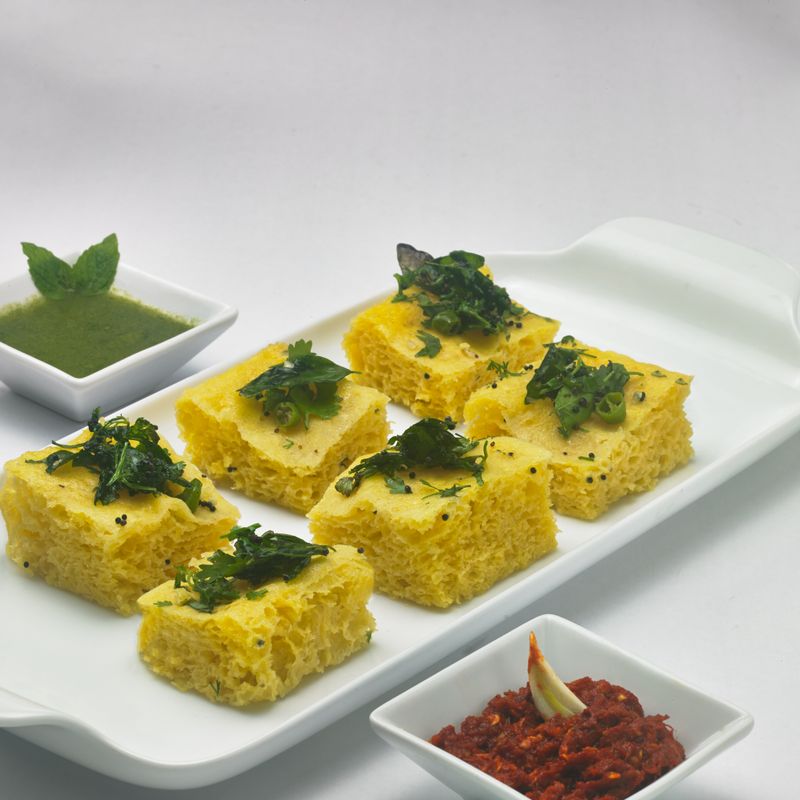
Sourdough Discard Indian Dhokla Steamed Chickpea Cake
A tangy, spongy steamed cake that blends Indian dhokla tradition with sourdough discard. Chickpea flour provides earthiness and protein while the sourdough adds fermented complexity and a tender crumb. Topped with a fragrant tempering of cumin seeds and green chilis in hot oil, then finished with fresh cilantro. Light, savory, and naturally leavened—ready in under an hour from start to serving.
- Prep
- 15 min
- Cook
- 25 min
- Wait
- 10 min
- Total
- 50 min
- Makes
- 1 cake (8 pieces)
Steps
Before you start
- Use sourdough discard at room temperature—not cold from the fridge
- Set up a steamer: a pot with 1½ inches of water and a trivet or steamer basket that keeps the cake pan 2 inches above the water
- Have a 9-inch (23 cm) square or round cake pan (metal or heatproof ceramic) ready; oil or grease it lightly
- Measure all ingredients before starting; the batter is ready to steam as soon as it's mixed
Combine wet ingredients
- In a medium mixing bowl, whisk together the room-temperature sourdough discard, yogurt, and water until no lumps remain.
- The mixture should be smooth and pourable, with a slightly thick batter consistency.
+ Show details− Hide details
Ready when: smooth, lump-free mixture
Tip: Cold sourdough discard will take longer to activate and may not leaven the cake properly; always bring it to room temperature.
Mix in dry ingredients and seasonings
- Add the chickpea flour, ginger, green chili, 1 teaspoon of the cumin seeds, salt, baking soda, turmeric, and hing (if using) to the wet mixture.
- Whisk until fully combined and smooth, about 1–2 minutes.
- The batter should resemble thick pancake batter, with visible specks of ginger and chili.
+ Show details− Hide details
Ready when: smooth, uniform batter with no flour streaks
Tip: Don't overmix; just blend until the dry ingredients are fully incorporated. Overmixing can make the cake dense.
Add oil and let rest
- Fold in the 2 tablespoons of vegetable oil until fully combined.
- Let the batter rest for 5–8 minutes at room temperature.
- During this time, the sourdough culture will begin to activate, and the batter will lighten slightly as small air bubbles form.
+ Show details− Hide details
Ready when: batter rises slightly and develops tiny bubbles on the surface
Tip: This rest period is crucial for lift; skipping or rushing it will result in a dense, flat cake.
Pour batter into pan and prepare steamer
- While the batter rests, bring the steamer pot to a rolling boil (water should reach 1½ inches on the trivet).
- Pour the batter into the oiled 9-inch pan, gently spreading it level.
- If you plan to use an instant-read thermometer to check doneness later, insert it into the center (or mark the center with a knife so you know where to check).
+ Show details− Hide details
Ready when: batter is level in the pan; steamer water is at a rolling boil
Tip: Make sure the pan sits at least 2 inches above the water to avoid a soggy, overly wet cake.
Steam the cakeOven 210°F / 100°C
- Carefully place the pan on the trivet in the steamer.
- Cover the pot with a lid (tenting foil over the pan first helps prevent condensation drips).
- Steam over medium-high heat for 22–25 minutes.
- The cake is done when a skewer or toothpick inserted in the center comes out clean or with just a few moist crumbs, or when an instant-read thermometer reads 205–210°F (96–99°C) in the center.
+ Show details− Hide details
Ready when: skewer comes out clean; center is springy and set; internal temp 205–210°F (96–99°C)
Tip: Don't open the lid frequently or the steam escapes and cooking time will increase. A single quick check at the 22-minute mark is fine.
Rest the cake briefly
- Remove the pan from the steamer and let it rest on a cooling rack for 5 minutes.
- The cake will firm up slightly but should remain soft and fluffy, not rubbery.
+ Show details− Hide details
Ready when: cake no longer steaming; surface is set but still soft
Tip: Don't skip this rest; it helps the cake firm up enough to hold its shape when you cut it.
Prepare the tempering (thal)
- While the cake rests, heat the 2 tablespoons of vegetable oil in a small saucepan over medium heat.
- Once shimmering, add the remaining ½ teaspoon cumin seeds and the mustard seeds (if using).
- Let them crackle and pop for 30 seconds until fragrant, then remove from heat immediately.
+ Show details− Hide details
Ready when: seeds crackle and pop; oil is fragrant
Tip: Watch closely once you add the seeds; they brown quickly and can burn. Remove from heat the moment they are fragrant.
Score and pour tempering over cake
- Use a sharp knife or skewer to lightly score the warm cake into 8 equal pieces (do not cut all the way through if using a square pan; just make guide lines).
- Carefully pour the hot tempered oil and seeds over the entire cake surface, letting it seep into the score lines.
- The oil will sizzle slightly as it hits the warm cake.
+ Show details− Hide details
Ready when: oil distributed across cake; cake absorbed some of the oil and seeds
Tip: Pour the oil slowly and evenly so it distributes across the whole surface. Wear an oven mitt on one hand to protect yourself from sizzling.
Garnish and serve
- Sprinkle the fresh chopped cilantro and a squeeze of lemon juice (if using) over the warm cake.
- Let it rest for 2–3 minutes, then cut along the score lines (or cut into 8 pieces if it is a square pan).
- Serve warm or at room temperature, directly from the pan or transferred to a serving plate.
+ Show details− Hide details
Ready when: cilantro is evenly distributed; cake is ready to cut
Tip: Serve within 30 minutes of tempering for the best flavor and texture; the cake is most tender and flavorful while still warm.
Good to know
Tips
- Sourdough discard must be active and bubbly (fed 4–8 hours prior) for proper leavening. A sluggish or unfed discard will not lighten the batter as much, and the cake may be denser.
- The tempering oil is the flavor heart of this dish. Invest time in getting the seeds fragrant and the oil hot; it transforms the cake from plain to aromatic.
- For a richer cake, use full-fat yogurt; for a lighter version, use low-fat or Greek yogurt (though thick Greek yogurt may need an extra 1–2 tablespoons of water to thin the batter).
- If you don't have a steamer, make one: place a heatproof ramekin or small bowl upside down in a large pot, add 1½ inches of water, and rest the cake pan on top. Cover with foil, then a lid, to trap steam.
Make ahead
You can prepare the batter up to 30 minutes ahead and keep it covered at room temperature. The sourdough will continue to activate slowly, making the cake even lighter. Do not refrigerate the batter; cold will slow fermentation.
Storage & reheating
Store the cooled cake in an airtight container at room temperature for up to 2 days. The cake is best served warm or within a few hours of cooking. Reheat in a steamer for 5–8 minutes until warmed through, or cover loosely with foil and warm in a 300°F (150°C) oven for 10 minutes. Not recommended for freezing, as the texture becomes rubbery when thawed.
Substitutions
- chickpea flour (besan) → a mix of 1 cup (120 g) all-purpose flour plus ½ cup (60 g) finely ground chickpeas or lentil flour. The cake will be slightly less earthy and may need an extra 1–2 minutes of steaming. Ensure the all-purpose flour is sifted to avoid lumps.
- plain yogurt → whole milk mixed with 1 teaspoon lemon juice; let it sit for 5 minutes before adding. This mimics the tang and moisture of yogurt. The cake may be slightly less rich but still fluffy.
- green chili (such as serrano or jalapeño) → ½ teaspoon cayenne pepper or red chili powder, mixed into the dry ingredients. You lose the fresh aroma, but the heat and color are similar. Adjust the amount to your heat tolerance.
- sourdough discard (active and bubbly, fed 4–8 hours prior) → ½ cup (120 ml) buttermilk plus ½ teaspoon baking soda (added along with the other leavening). This creates a tangier cake without fermentation, but you lose the sourdough's complexity. Add the baking soda to the chickpea flour mixture rather than as a separate step.
More breakfast bakes
See all →

Find more like this
- Meal
- Breakfast
- Cuisine
- North Indian
- Main ingredient
- Chickpeas
- Method
- Stovetop
- Quick & Easy
- Budget